
The call from Dylan’s lawyer fell into the air that had stopped in the room.
Richard reached for the phone, but Dylan stepped back.
“Don’t touch anything anymore,” he told him.
“You have no idea whom you are fighting.”
“Now I do.”
Richard went to the window. The streetlamp drew an iron-colored stripe across his face.
“Ellen, this is all a misunderstanding.”
“A twenty-year misunderstanding?”
“We needed money then.”
“My family’s things did not belong to you.”
“You were my wife. Everything was shared.”
Dylan said quietly:
“The ring was never shared.”
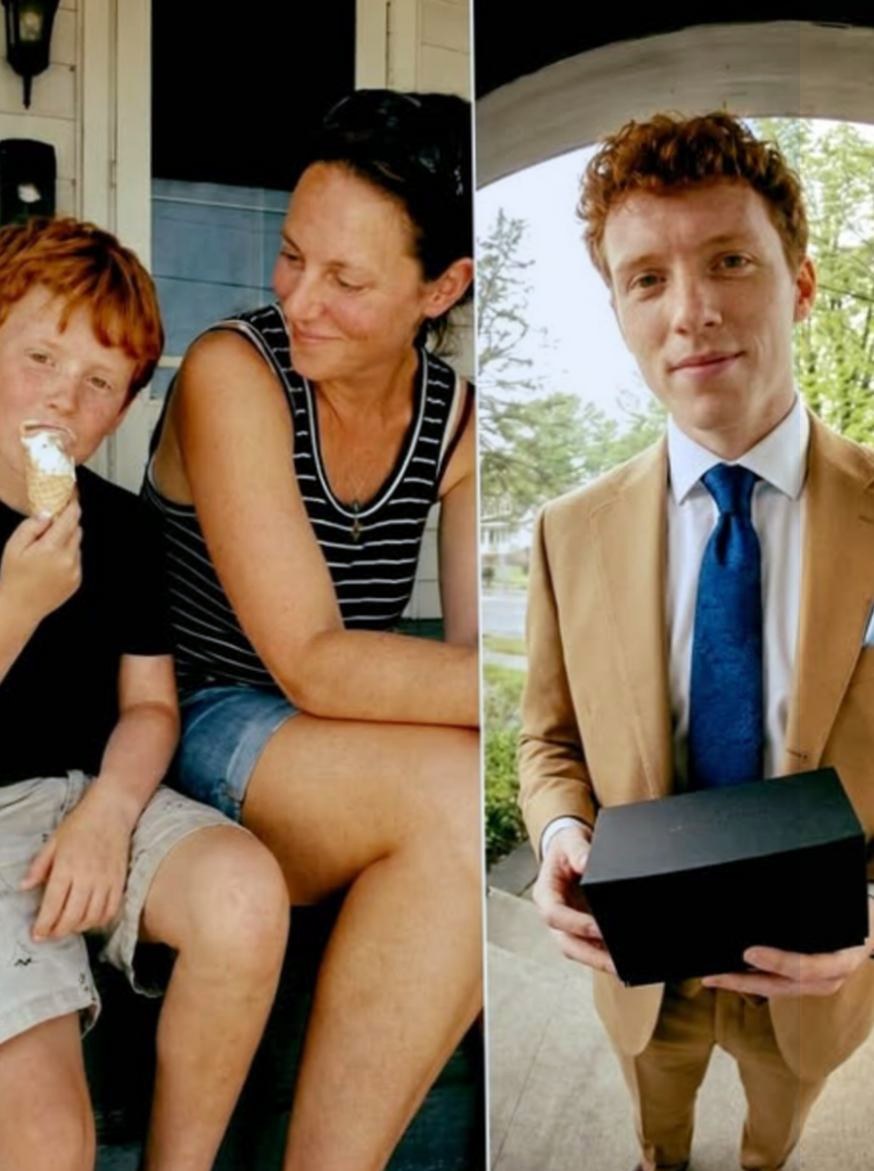
Richard looked at him as if he were again seeing that small, thin boy standing barefoot on the carpet.
This time Dylan did not lower his gaze.
The lawyer contacted us by video call. A young woman appeared on the screen, with shelves full of documents behind her.
“Mrs. Holland, before his death the owner of the pawnshop left a statement with a notary. He confirmed that twenty years ago Richard Holland sold your things.”
Richard slammed his fist on the table.
“It’s a lie!”
“The statement is signed by two witnesses,” the lawyer continued. “They also found the sales ledger, where the ring’s number is indicated.”
I sat down on the chair. I was still holding Dylan’s recorder in my palm. The plastic edge dug into my skin, but I needed the pain to make myself believe that moment.

Richard took out his phone.
“I’ll call the police. This man broke into my house.”
“No,” I said.
He looked at me in surprise.
“What do you mean, ‘no’?”
“You call them yourself.”
“Ellen!”
“Tell them that your old recording exists. Tell them that you sold the things. Tell them that you threatened a child.”
His lips froze.
Dylan put another sheet of paper on the table. It was a statement prepared for the court, which also mentioned an attempt to forge my signature. Richard wanted to take out a loan in my name. If I left the house that same day, he would no longer be able to do it.
“You were going to sell my house and my name too?” I asked.
“I was going to fix everything.”
“How?”
“When I got old.”
It was so absurd that I laughed for the first time. Not with joy. My body simply could no longer endure the weight it had carried for twenty years.
That evening Richard’s lawyer called. He refused to defend him as soon as he heard the recording and saw the documents.
“This case cannot be hidden,” he said. “Nor am I going to take part in your lie.”
Richard put down the phone and began walking back and forth around the room.
“Ellen, I did everything for you.”
“No. You hid everything from me.”
The next day we went to the police. Dylan handed over the recording, and the lawyer handed over the documents. The pawnshop ledger and the witnesses’ testimony finally confirmed that Richard had sold the things. His account was frozen, and the court ordered him to compensate the damage.

My mother’s ring no longer existed. It had been melted down long ago.
But my grandmother’s earrings were found in a small antique shop in another city. It cost Dylan dearly to get them back, although he did not mention the money.
“You should not have done this,” I told him.
“When I was a child, you gave me what you did not have. Now I can.”
Richard tried to return to me for several weeks. First letters came. Then voice messages.
“Ellen, I made a mistake.”
“You loved our house too, didn’t you?”
“You are the only person I trust.”
I answered none of them.
One evening he left a small suitcase at the door. An old kitchen key lay on top of it.
Dylan looked at me.
“Do you want me to call him?”
“No. This time he will answer for it himself.”
Richard was found guilty in court. He was sentenced to probation, a large amount of compensation, and the return of the value of the sold things. I asked him for a divorce.
After the court I entered the empty bedroom. His clothes were gone. In the corner of the closet only the wooden arm remained, which he always tapped when he was angry at Dylan.
And on the table stood the small wooden box of my grandmother’s jewelry.
Empty.
That night I slept for the first time without being frightened by the sound of the door opening.
Three months later I rented a small apartment in a new city, by the river. In the mornings I worked at a children’s library. I recommended books to children, folded pages for them, and even left an extra cookie for those whose parents told them that sweets were not allowed.

Dylan came every week. Now he was an architect and had his own small company. He hung on the wall an old photograph of my kitchen, which he had taken that evening when we first fed him pizza.
“Back then I thought kind people existed only in fairy tales,” he told me once.
“And I thought you were simply hungry.”
“We were both right.”
It snowed for the first time in winter. Returning from the library, I saw a small piece of paper on the window. Dylan had drawn a house whose door was open. Two people stood beside it, and between them was a steaming cup of tea.
Below it was written: “Home is where you are no longer afraid.”
That same evening I received Richard’s last message.
“You only met me once. I won’t ask you for anything. I want to explain.”
I looked at the screen for a long time.
Then I wrote:
“There is no need anymore. I have already heard your words.”
And I blocked the number.
My grandmother’s earrings lay in a small wooden box in my new room. Their gold was slightly scratched, but it still shone. Every morning, before going to the library, I opened the box and looked at them for several seconds.
Not because I wanted the past to return.
Because now I knew: something can be saved even when someone has quietly sold your life.
That evening I put the box by the window. Outside, snow was falling, and inside, tea was warming.
I left the door open.
This time I was waiting for no one.
I simply was no longer afraid.
Missed the beginning?