
“Who was it?” the warden asked me.
I put the phone into my pocket.
“The lawyer for the homebuyers’ association. He says there is a contract concerning my house.”
Evan’s eyes widened.
“Dad, don’t believe him. He is Siana’s lawyer.”
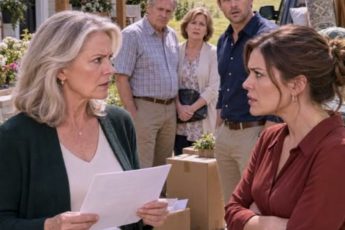
“He is your lawyer,” Siana said. “You told me everything was settled.”
“I only arranged the event permit.”
“Then why do they have my signature?” I asked.
He could not answer.
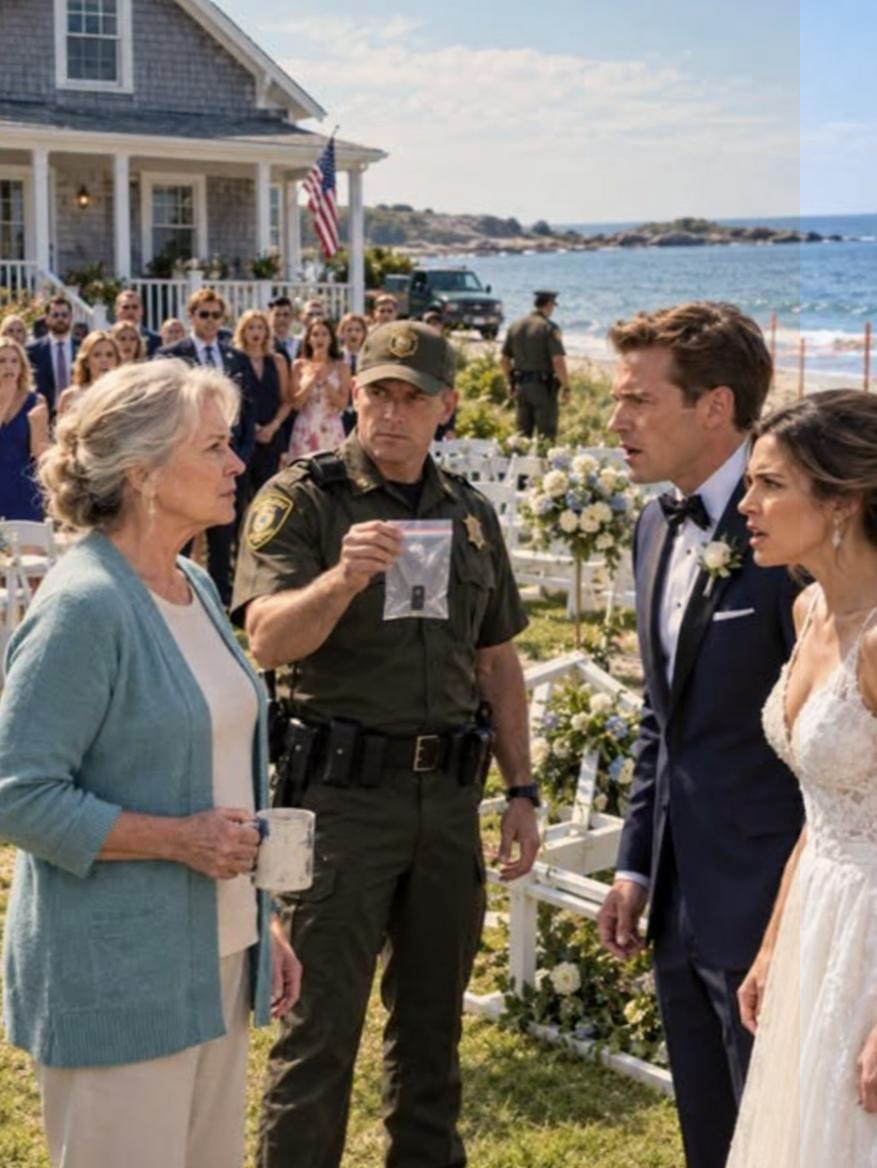
The warden turned to the guests.
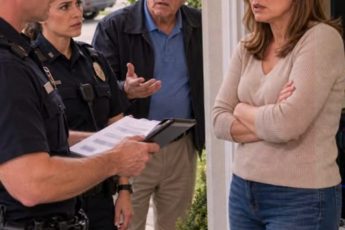
“The wedding area is being closed. Please leave the shore and do not approach the fence.”
People began moving all at once. Someone dropped a suitcase into the sand. Someone carried the flowers into a car. White dresses, dark suits, and confused faces collided with one another.
Siana still could not believe that everything was over.
“Dad, it was not necessary to do this in front of the guests.”
“I did not plan this wedding at my house.”
“You are family!”
“Family asks for permission.”
Evan came to me. His breath was a mixture of alcohol and mint.
“If you back down now, I will fix everything.”
“What are you going to fix?”
“The wedding. The house. Everything.”
“You have already fixed the house for me. I changed the locks.”
He took hold of the door handle, but the door did not open.
This was the first moment when my son truly understood: he could no longer enter the house merely because he was my son.

That same evening the police took statements from Lorna and Siana. The recording, messages, photograph of the egg, and wedding plan were entered as evidence. The warden explained to me that the damage to the protected bird’s nest and the deliberate removal of the fence were matters for investigation.
Evan called my mobile several times.
At first he was angry.
“Dad, the lawyer says this is a misunderstanding.”
The second time his voice broke.
“Please, just don’t sue.”
The third time his lawyer called me.
“Mr. Smallwood, I advise you to consider an agreement. Your son says that you verbally gave up the right to use the house.”
“A verbal promise cannot change ownership.”
“The court process may be lengthy.”
“I worked night shifts for thirty years. I am not afraid of lengthy things.”
The next day the lawyer sent me a copy of the so-called contract. My name was written on it, and the signature looked like mine. But there was one detail at the bottom: the document had been notarized on a day when I was still working at the hospital.
That day my card showed the time I entered and left the system. From seven in the morning until seven in the evening I was in the intensive care unit. There was also camera footage.

I went to the lawyer’s office. Evan was there waiting for me.
My signed paper lay on the table.
“Is this your signature?” he asked me.
“In appearance.”
“Dad, I did not do it.”
“Then who took a sample of my signature from my old documents?”
Siana was standing at the door and crying. Lorna was no longer visible.
The lawyer picked up the paper.
“An examination will be conducted. Until then, no one can act on the basis of this document.”
Evan sank into a chair.
“If Mom were alive, she would not leave us like this.”
His mother had died ten years earlier. I could not bear his manipulation in her name.
“Your mother lived to save others,” I told him. “But she too would understand that taking someone else’s house is not saving.”
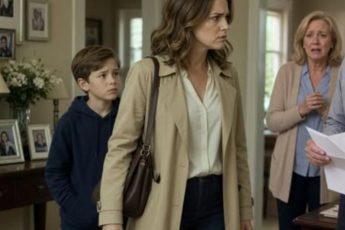
One week later a case was officially opened against Siana and Lorna. Lorna admitted that she had removed the fence. Siana’s messages showed that she herself had devised the plan. The examination established final responsibility for the damage to the egg, although the court charged both of them with deliberate violation of protected territory. The wedding was canceled. The guests demanded the return of the amounts paid in advance. Siana’s small event company closed.
Evan was not criminally charged, but he signed an acknowledgment that he had never had the right to use my house. In the investigation into the false document, it was established that Lorna and Siana had prepared the copy submitted to the lawyer’s office without his knowledge. Evan testified against them.

But that was not the hardest part.
The hardest day was the day I made Evan hear his own voice.
After the preliminary court hearing, in the lawyer’s room, I turned on the recording.
“Dad will surrender in the end anyway. He always surrenders.”
His voice returned from the walls.
Evan raised his head.
“Did I say that?”
“Yes.”
“I did not think that way.”
“But you said it.”
He covered his face with his hands. For the first time he was not looking for an excuse.
“You always saved us.”
“Yes.”
“I thought you would save us now too.”
“This time I was saving myself.”

When I returned home that evening, I found the second bedroom empty. Siana’s leftover white ribbon lay on the floor. On the wall there was only one small mark left where she had driven a nail for the wedding photograph.
I placed my old cup on the veranda.
Its edge was still chipped.
But for the first time I no longer needed to hold it to remember who I was.
Three months later I began volunteering at a small rehabilitation center near the shore. Twice a week I measured elderly people’s blood pressure and taught new nurses how to get through the night shift. Soon everyone in town knew that I lived by the sea, but no one said “the wedding house” anymore.
The nest survived.
Three small birds flew from the sand at the end of summer. The place of the fourth egg was marked by the wardens with a small wooden sign. Every morning I went there and looked toward the sea.
In November my seven-year-old grandson, Noah, came to me for the first time. Evan stood for a long time looking at the house when he got out of the car.
“Grandpa, is it really yours?” Noah asked me.
“Yes.”
“Can you not let anyone stay here?”
I smiled.
“I can.”

Evan stood a few steps away.
“Dad, may Noah spend the summer here?”
“Will you stay too?”
He lowered his head.
“If you let me.”
“I will let you when you come as a guest. Not when you demand something.”
For the first time he did not argue with me.
In the first snow of winter Noah sat on the veranda and drew a shorebird. He drew the house too, and the fence, and a large cup that had two handles—one for me, the other for him.
“Why did you draw this?” I asked.
“So that when you drink coffee, you will not be alone.”
Several weeks later Evan wrote to me once again. It was a short message: “I miss you. Maybe we can start over?”
I looked at the screen for a long time.
Then I wrote back: “Starting over is possible only when you no longer hide the past. You may come as a guest. Taking my house away—you may never do that again.”
He did not reply.
But in the evening I went into the kitchen, boiled water, and returned my old hospital cup to the shelf. Its chipped edge showed against the white snow, while beyond the window the sea was growing dark.
The cup was still mine.
The house too.
And this time the door opened only for me.
Missed the beginning?