
When I saw my heavy black box in Dylan’s hands, my first thought was that twenty years of pain had finally returned to me. But when I lifted the lid, the object that flew out of the box knocked me down on the stairs and gave my husband an expression I had encountered only once before.
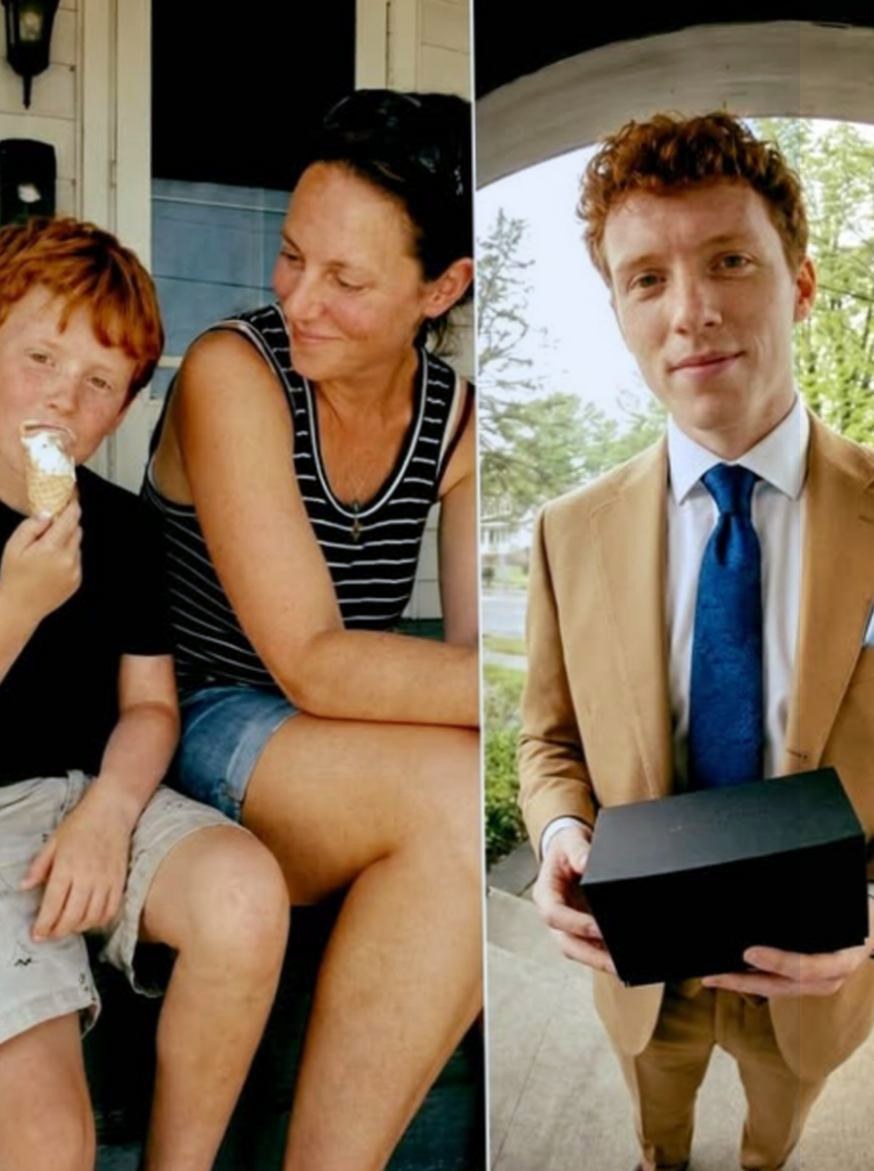
Twenty years ago, on a cold December evening, I noticed a little boy in front of our house. His knees were drawn up to his chin, and he was wearing a thin jacket as if it had been sewn for summer.
“Do you want tea?” I asked from the window.
The boy raised his head and looked at me cautiously.
“Tea… and, if possible, cookies too.”
I still hear his voice to this day.
Dylan lived next door. His parents did not beat their child, did not leave him on the street, and for that reason no one could interfere in their life. But at home they fed him only boiled vegetables. No sweets, no pizza, no chips. Once, in the heat of July, he offered to mow all the grass in my yard in exchange for one piece of chocolate.
“Don’t pay me with food,” I said, putting the chocolate in his hand.
“Then I’ll do something else.”
“You don’t need to do anything.”
He did it anyway. He carried bags from the store, collected leaves, and changed light bulbs. And I ordered pizza for him and put on old cartoons. I was childless, and little by little that boy became the child life had not given me.
My husband, Richard, hated it.
“One day all this will come back to us badly,” he would say in the living room, tapping the wooden arm of the armchair with his fingers. “His parents will accuse us. Besides, we cannot afford to feed one more person.”
“One slice of pizza will not make the child poor.”
“You don’t understand, Ellen. Some people only wait for the moment when you will feel sorry for them.”
I answered nothing, but those words left a small thorn in my heart.

On the evening before Dylan left for college, I arranged all his favorite foods in our kitchen. Pizza boxes stood on the table, and on the television the cartoon he had watched at the age of seven was playing.
“Won’t you forget me?” I asked jokingly.
He lowered his head and touched the edge of the plate with his finger.
“No one forgets a person like you, Mrs. Holland.”
By morning he was already gone. I found the neighbor’s yard empty. In the bedroom, the jewelry box lay open. My grandmother’s earrings, my mother’s ring, necklaces, and the money Richard had hidden were gone too.
Richard stood at the door.
“Didn’t I tell you?” he said to me.
I could not call Dylan. I was afraid that his parents might do something to him. But twenty years passed. Neither a letter nor a call.
Then, on one foggy afternoon, the doorbell rang. A tall man in a dark suit stood on the camera. He was holding a large black box.
He ran his hand over his hair exactly as he had in childhood.
“Dylan?” I asked through the camera.
“Yes, Mrs. Holland.”
I opened the door.
“Where were you? Are you well? Why did you disappear?”
“I came only to bring this,” he told me and held out the box.
The box was heavier than expected. Hope suddenly arose: perhaps my mother’s ring was inside? Perhaps everything had returned?
I put my hand on the lid. But Dylan looked past my shoulder, into the depths of the house, and lost color. Then he said quietly:
“Before you open it, where is your husband?…”
❤️ Thank you for reading this part to the end. The continuation awaits you in the first comment. 👇 If the comment does not appear immediately, press “show all comments.” If you want the continuation, like this story and write “yes” in the comments.

When I heard Dylan’s question, my hand froze on the lid of the box.
“Richard is at home. Why are you asking?”
Dylan looked toward the yard.
“Lock the door and draw the curtains over the windows.”
“Tell me immediately what is happening.”
“Open the box first. But don’t stay alone.”
We entered the room. The ticking of the clock suddenly became very loud. Inside the box lay old recordings, a small recorder, and a sealed envelope. The jewelry was nowhere to be seen.
“What is this?” I asked.
“The truth I have been waiting twenty years to tell.”
Before I could turn on the recorder, a heavy creak of the floor came from above. Richard was coming down from the bedroom.
Dylan grabbed me by the wrist.
“Whatever you hear, don’t tell him that you have this recording.”
“Did you steal my things?”
He lowered his eyes.
“No. But then I could not stop him.”
Richard’s steps came closer on the stairs. Dylan put the recorder in my hand and stood in front of the box himself.
Richard entered the room, saw us, and smiled.
“We have a guest,” he said.
For the first time Dylan looked directly at him.
“This time you won’t frighten me.”
Richard’s smile disappeared. He moved toward the box, and I gripped the sealed envelope with my fingers…

Richard reached toward the box, but Dylan stepped in front of him. Behind him, the kitchen clock showed nine o’clock, and under the glass lay an old, yellowed receipt.
“Move aside, boy,” Richard said.
“I have waited twenty years for those words.”
I put the envelope on the table. My fingers were trembling so much that the ring fell out twice.
“Ellen, don’t open it,” Richard told me. “This man is manipulating you again.”
“Then why are you afraid?”
For the first time I saw not anger, but fear on his face.
Dylan pressed the button on the recorder.
The voice of a young Richard sounded in the room, hoarse and cold:
“If you tell anyone that I took the things, I will tell your mother that you ran away from home. The police will believe your parents, not you. And I will tell Ellen that you stole them. She will hate having anything to do with you forever.”
The child’s breathing could be heard in the recording. Then Dylan’s old, broken voice sounded:
“Please, don’t tell her.”
Richard snatched at the recorder, but Dylan stopped him by the wrist.
“That was only a copy,” he said.
I leaned against the chair. The room seemed to spin together with the walls.
“You took my family’s things?” I asked Richard.
“We needed money.”
“And you blamed Dylan?”
“He would have disappeared anyway. His parents believed me.”
“You threatened him when he was a child.”
“I was protecting you!” he shouted. “You were turning him into a son, while he was destroying our house.”
Dylan’s eyes filled with tears.
“I only wanted food. And you took away the only safe place I had.”
I opened the envelope. Inside were bank statements, old pawnshop receipts, and a photograph in which Richard was turning my mother’s ring in his hand. The last sheet said that the money from the sold items had been transferred to his personal account.
I looked at my husband.
“All this time you knew he was innocent.”
Dylan nodded.
“I went to university, worked, and recovered everything I could find. But I obtained the main evidence only now. Your husband thought the recording had been erased.”
Richard took out his phone and called someone.
“Come immediately,” he said.
Then he leaned toward me.
“If you leave this house, I will tell everyone that you have gone mad.”
At that moment Dylan’s phone rang. He looked at the screen and his face changed.
“What happened?” I asked.
“It’s my lawyer. He told me that the owner of the pawnshop died this morning… and another document about your mother’s ring was found in his safe…”
რიჩარდმა საკუთარი ხმა მოისმინა და პირველად დადუმდა…
ფინალი ყველაფერს სხვა თვალით დაგანახებთ. ყველაზე მძიმე სიმართლე ყუთში კი არა, წარსულში იმალებოდა.
„შენი სიტყვები უკვე მოვისმინე.“
რიჩარდი პირველად დარჩა პასუხის გარეშე.
👇 ისტორიის ფინალი უკვე გახსნილია






