
As soon as we returned to the terminal, everything began moving at once.
My lawyer called me.
Then the chairman of the board.
Then the bank representative, who told me that the deal account had been temporarily frozen.
I answered none of the calls.
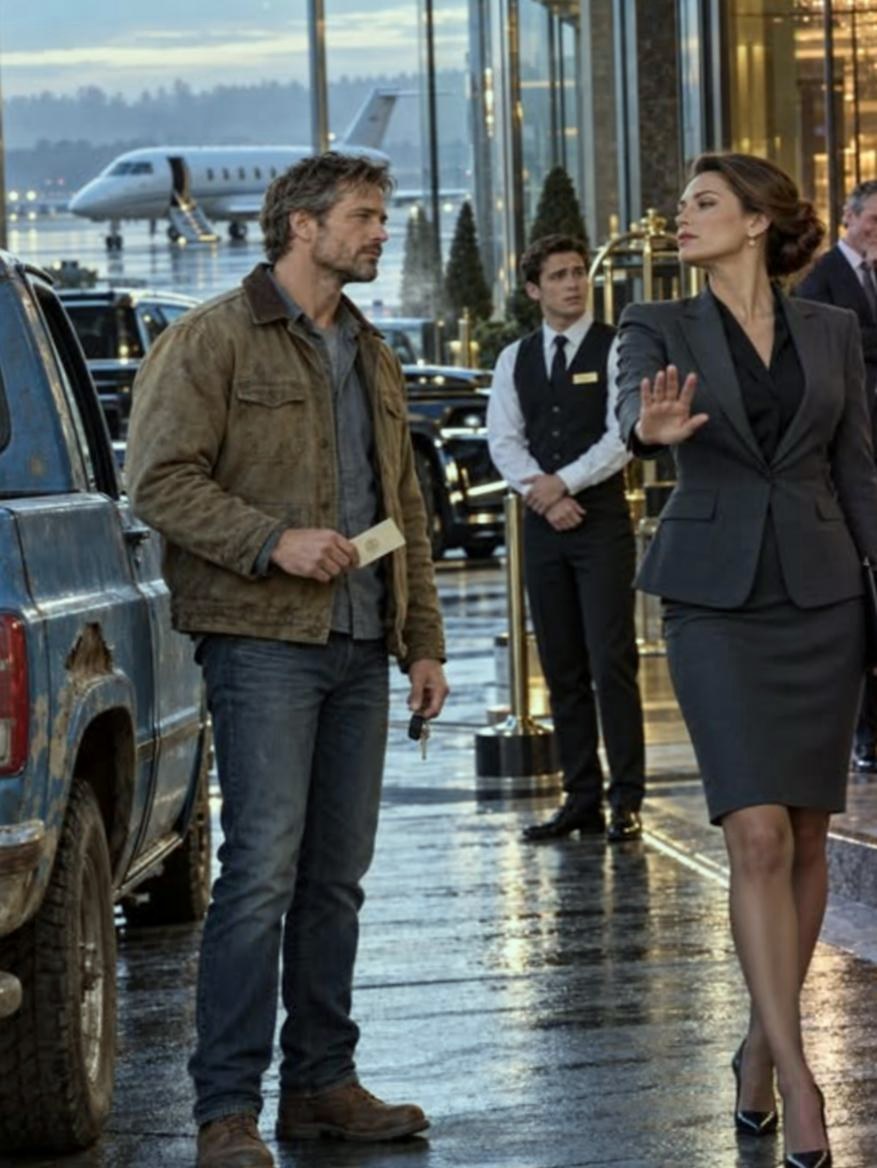
Caleb, meanwhile, stood by the window and watched the airplane parked outside.
“Who knew your system password?” he asked.
“Only me, Grant, and the technical director.”
“Peter?”
“He did not have access to the financial files.”
Grant raised his head.
“Vivian, that document looks like a signature, but the electronic signature is only a scanned image.”
“So someone used my old signature.”
“Yes.”
Peter stepped back.
“This is absurd. I only work on communications.”
Caleb looked at him.
“Then why do you have a system login record starting at four o’clock in the morning?”

Peter’s mouth opened.
“I… was at home.”
Grant opened the laptop.
“The record is here. Someone entered from your device and uploaded the document.”
“My computer was left at the office,” Peter said.
“And who had the office key?” I asked.
Peter did not answer.
In the second room, they brought a small monitor for us. The security-camera recording unfolded.
It was four twelve in the morning.
The door to my office opened.
Peter entered.
He was holding my work bag.
I collapsed into the chair. I always had an old metal pen in the bag, which my father had given me. That morning I took the pen out of the bag and left it on the desk.
In the recording, Peter opened the drawer, photographed the document with my signature, and sat down at the computer.
“This does not mean anything,” he shouted.
Caleb answered quietly:
“You did it yourself.”
Then the audio recording began playing. Peter’s voice could be heard clearly.
“If Rowan stops the money today, Vivian will have to sign the agreement. Then the bonuses will remain with us.”

The second voice belonged to his accomplice—our head of acquisitions, Sabine Morris.
“What if something comes out?”
“Everything is in Vivian’s name. She will say that she knew.”
Peter looked at the monitor as if he were hearing his own words for the first time.
“I did not mean it like that.”
“But you said it,” Grant told him.
This time I looked at Peter.
“Why?”
He lowered his eyes.
“Because you always make the big decisions, while we only write down the consequences.”
“Deceiving me does not justify this.”
“No one talks to you, Vivian. Everyone is afraid of you.”
That was the most painful thing, because it turned out to be partly true.
Caleb brought his lawyer. An hour later, Peter and Sabine were arrested on charges of fraud and illegal use of data. The company received a temporary protection order from the court. The bank unlocked the account, but the deal was canceled.
My lawyer tried for a long time to convince me.
“You can say that you knew nothing.”
“I did not know.”
“Then simply remain silent.”
I looked at Caleb.
“No. First I must say everything I know.”

In the courtroom, Peter heard his voice again. The judge played the recording. His own words returned from the walls.
“Everything is in Vivian’s name.”
Peter buried his head in his hands.
I did not feel revenge toward him.
Only tiredness.
The board soon offered me resignation as a form of taking responsibility. I did not refuse, but I set one condition for them: in every major deal, I would meet the partner myself, regardless of his car and clothing.
Caleb did not continue the deal.
But several weeks later he sent me a new proposal.
“If you ever wish to build everything from the beginning again, my door will be open.”
I replied:
“This time I will knock on the door first.”
Six months later I moved from Chicago to Denver. I opened a small office and, instead of managing regional airports, taught young managers how not to confuse power with speed.
My daughter, Elene, moved in with me. For the first time in years, Sunday evenings were not lost to calls and meetings.
One evening she asked me:
“Mom, was that man really rich?”
“Yes.”
“Then why did he drive that old car?”
Outside the window, the first snow was falling.
“Probably because, for him, the car was not simply a car.”
Elene thought.
“What do you look at in people now?”
I looked at the small airplane drawn in her notebook. Its wings were slightly uneven, but it was flying toward the sky.
“How they treat those who cannot give them anything.”

Several days later I received a final letter from Peter.
“I have lost everything. Please do not speak against me in court.”
I looked at the screen for a long time.
Then I wrote only one sentence:
“I am not doing anything against you; I simply will no longer protect you from your own words.”
No answer came.
That winter I bought an old pickup.
Not one similar to that car—the exact car that Caleb had been planning to sell before I learned its real story. He sent me the small, copper-colored emblem from his father’s old car, which he had kept under the steering wheel.
I hung it on the wall of my office.
Every morning, before I began work, I looked at it.
Then I took my bag, kissed Elene, and closed the door as if everyone in the world were already known.
But I knew that was not so.
Sometimes the most valuable person comes quietly, in an old car, with a worn jacket and a name that you hold in your hand but do not read.
And on the day when I was no longer afraid to see an ordinary appearance for the first time,
the old emblem lit up in the sunlight.
I looked toward the door.
And this time, I knocked first.
Missed the beginning?