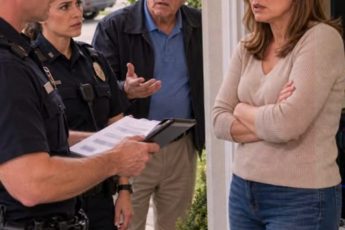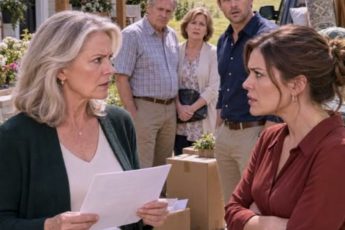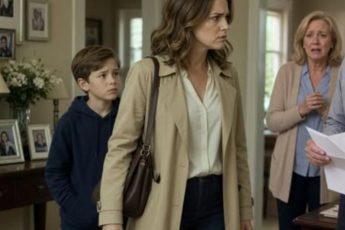
At Harlan’s last words, Vicky almost dropped the phone from her hand.
Her lawyer was no longer on the line.
“Bradley, come back,” she told him. “Come back right now.”
The answer could be heard so clearly that Todd, standing nearby, heard it too.
“Vicky, I am no longer on site. From this moment, I am no longer taking the new case.”
“You cannot abandon me!”
“I already abandoned you. After today’s recordings, I have a conflict of interest and, to tell you the truth, I can no longer defend you.”
The line went dead.
Vicky stood motionless for several seconds.
Then the phone rang again.
It was a representative of the development company. He told her that all Ridgecrest purchases and the documents from the initial construction would be handed over to an independent auditor.
“You said the road had been transferred legally,” Vicky told him.
The man’s voice on the other side grew tense.
“That is what we thought.”
“I was chairwoman for six years!”
“That is exactly why we need all your correspondence.”
Vicky ended the call.
The neighbors gathered around her slowly dispersed. Some avoided looking at me. Some looked at their phones. A few minutes earlier they had stood behind her, but now each was looking for their own car.
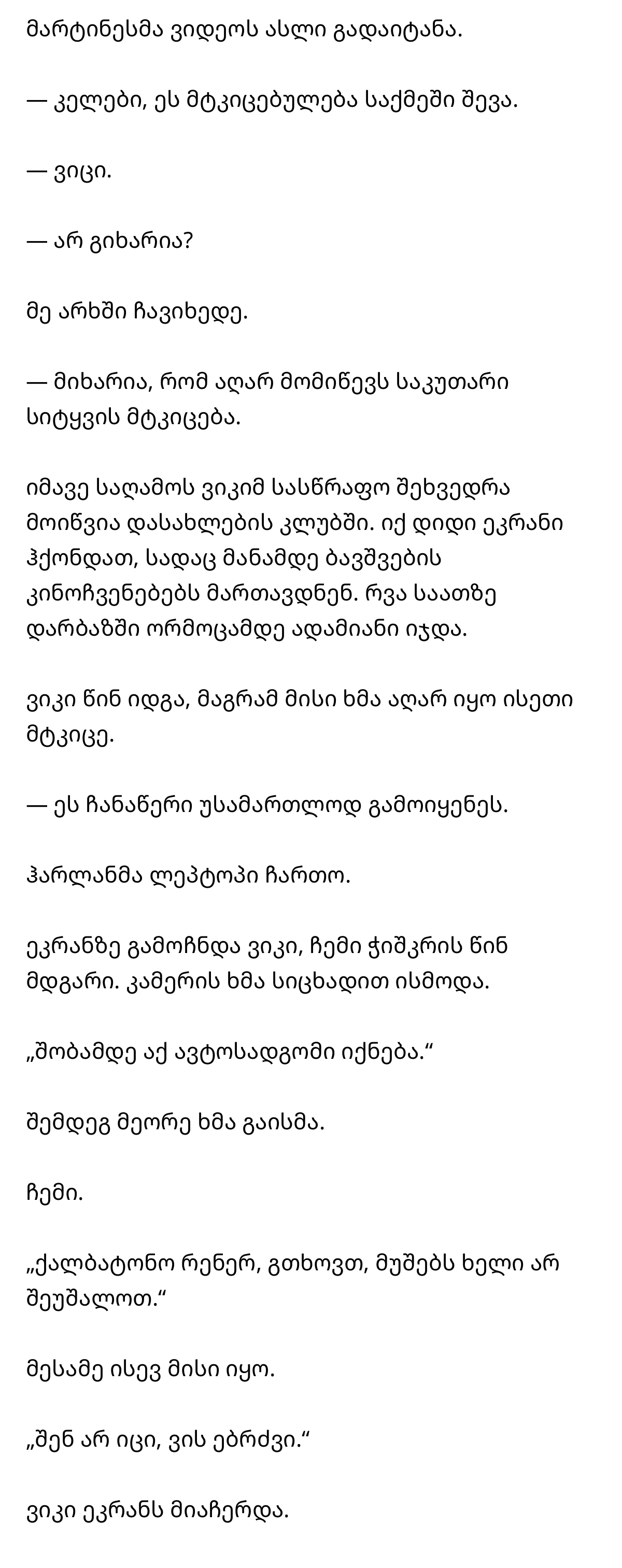
Martinez transferred a copy of the video.
“Cal, this evidence will become part of the case.”
“I know.”
“Aren’t you happy?”
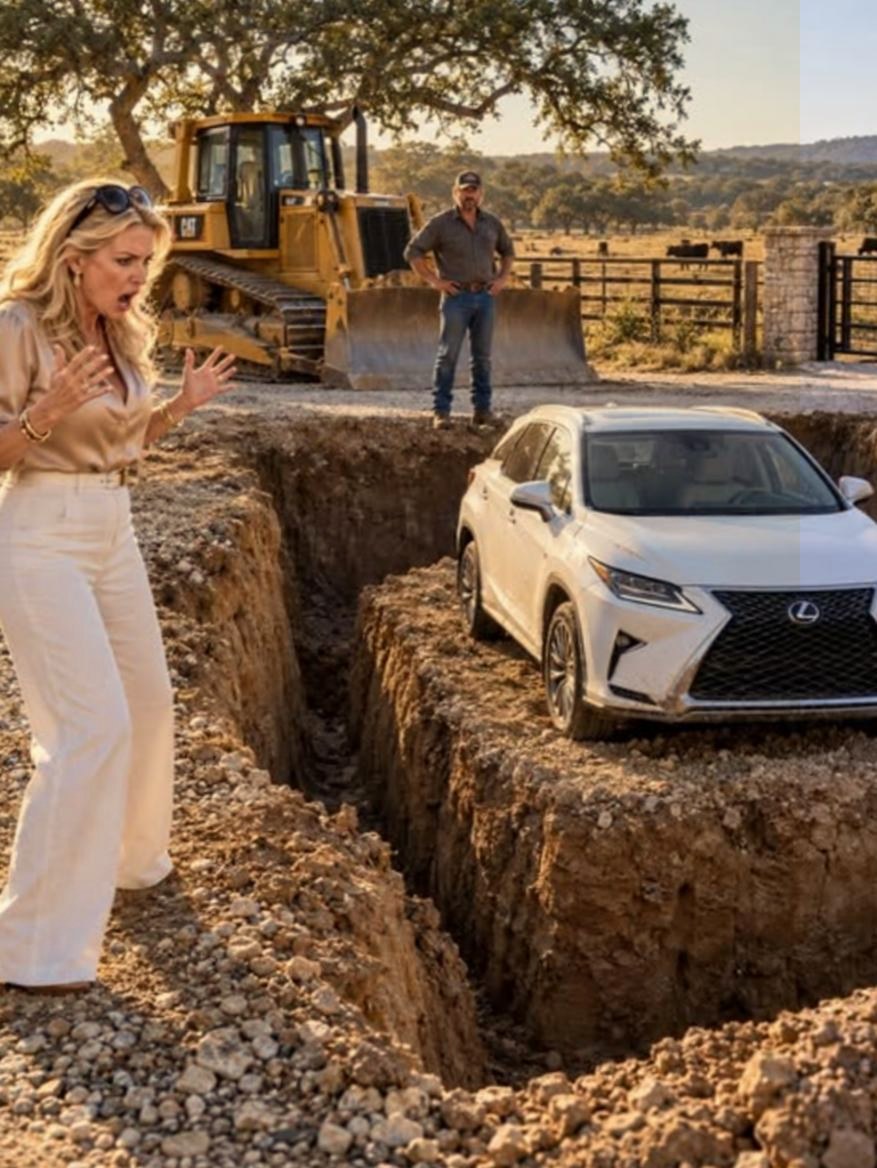
I looked into the ditch.
“I am happy that I will no longer have to prove my own word.”
That same evening Vicky called an emergency meeting at the development club. They had a large screen there, where they had previously held children’s movie screenings. At eight o’clock, about forty people were sitting in the hall.
Vicky stood at the front, but her voice was no longer as firm.
“This recording was used unfairly.”
Harlan turned on the laptop.
Vicky appeared on the screen, standing in front of my gate. The camera’s sound could be heard clearly.
“There will be a parking lot here by Christmas.”
Then a second voice sounded.
Mine.
“Mrs. Renner, please do not interfere with the workers.”
The third was hers again.
“You do not know whom you are fighting.”
Vicky stared at the screen.
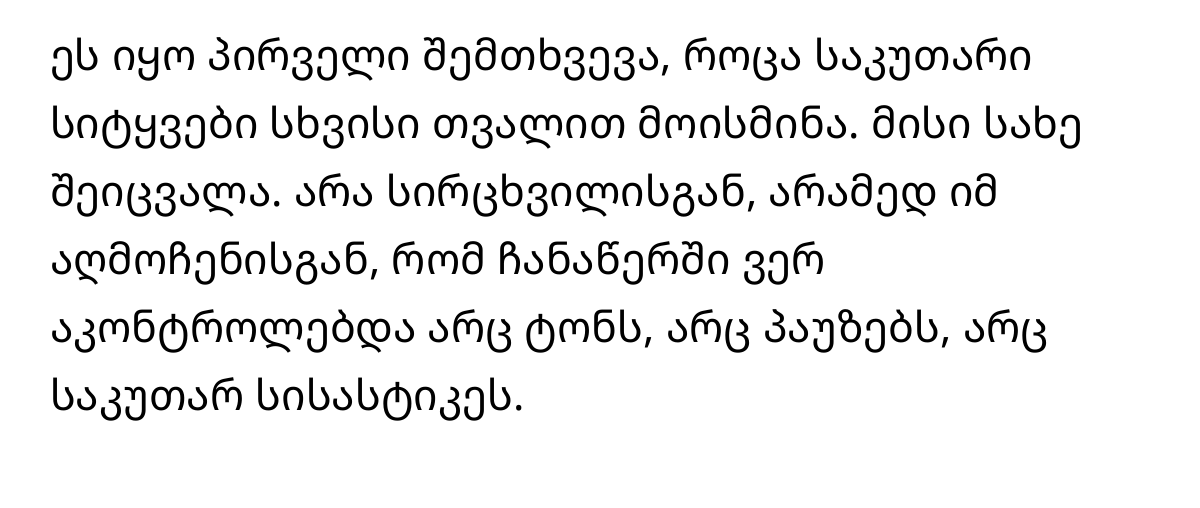
It was the first time she had heard her own words through someone else’s eyes. Her face changed. Not from shame, but from the discovery that in the recording she could control neither her tone, nor her pauses, nor her own cruelty.
“Turn it off,” she said.
“You yourself requested the full recording,” Harlan replied.
“I did not know that…”
“That is exactly the problem,” Todd said quietly.
An awkward silence fell over the hall.
Two weeks later, the county prosecutor’s office announced that an investigation would begin into the false statement and obstruction of an official process. The court confirmed my ownership right to the strip beneath the road and ordered the developer to make a permanent agreement with me.
I did not close the road.
The shared entrance remained with the development, but for it they paid, for the first time, what they should have paid years earlier. I used the money for the ranch’s new gate, drainage, and a veterinary fund.
Vicky resigned as chairwoman.
The house was sold within several months.
Before leaving, I stopped once by her yard. The house was empty. Instead of furniture, only strips of sunlight could be seen through the windows. The golden plaque removed from her wall lay by the stairs.
“Neighborhood Harmony Council.”
I did not touch the plaque.
That day I removed the copper compass hanging from the key to my old bulldozer for the first time. The leather strap had darkened with earth, and the metal bore small scratches.
My father gave me that compass when I was eighteen.
“Sometimes the road cannot be seen on the ground,” he told me. “But the direction still exists.”
Three months later, on a cold November morning, I stood with my daughter Helen in the northern pasture. Helen worked in the city and rarely managed to come down to the ranch. That morning she brought a small wooden board and attached a new sign for me.
“Dawson Ranch. Founded in nineteen fifty-one.”
“Why did you add the date?” I asked.
“So that whoever comes here knows: this place is not someone’s whim.”
I smiled.
“Your mother would say they are unnecessary words.”
“Mother would say they should be written in the right place.”
That day the first thin layer of snow came. In Texas it does not stay for long. White flakes fell on the grass, while the cattle moved peacefully beside the new fence.
I kept my work.
Luis was still with me. No one secretly filmed him on a phone anymore. The veterinarian used the new access road and never once had to go around. The neighbors paid the fees and, for the first time, signed an agreement they had previously simply considered their right.
Ridgecrest also changed.
Not because the people became kind in one day. They simply knew now that roads have documents, while words have consequences.
One morning I received a message from Vicky.
“Could I speak with you in person? Everything has gone too far. I can apologize.”
I looked at the screen for a long time.
Earlier I would have gone immediately after such a message. I would have explained, calmed her, and tried once more to ease her fears for someone else.
But now I no longer needed to save her.
I wrote to her:
“I wish you peace. The business matters between us are already finished. I do not intend to have a personal conversation.”
Then I deleted the message.
Not because I was afraid.
Because the answer was enough.
In the evening I went to the bulldozer. The new ditch shone gold at sunset. Water flowed slowly along its bottom and no longer carried away the road.
The copper compass again lightly struck the metal beside the keys.
This time it was silent.
And for the first time, the road was truly mine.