Derek answered the call, but listened for only a few seconds.
“This is impossible,” he said.
Then he hung up.
Marina closed the door. Flynn turned the computer screen on again, while Oscar closed his notebook.
“Who was calling?” Andrew asked.
“The bank’s auditors,” Derek replied. “They want an explanation.”
“You already have an explanation,” I said.
He looked at me as if he were noticing my face for the first time now, and not merely the person he used to call on difficult nights.
“It was a mistake, Kala.”
“No. A mistake would be if one command were written accidentally. You had six days to correct it.”
Derek put the phone on the table.
“I will call a lawyer.”
“We already called one,” Marina said. “He told me that he could not remain as your representative at this meeting.”
Derek’s fingers began tapping on the table without rhythm.
“What does ‘cannot remain’ mean?”
“It means he saw a conflict of interest. He cannot defend the company and at the same time justify your personal decisions.”
At that moment something collapsed on his face. Not regret. The fear of losing control.
Andrew looked toward me.
“Kala, can you confirm that all the warnings are in your archive?”
“I have three copies. One in the work system, one in personal storage, and one printed.”
Derek raised his head.
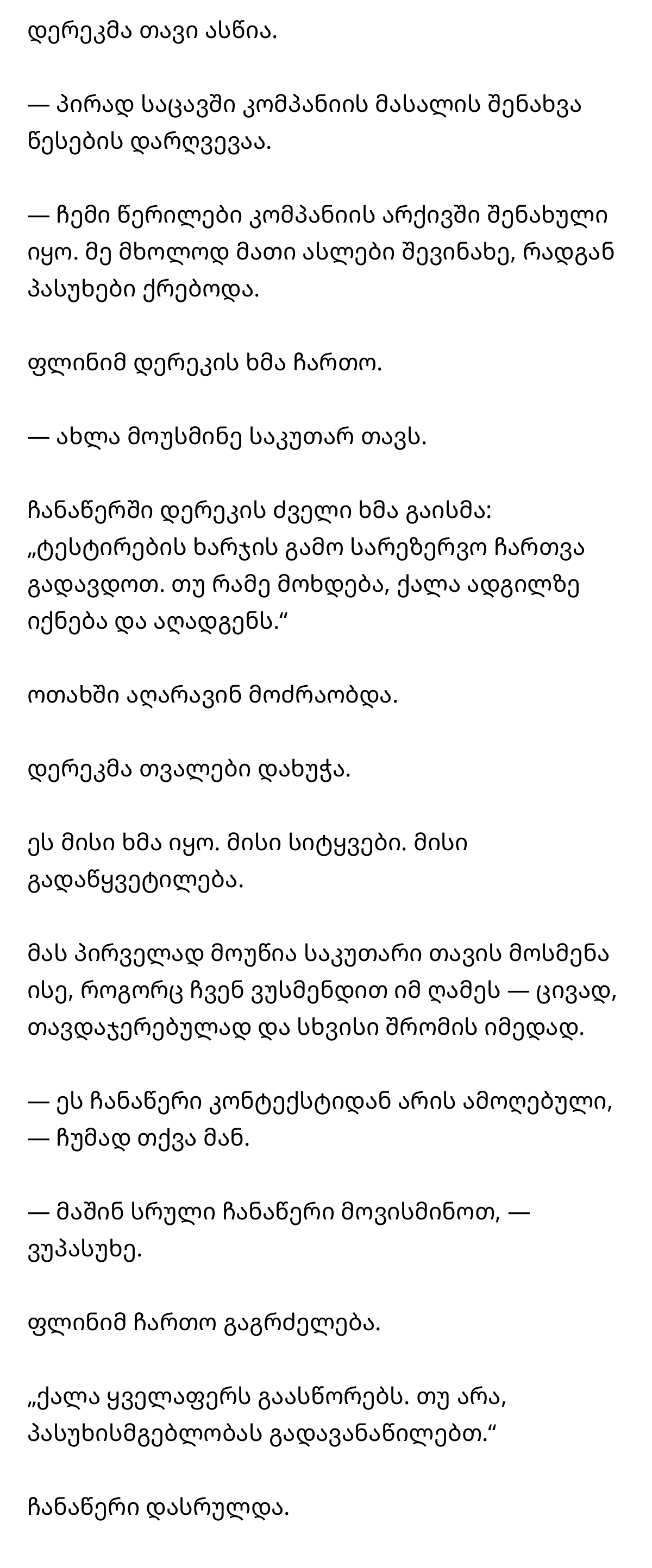
“Keeping company material in personal storage violates the rules.”
“My letters were stored in the company archive. I only kept copies of them because the replies were disappearing.”
Flynn turned on Derek’s voice.
“Now listen to yourself.”
Derek’s old voice sounded in the recording: “Let’s postpone backup activation because of testing costs. If something happens, Kala will be on site and restore it.”
No one moved in the room anymore.
Derek closed his eyes.
It was his voice. His words. His decision.
For the first time, he had to listen to himself the way we had listened to him that night — coldly, confidently, and relying on someone else’s work.
“This recording is taken out of context,” he said quietly.
“Then let us listen to the full recording,” I replied.
Flynn played the continuation.
“Kala will fix everything. If not, we will distribute the responsibility.”
The recording ended.
Derek sat down in the chair.
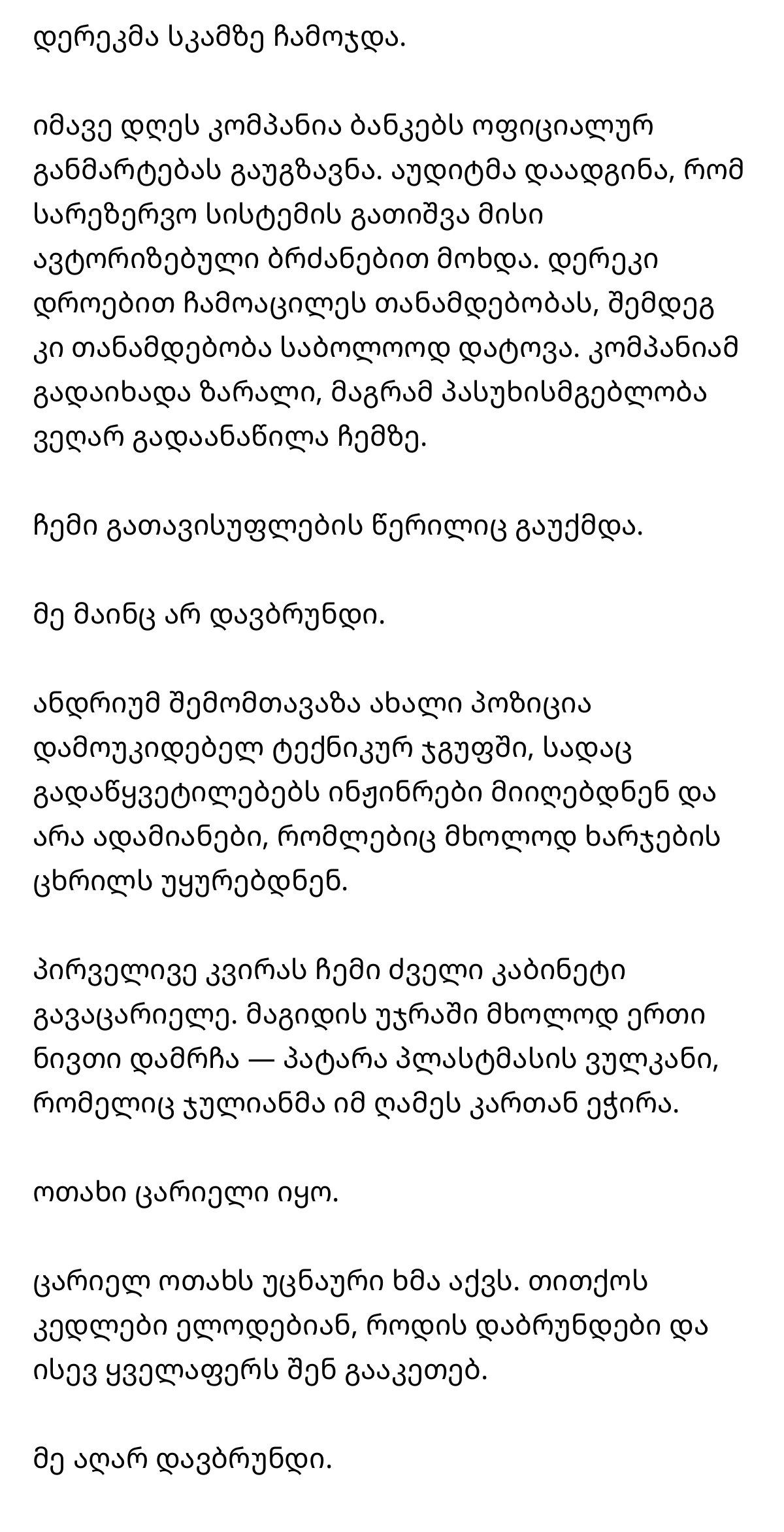
That same day the company sent an official explanation to the banks. The audit established that the backup system had been disabled by his authorized command. Derek was temporarily removed from his position, and then finally left the position. The company paid the losses, but could no longer shift the responsibility onto me.
My dismissal letter was also canceled.
I still did not return.
Andrew offered me a new position in an independent technical group, where decisions would be made by engineers and not by people who looked only at the expense table.
In the very first week, I emptied my old office. Only one thing remained in the desk drawer — the small plastic volcano that Julian had held at the door that night.
The room was empty.
An empty room has a strange sound. As if the walls are waiting for you to return and do everything again yourself.
I did not return.
Three weeks later I left the Chicago office. It was raining in the city. Lights spread through puddles on the sidewalk, and for the first time in years I put my phone on silent mode.
Julian asked me in the car:
“Are you afraid?”
“A little.”
“Is that good or bad?”
“Good. It means I am starting something new.”
Mia was sitting in the back seat and drawing her volcano. This time she painted the lava not red, but gold.
“Mom, is this your new job?” she asked.
“No. These are my new mornings.”
Two months later I started working in the new group. It was a small office, a river was visible from the window, and at nine in the morning no one demanded that I deal alone with a problem from three at night.
Every Monday the team checked the backup systems together. Every decision was recorded in writing. Every warning received a response.
On the very first day an employee asked me:
“Can you really say here that something is not working?”
“That is exactly why we are here,” I told him.
At home, a new habit remained with me. After six in the evening I no longer opened work messages. Mia asked me about her homework, Julian prepared dinner, and I sat at the table as if this were an ordinary life.
But for me it had never been ordinary.
One morning, four months later, I received an email from Derek.
“Can we meet? I want to explain everything. We were also considering your return.”
I looked at the email for a long time.
Then I wrote him one sentence:
“I no longer need to return to a place where they remembered my work only when everything was falling apart.”
I pressed the send button calmly.
I did not open Derek’s reply.
That evening Mia brought me my new drawing. The small plastic volcano stood by the window, and beside it we attached the new drawing. Four people were drawn on it: me, Julian, Mia, and a small house from whose roof no smoke was rising.
“Why doesn’t this house explode?” I asked.
Mia shrugged.
“Because everyone here listens to one another.”
Her words went deeper into me than any official decision.
That night I put the small volcano on the shelf. In the morning Mia went to school, Julian made coffee for me, and I opened the window.
The city was still noisy. Cars were going, elevators were rising, and somewhere someone was still in a hurry.
But my phone was silent.
And this time that silence was not a danger.
The small plastic volcano stood in the sunlight. Its surface had cracked slightly because Julian had squeezed it tightly in his hand that night.
I ran my finger over the crack and thought that sometimes destruction resembles not an ending, but an awakening.
Then I drank coffee.
It was warm.
Missed the beginning?