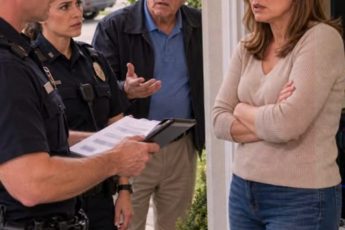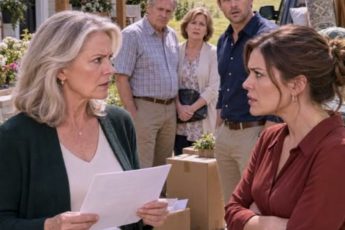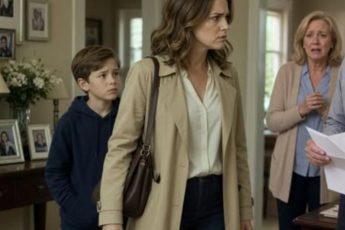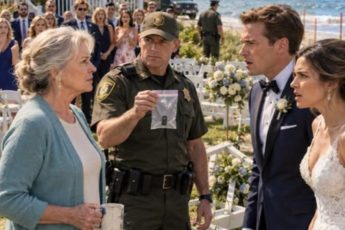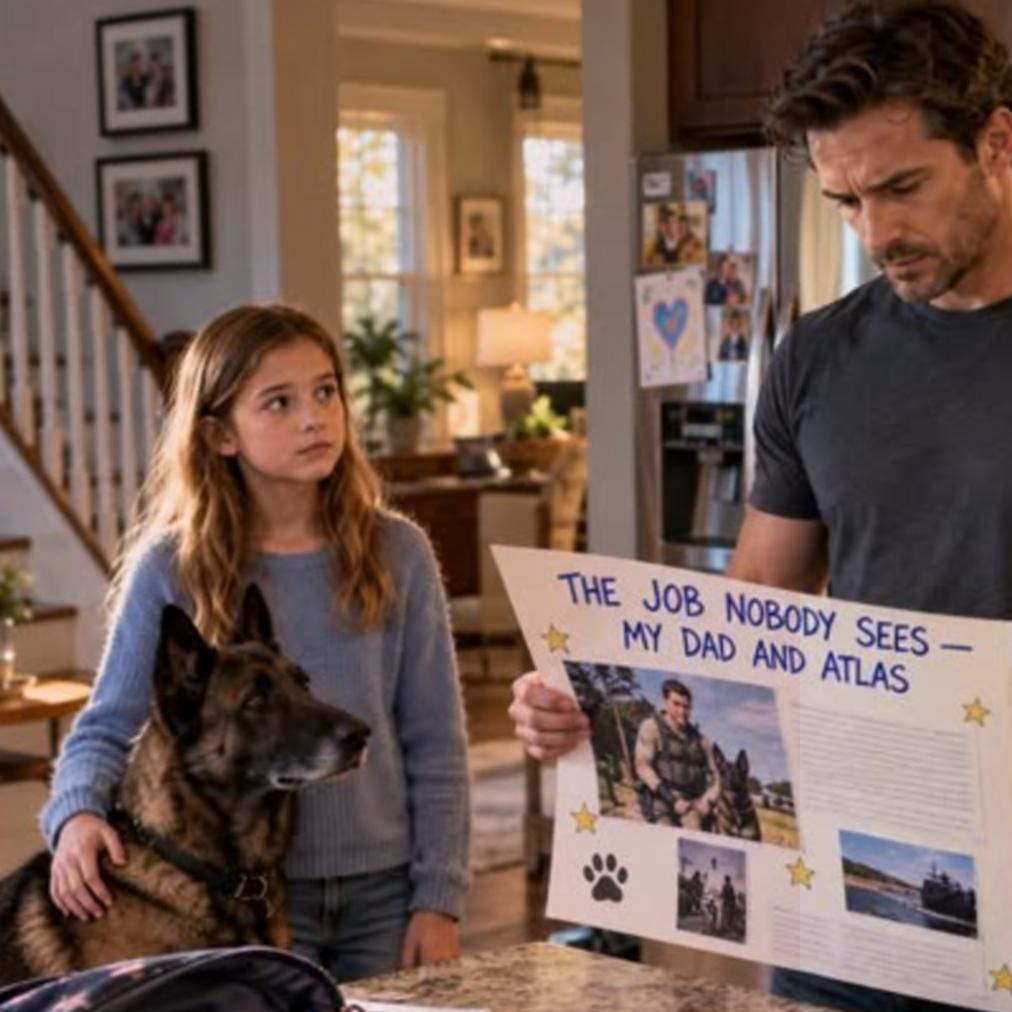

Beckett wrote down the number immediately. Heavy silence still stood in the room, but now fear had appeared in it.
“Who was it?” Wren asked me.
“I don’t know,” I answered. “But we’ll find out.”
Caldwell picked up his bag and headed for the door.
“This meeting is over,” his lawyer said.
The district lawyer blocked the way.
“No. The official investigation begins now.”
Caldwell stopped.
His face no longer resembled that of a teacher who merely regretted a bad decision. He looked like a man whose doors were closing from every side.
The phones rang simultaneously.
Keene called the district head. The lawyer notified child protective services. Beckett contacted Lucas’s family.
I was looking only at Wren.
“Shall we go home?” I asked.
“Not yet,” she told me. “I want them themselves to understand that I did not lie.”
Her voice did not tremble.

Caldwell’s lawyer said to him in a low voice:
“Marlow, say nothing more.”
“But they need to know that I didn’t want to…”
“Say nothing more.”
Caldwell looked at him.
“Are you leaving too?”
“If you say one more word, yes.”
That was the first open abandonment I saw that day.
That evening at home, at 19:20, Wren and I sat in the kitchen. The smell of cheese bread stood over the pan. Atlas lay under the table and moved his ears even in sleep.
Suddenly a message arrived on my phone.
Beckett had sent the full copy of the recording. Beneath it was one sentence: “Listen to the end.”
I understood why.
Caldwell was not alone in the recording. In the final minute another man’s voice entered the room.
“If you bring Lucas’s father’s documents, your career is over.”
Caldwell answered:

“You said the records were lost.”
“I said they should not appear.”
Wren raised her head.
“Who is that?”
I heard the voice for the second time. I knew it.
At school I had thought he was the district lawyer’s assistant, but he was Darren Holt, a former contractor who had worked on our service warehouses years ago.
Beckett called me.
“Holt processed documents back then. He should have nothing about your service.”
“But he does.”
“And something else. He sent the district a letter claiming that he had the right to access your records.”
“Did he?”
There was a long pause.
“No. That is exactly what I was checking.”


The next day, at 9:00, Holt appeared at the police station with a lawyer. He thought he could still control everything.
But Beckett sent me a document Holt had never seen: an old audit report. It showed that he had deliberately moved several case files into a private storage facility and then used them to blackmail military families.
Caldwell had worked with him not for money, but out of fear. Holt had promised to “settle” the old case if Caldwell confirmed that Lucas’s father was a liar. Then he tried the same method on me.
At the police station Holt smiled when he saw me.
“You were always too quiet, Mercer.”
“And you were always talking too much.”
He opened his bag.
“I’ll make one call and your family will learn things you never tell your daughter.”
“I will tell my daughter the truth in a way appropriate to her age. And you will listen to your own voice for the first time.”
Beckett turned on the recording.

Holt heard his own words: “They should not appear.”
His smile disappeared.
Caldwell was temporarily removed from his position that same week, and then officially fired. Holt was charged with stealing documents and attempted blackmail. Lucas’s family demanded a new investigation.
I went to court several times, but I did not feel victorious at any meeting. People humiliated in front of children can never become merely entries in a folder.
Caldwell later sent us a letter. He wrote that Holt had forced him, that he had been afraid, and that he had not wanted to hurt Wren.
I replied with only one sentence:
“Fear is an explanation, but not a justification.”
A week later I saw Wren’s cardboard again at school. The principal took it down from the office wall and brought it home to me. The red zero had been crossed out. A new grade stood beside it: ninety-nine out of one hundred.
They deducted one point because the list of sources was incomplete.
Wren considered that fair.

“You wanted it that way too, didn’t you?” she asked me.
“Yes.”
“Then why does it seem to you that you are sad?”
“Because justice sometimes still leaves scratches.”
That night her room was not empty, but one place remained on the wall where she had taken down Atlas’s old photograph. The nail was still visible. On the table lay my copper whistle, which Wren had quietly removed from my keys.
“You need this,” she told me.
“Why?”
“Because when you are afraid, you touch it.”
I did not know that she noticed.
Three months later the first snow came to the seaside city. The snow melted quickly, but in the morning Wren stood by the window and drew a dog on the glass with her finger.
I was still working as a dog trainer. My truck was still old. In the morning I bought coffee at the same little bakery. The only difference was that now, when my surname was mentioned at school, people fell silent not from suspicion, but from embarrassment.

Wren prepared a new project. This time she chose as her subject people who admit their mistakes.
“Will you write my story?” she asked me.
“Only what you give me permission to say.”
“Then write that Dad sometimes stays silent for too long.”
“That is already known to everyone.”
She laughed.
That evening I found an envelope at the door. There was no sender on it. Inside was a short letter from Caldwell.
“If you ever can, I want to explain why I did this. Maybe I could speak to Wren too.”
I looked at the sheet for a long time.
Then I folded it and put it in the folder where the other documents were kept.
I did not send an answer.

Sometimes refusal is not revenge. Sometimes it is simply locking a door that you were afraid to open for too long.
That night Wren left a drawing on the kitchen table. In it, she, Atlas, and I stood in a snowy yard. A small copper whistle was visible in my hand, and clearly written on it was “A-17.”
Below the drawing she had written one sentence:
“Now you do not have to prove your work to everyone.”
I took the whistle in my hand.
For the first time in many years, I did not touch it because of fear.
I simply saw how the morning light was reflected on it.
And I quietly closed the door.
Missed the beginning?