
At that very moment Dalton’s phone rang.
He looked at the screen and ended the call.
Then it rang again.
—Answer it,—I told him.
—This is none of your business.
—Today everything you did in my name is my business.
Dalton put the phone in his pocket, but Nicole held out her hand in front of him.
—Who is it?
—No one.
—Is it the company collecting your debts?—Nicole asked. —Or the man you were talking to about the night your mother was in the hospital?
Dalton fell silent.
For the first time, Father raised his head.
—What does this mean?
Nicole looked toward me.
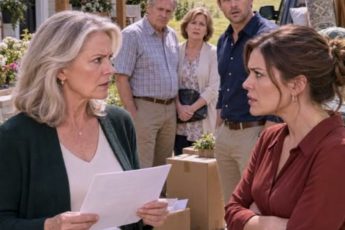
—He has not told you everything. Nor you.
An old pain opened in my heart. The night Mother ended up in the hospital had been twelve years ago. Then everyone thought that Dalton had called the ambulance after the accident. That was what the family repeated for years.
And Dalton always told me that remembering that night would be too painful for me.
—What happened?—I asked.
He stepped back.
—Siena, now is not the time for this.
—You yourself said that you were an only child. Now tell me what else you erased from my life.

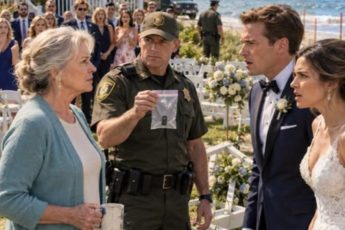
The lawyer closed the door. The guests were standing in the yard, but no one left. Everyone was listening.
Nicole took a small memory card out of her bag.
—This is a copy of the hotel’s surveillance camera. That night Dalton was not at home. He left with friends and left your mother alone. I called the ambulance because a neighbor called me. I did not know Dalton yet then.
Father’s face became gray.
—He told us that he was there.
—He said that he controlled everything,—Nicole continued. —But the truth is that Siena paid all the hospital bills. And Dalton convinced everyone that he was a hero.
I looked at the memory card.
For so many years I thought I was helping the family. In reality, with my silence I was covering a person who sold my kindness as his own story.
Dalton suddenly shouted:
—Enough!
—No,—Nicole said. —Now it begins.
She opened another recording on the phone. Dalton’s voice sounded, this time while speaking with Father.
“Do not tell Siena that she paid Mother’s bills. If she finds out how necessary we are to her, she will shut everything off for us.”
Father put a hand on the chair so that he would not fall.
And for the first time I saw the whole picture: they had turned my help not into love, but into an obligation.

Dalton walked toward me.
—I am your brother.
—You were.
—Without you I will perish.
—That is no longer my decision.
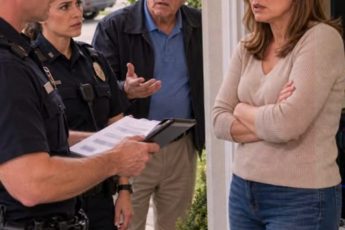
That day they did not call the police. There was no noisy arrest, nor a scene of victory in a courtroom. Nicole canceled the wedding, Father led the guests away, and the lawyer told Dalton that he no longer had the right to remain in the house.
At six in the evening he called me several times.
The first time he was angry.
—You destroyed our family!
The second time he was crying.
—Please, give me only one month.
The third time he stayed silent. He was probably waiting for me to say something in his place.
I did not.
The new owner, an elderly teacher named Elene, came the next morning. She held a small clay pot in her hand and told me that she would plant lavender in the front yard.
—There is a lot I need to change here,—she said.
—Change it,—I answered. —This house needs change.

I entered Dalton’s room to take his things. Our childhood photograph still hung on the wall, in which he stood in the center and I was half cut off. I took the photograph down and placed it on the dresser.
The room remained empty.
Only one old thing of mine remained in the closet—a red bookmark, in the shape of a small copper ship, which Father had given me in childhood. From that day I used it in every important document. It was with that bookmark that I had marked the house ownership papers.
I put it in my pocket.
A week later Dalton’s lawyer called me.
—Your brother is offering you a deal. If you demand that the sale be canceled, he will apologize publicly.
—No.
—He will return the money to you as well.
—No.
—Then what are you asking for?
I looked at the street through the window.
—Nothing. Just do not call me again.
Months passed.
I moved to another city and began working at a small architectural studio. In the morning I made coffee myself, and placed the red ship-shaped bookmark on my desk. It no longer marked the old documents. Now it held down my new plans so that I could build everything again, calmly.


Nicole wrote to me sometimes. She never held the wedding. She began working at a library and told me that for the first time in her life she had made a choice without someone else’s fear.
Father came to me later. He stood at the door for a long time.
—I do not know how to make this right for you,—he said.
—Maybe you cannot make it right.
—I still want to try.
I moved aside and let him into the house.
It was not forgiveness.
But I no longer had the door locked completely.
Dalton sent me his last message with the first snow of winter.
“Siena, now I understand everything. You really were the only person who stood beside me. Maybe someday we can start again?”
I looked at the screen for a long time.
Then I wrote: “Start again. Only without me.”
I put the phone down.
Outside the window, snow was falling quietly on the city. On the table lay the red copper ship, small but heavy. For years I thought that it stopped my past.
That evening I understood for the first time that the ship knew only one direction.
Forward.
Missed the beginning?