

The knocking on the door sounded again.
Thorne did not open the door. First he put the telephone on the table, then signaled to the nurse to step back.
“Who is it?” he asked.
“Police. Open the door.”
Mother immediately picked up her bag.
“This is all nonsense. Sarah, tell them that I did nothing here.”
“I am not going anywhere yet,” I said.
Her fingers trembled.
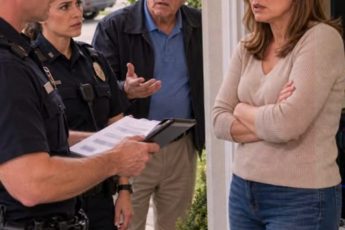
Two investigators and one uniformed officer stood in the doorway. They had a court warrant in their hands and handed it directly to Thorne.
“Last night, a camera recorded two people at number fourteen Legare Street,” the investigator said. “One is Mrs. Miller, and the other is Tom Hayes.”
Mother immediately shouted:
“He is my husband! He entered the house to take things because I asked him to!”
“That is exactly why we are here,” the investigator replied.
Tom was brought into the room several minutes later. His face was tired, and in his hand he held the old brass key to Grandmother’s house. When Mother saw him, she rushed at him.
“Tell them we were only looking for letters!”
Tom lowered his head.
“Diane, enough.”
“Be quiet!”

The investigator placed a small recorder on the table.
“Is this what you wanted to say?”
He pressed the button.
Mother’s own voice sounded in the room.
“If you find that red folder, take it. Before they hand the house over to Sarah, everything must disappear.”
Mother looked first at the recording, then at me.
“That is not my voice.”
Tom sighed quietly.
The recorder repeated the next phrase.
“Make Sarah believe that Grandmother was angry with her. If she asks anything, tell her that she herself did not come to the visits.”
My knees gave way. I knew Mother was lying to me, but hearing her own voice from her mouth was heavier than any confession.
Mother struck the chair.
“I just wanted something to remain for me too!”
“Something did remain,” I said. “Trust. A house. A mother. You destroyed everything yourself.”
The investigator put handcuffs on her. Mother no longer resisted.
“Sarah, you are my daughter,” she said.
“I know. That is why it hurts.”
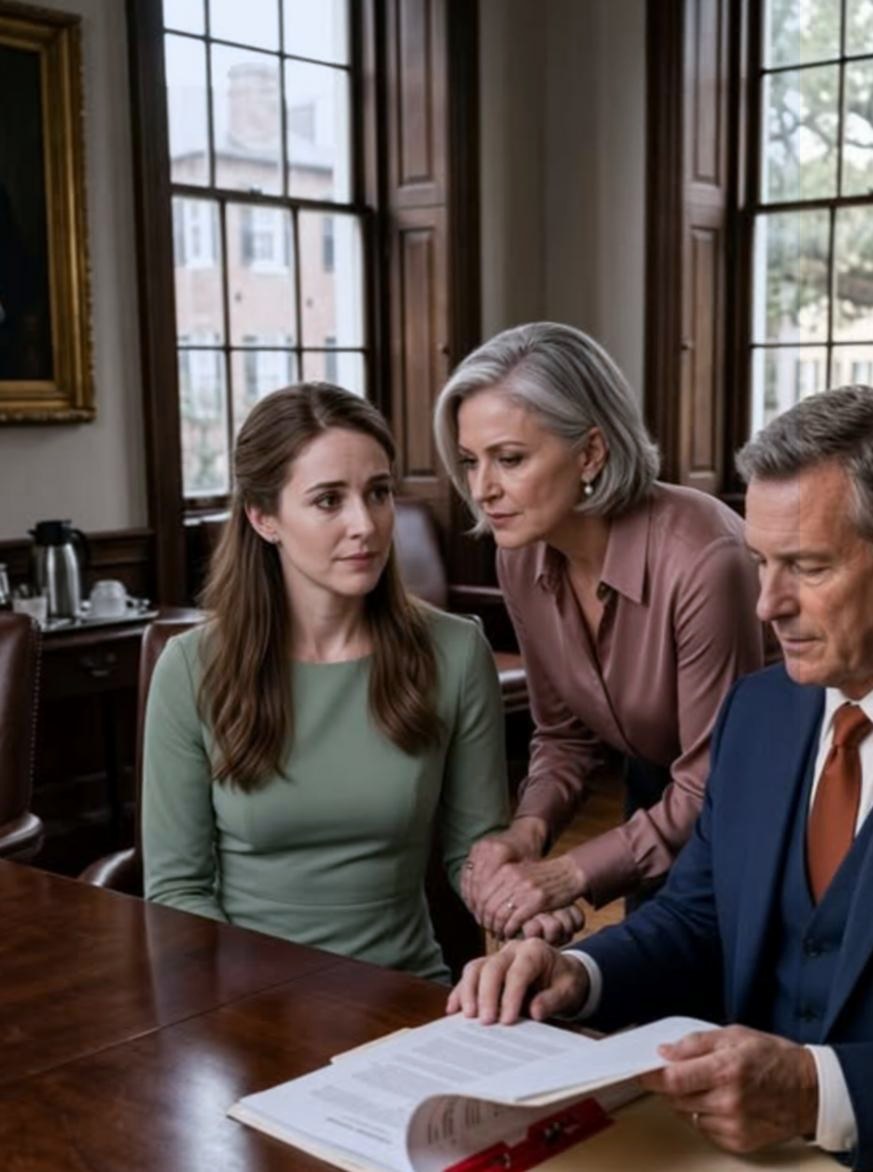
Tom was charged separately because he took documents from Grandmother’s room and hid one recording. The lawyer handed over all the materials to the court. I did not ask for revenge. I only wanted Mother to no longer consider my silence protection.

That evening I entered Grandmother’s house alone for the first time.
The rooms were empty. Rectangles of dust remained on the bookshelves. The bed had been stripped in the bedroom, but one object still lay on the windowsill—the small brass switch from the lamp that Grandmother had removed from the porch and given me in childhood.
I picked it up. The metal was warm, as if someone had just held it.
My old drawing hung on the kitchen door. I was six years old when I drew it: a yellow house, a black sky, and a small woman lighting a lamp by the door. Grandmother had never thrown the drawing away.
That night I turned on the porch light.
Not because I was expecting anyone.
Because at last I was home.
Three weeks later, the court took control of the property away from Mother. The lawyer explained to me that Grandmother’s agreement remained in force, while the case against Mother would continue for deliberate isolation, concealment of documents, and illegal removal of property.
I did not attend every court hearing.
Sometimes, to prove your own truth, you should not have to knock against every door.
The main thing had already been said.
Tom confessed his guilt. He said that he had helped Mother because he was afraid he would lose the house himself as well. Mother did not sign the agreement. At first she tried to convince the lawyer that I was emotional and unstable.
The lawyer refused to defend her.
“You used my office to deceive as well,” he told her. “From now on, find another representative.”
Only then did Mother understand what it meant to be left alone.

Two months later, a new workweek began at school. In the morning I hung the children’s drawings in the classroom. Luke, whom I had told about Grandmother, drew a yellow house and wrote underneath it: “Returning home.”
“This is for you,” he told me.
“It is very beautiful.”
“Is the light always on there?”
“Now it is always on.”
I slowly repaired the house in Charleston. I turned Grandmother’s library into a classroom. On Sundays the neighbor children came and read old books. The smell of cinnamon stood in the kitchen, and in the corridor Grandmother’s clock still rang every hour.
On the first snowy morning of winter, although the snow melted almost immediately, I received a message from Mother.
“I miss you. I know I behaved badly. Just meet me once. I do not want the house. I just want to see you.”
I looked at the screen for a long time.
Earlier, I would have abandoned everything at such a message. I would have gone. I would have listened. I would have calmed her. Again, I would have tried to carry her guilt.
But now I was a different person.
I wrote: “I will be able to see you when you take responsibility for your choice and respect my boundaries. Until then, no.”
Mother called me immediately.
I did not answer the telephone.
The next day another letter arrived, this time through a lawyer. Mother was asking to have permission to enter the house because her childhood belongings were also stored there. I told Thorne that I would pack the belongings and hand them over in a neutral place.

After returning home, I put Grandmother’s room completely in order. Under the bed I found a small card written in her hand. Only one sentence was written:
“Sarah, if you ever think that you are alone, look at the porch.”
I put the card inside a book.
Then I went outside.
The evening sky was violet. The trees rustled in the wind. In my hand I held the old brass switch—the one Grandmother had given me in childhood and which I now attached again beside the door.
I pressed my finger on it.
A yellowish light came on on the porch.
This time that light was burning for me.
And for the first time I was waiting for no one.
The house was no longer waiting.
The house was me.
Missed the beginning?