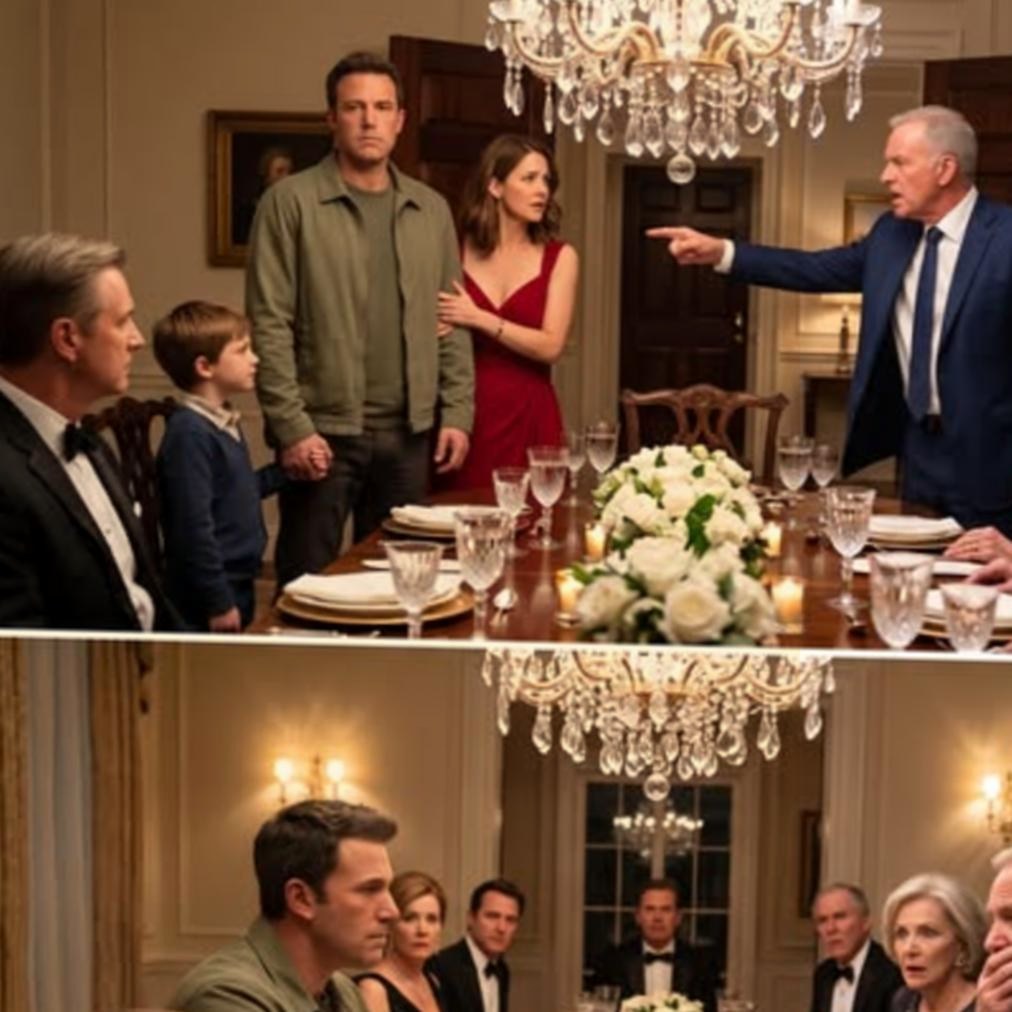

Elena’s voice was still hanging in the air when Nora snatched the phone from her hand.
“In my name?”
“No,” Elena said. “In Miles’s name.”
I looked at the screen. The message said that at two o’clock at night an entry into Aldenbridge’s central server had been recorded. To enter the system, a temporary code had been used that only Nora, Whit, and Graham had.
Graham immediately stood up.
“This is absurd. Someone wants to discredit me.”
“Sit down,” Nora told him.
“Nora, you do not understand what is happening.”
“For the first time I understand very well.”
Whit took out his phone and dialed a number.
“I am calling the chairman of the board of directors.”
Elena raised her hand.
“I have already called.”
“Who gave you the right?”
“The company was protected by an agreement that you violated.”
Whit dialed a second number. This time his lawyer answered. He listened for several seconds, then went to the window.
“This is impossible,” he said.
“What is impossible?” Celia asked.
Whit lowered his voice, but we all heard.
“The lawyer says he is withdrawing from the case.”
Graham took the phone away from him.
“You cannot leave now! We had an agreement!”
“I did not have an agreement,” Whit replied.
“You told me everything was under control!”
At these words I suddenly stopped. This was exactly what I wanted to hear from them: their own voices, before each other, without their protective masks.


Elena turned on the laptop and brought the recording onto the large screen. Whit’s office could be seen on the camera. The time was eleven forty-nine at night.
Graham was sitting at the desk.
“We must remove Nora at tomorrow’s board meeting,” he was saying.
Whit answered:
“If she refuses, we will tell them that her decisions are dangerous for the company. Then we will accuse Miles of stealing data.”
“And if he owns the debt?”
Whit laughed.
“No one will believe him. A man who comes in clothes like that has no power to run our company.”
The recording ended.
Graham looked at the screen as though he were seeing strangers there.
“That is not my voice.”
“It is your face,” Nora said.
“It may have been edited.”
“You can request an examination,” Elena replied. “But before you do that, remember that the cameras at the system entrance are also preserved.”
Graham suddenly looked toward me.
“You arranged everything in advance.”
“No,” I said. “You said everything yourselves. I only listened.”

That night the police did not enter the dining room. Not yet. Elena transferred all the documents to a secure server, while Nora scheduled an emergency meeting of the board of directors.
But Graham tried to escape.
The door slammed and the sound of his steps disappeared in the corridor. Two minutes later a message came from the house cameras: he had taken a small black bag from the garage.
“What does he have in there?” Celia asked.
Whit lowered his eyes.
I already knew the answer.
“The company’s backup disks.”
Nora turned toward me.
“If they disappear, we will not be able to protect the patients’ data.”
“They will not disappear,” I said.
I picked up my phone and called the head of security. He said nothing for a long time. Finally he uttered only one sentence:
“Mr. Hart, Graham did not leave alone.”
“Who is he with?”
The head of security sent me a photograph.
In the picture, Whit’s old driver was standing at the rear exit of the garage. In his hand he held not a bag, but Nora’s daughter Emma’s school backpack.

At that moment my body froze.
Emma was not at home. She was supposed to be at the neighbor’s, but the nanny did not answer.
I looked at Nora.
“Where did they take my child?”
Whit let go of the chair.
“I have nothing to do with it.”
“Then call your driver,” I told him.
He dialed the number. The call rang for a long time. Finally they answered.
“Mr. Alderman,” came a breathless man’s voice. “The girl is not with us.”
Nora covered her face with her hand.
And at that moment I remembered Emma, who in the morning had been fixing the hot-chocolate stain on my coat and laughing.
“If anything happens to my child…”
Whit raised his head.
“Miles, I swear, this was not my order.”
“For the first time I believe you,” I said. “But this will not save you.”
The police came in fifteen minutes. The city cameras recorded the driver’s car on the road leading toward the river. Nora got into the car, and I went with her.
We found Emma at the old ferry station. She was sitting in an empty warehouse, holding her yellow pencil and having drawn a small house on the floor.
“Father, I knew you would come for me,” she told me.
I knelt down and hugged her.
My whole body trembled in that embrace. Only then did I realize how close I had come to losing everything.

The driver was arrested. Several hours later Graham was also found in a hotel, where he was trying to erase the backup disks. Whit, meanwhile, was left alone for the first time, without a lawyer, money, or influence.
In the following weeks everything happened quickly.
The board removed Whit from the position of director.
Graham was charged with illegal access to data, financial fraud, and attempted child abduction.
The accounts of Whit’s fund were frozen.
I went to court several times, but being there did not feel like victory. Nora sat beside me and only took my hand when cameras in the courtroom were watching us.
One day the prosecutor played a recording for me.
Whit’s voice sounded in the room again:
“A man who comes in clothes like that has no power to run our company.”
I listened to myself from the outside. It was a strange feeling. Several months earlier these words probably would have destroyed me. Now they were simply evidence that their idea of power had been wrong from the beginning.
Whit lowered his head.
“I did not mean it that way,” he whispered.
Nora looked at him.
“But you said it.”
After the trial no one returned to the dining room of Whit’s house. In a few weeks the furniture was taken away. Only a small spot of candle wax remained on the marble floor.

Nora put rings and old photographs into a box. Among them was a picture in which, as a child, she was sitting on her father’s shoulder and laughing.
“Should I take this?” she asked.
“If you want.”
“I no longer know whether I want to.”
“Then do not decide today.”
She left the photograph on the table.
It was the first thing that no longer connected her with her father.
Two months passed.
Nora refinanced Aldenbridge’s debt under transparent conditions. My firm remained only a creditor and did not interfere in management. She saved the company herself, this time without her father’s shadow.
Emma and I moved to a small coastal town. In the mornings I walked her to school, then went to an office arranged in an old brick building. The harbor could be seen from the window, and at midday the smell of salt entered the room.
Emma drew every evening.
One day she drew three people on a sheet of paper: me, herself, and Nora. Above us was a large roof, with a yellow sun visible in its corner.
“Is this our house?” I asked.
“No,” she answered. “This is the place where no one is afraid anymore.”
Nora visited us twice a week. She brought bread, apples, and news about the company with her. We no longer talked about debts, the board, or Whit.

One evening, during the first snow, a message came to my phone.
From Whit.
“Miles, I know that I did many things wrong. For Nora, for Emma, and for you. If you can ever, meet me for only ten minutes. I want to explain why I acted this way.”
I looked at the screen for a long time.
Then I showed it to Nora.
“What will you answer?” she asked.
“What is true.”
“And what is true?”
I deleted the message.
“An explanation is needed when restoring trust is still possible. But we are building peace now.”
Nora nodded. The old fear was no longer in her eyes.
That night Emma sat on the floor and searched for her yellow pencil. At last she found it in the pocket of my old brown coat. The same coat on which the hot-chocolate stain had remained years earlier.
“Father, this stain is still here,” she laughed.
“I know.”
“Won’t you wash it?”
I picked up the coat, went to the window, and looked out at the snow.
“No,” I told her. “Some stains remind us how far we have come.”
Emma stood beside me and took my hand.
Outside, the snow was silently covering the old roads.
For the first time I no longer wanted to go back.
The old coat hung on the chair, and the stain looked like a small, warm star in the candlelight.
This time I chose my home myself.