

My mother gave them the other address.
She said it so quickly, as if she had been waiting all night for this sentence.
“It is an old warehouse by the river,” Elene explained. “He took the girls there when the garage was no longer enough for him.”
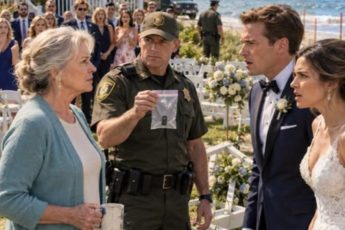
Detective Reed brought the phone to his ear.
“The team is already going.”
For the first time, Frank lost control.
“Elene, you have no idea what you are doing!”
“I know exactly,” she replied.
Her voice was trembling, but she was no longer backing down.
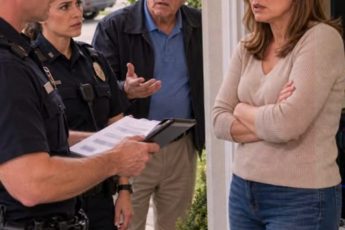
Frank looked toward the door. Two police officers were standing there.
“Maya, tell them that this is a family conflict.”
“Seven years of violence is not a family conflict.”
“You can’t prove anything.”
Reed laid the memory cards out on the table.
“She already proved it.”
Frank looked toward me as if he were searching for the old Maya. The girl whom he had put against the wall at seventeen and told that she had no right to speak loudly.
But that girl was no longer standing here.
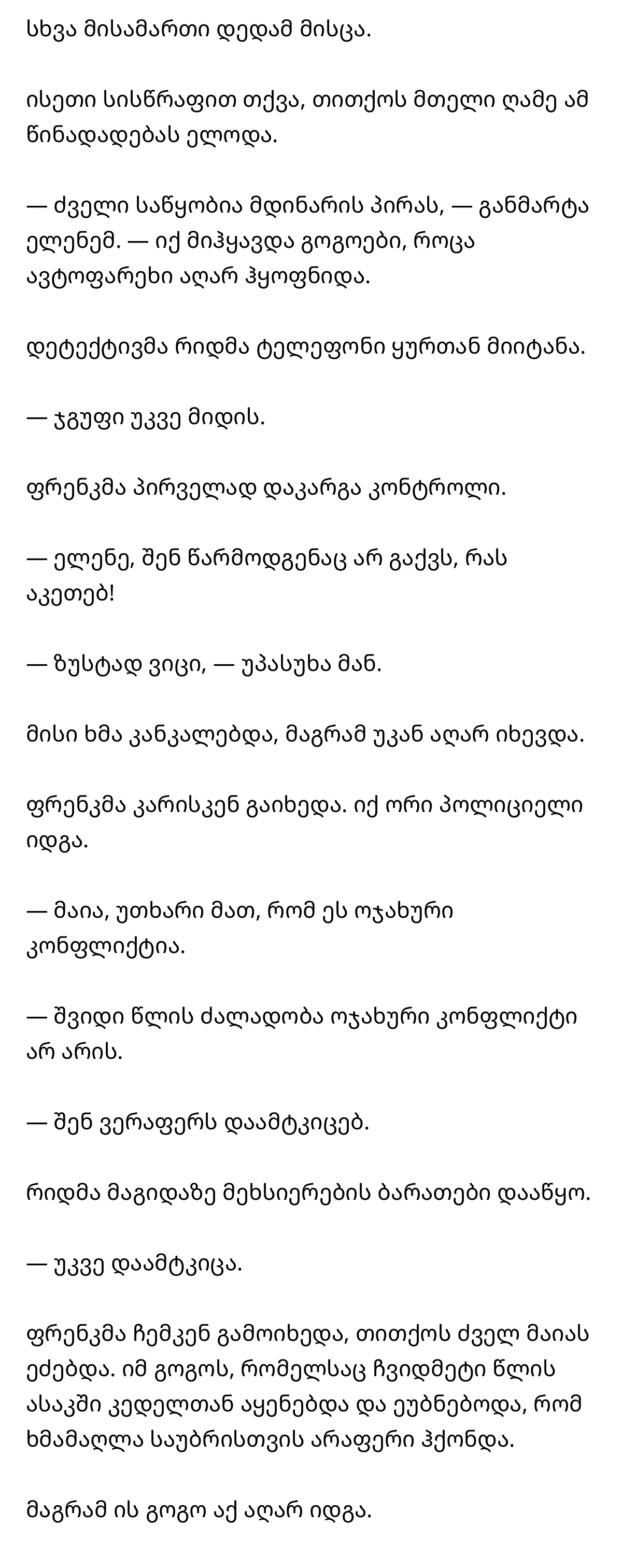
I was wearing my uniform, my back was straight, and my hands were held calmly.

Frank suddenly snorted.
“All of this is only your words.”
Reed picked up the recording device.
“No. They are your words.”
He turned on the recording.
The garage appeared again. In the video, Frank was standing in front of Chloe. His voice could be heard clearly.
“I’ll tell your mother that you asked me for money yourself. And I’ll tell Maya that military service ruined you.”
Chloe said quietly:
“Please don’t hit me.”
“Then sign.”
The recording continued. Frank placed a loan document on the table and forced Chloe to take responsibility for a debt taken out in someone else’s name. Then he spoke about girls whom he sent to work from the “care home” and kept part of their income.
A heavy silence fell over the room.
Frank shook his head.
“This is cut out of context.”
“It is a full three-hour recording,” Reed said.
My mother closed her eyes.
“I knew he was beating Chloe. But I didn’t know how many children he was destroying.”
I looked toward her.
“Why didn’t you tell me?”
Tears rolled from Elene’s eyes.
“Because every time I resisted, he told me he would destroy your military career. He would call your commander. He would say that you were mentally unstable. I was a coward, Maya.”
“Yes, you were,” I told her.
Those were the hardest words I had said to my mother.
But for the first time I no longer felt that I had to carry her fear.
That same morning Frank was arrested. The police brought three girls out of the warehouse. Two of them knew Chloe. Their statements matched the documents found in the safe.

And Chloe was still lying in the hospital.
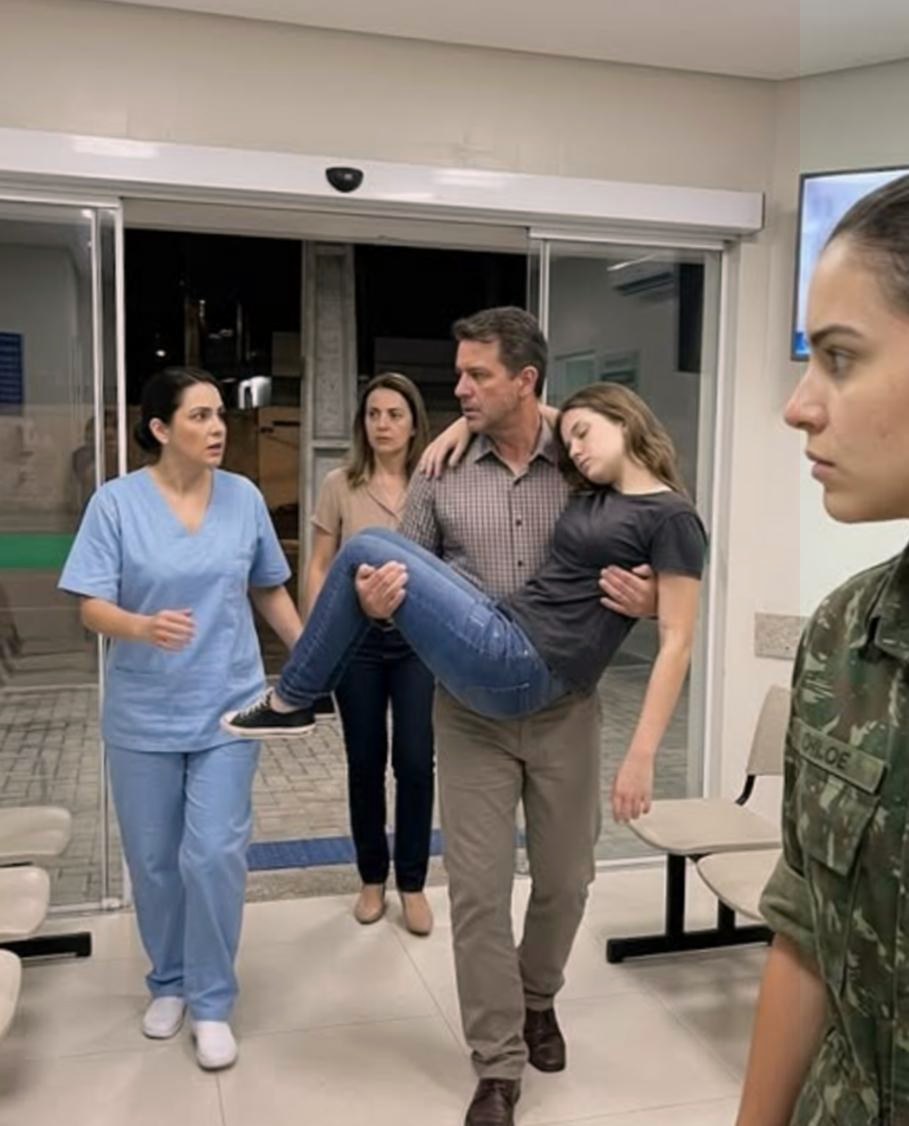
Her wrist was in a cast, she had a cracked rib, but the doctor told me that she would survive.
When I entered the room, her eyes were open.
“Did you find the safe?” she asked.
“I found it.”
“Did Mom help you?”
“In the end.”
Chloe smiled weakly.
“I thought she would never dare.”
I took her hand, carefully so I would not touch the cast.
“You dared for her too.”
Several days later Frank changed lawyers. The first refused to defend him when he learned the scale of the case. The second tried to speak to the media, but the court prohibited the publication of the witnesses’ names.
Frank still tried to contact me.
He called me from his cell for the first time.
“Maya, I only wanted to save the family.”
“You weren’t protecting the family. You were protecting your own power.”
“Your mother ruined everything.”
“No. You ruined it when you thought no one could stop you.”
He raised his voice.
“You were always ungrateful!”
Reed told me that the call had been recorded. That same evening Frank heard his own voice for the first time. The recording was being kept for the court, but the lawyer played a short excerpt for him in his cell.

“I wanted to save the family.”
His own voice.
Frank took off the headphones.
“I didn’t say it like that.”
The lawyer answered calmly:
“You said it yourself.”
Frank leaned his head against the wall. At that moment he realized for the first time that he could no longer change a single word.
The trial took place several months later.
Chloe gave testimony by video call from the doctor’s room. My mother spoke too. And I stood before the witness only when the judge asked me about the materials found in the safe.
Frank was given a severe sentence. He was forbidden any contact with minors, and the illegally taken loans were canceled. The injured girls were given assistance and housing.
Elene confessed to the crime, although the court took her cooperation into account. My mother still had responsibility, but for the first time in her life she did not run away from responsibility.
We did not reconcile immediately.
Some doors do not open with an apology.
A week later I went to Frank’s house to collect my things. Chloe’s room was almost empty. Only one small drawing hung on the wall: four birds under an open sky.
Under the bed I found the thing I remembered most from that night—Chloe’s old yellow bracelet, with a small metal airplane.
The bracelet had remained in the garage on the day Frank locked her in for the first time.
I picked it up.
The metal airplane was warm, as if it had just been taken off.
Three months later Chloe moved in with me in a new city. I rented a small apartment above the river, where the sound of trams could be heard in the morning and mountains could be seen from the kitchen window.
I began volunteering at a center that helped teenagers escaping violence. Chloe began drawing. Every Saturday we sat in the same café; she drew by the window while I stirred my coffee.

One evening she asked me:
“Are you still afraid now?”
“Sometimes.”
“Then how do you live?”
The first snow began to fall outside the window.
“Together with the fear,” I told her. “But no longer in obedience to it.”
Chloe showed me a new drawing. This time there were no longer four birds. There were only two, flying in the same direction.
“Where are the others?” I asked.
“Some found their way,” she replied.
Several weeks later I received a letter from Frank. It was short. He wrote that he had become a changed person and wanted me to hear his apology someday.
I did not open the letter all the way.
I sent only one reply to his lawyer:
“I am not going back. Neither into his life nor into that house where fear had become a rule.”
Then I tore up the letter and put it in the trash bin.
Chloe saw it.
“Don’t you feel bad?”
“No.”
“Why?”
I fastened the yellow bracelet around my wrist. The small metal airplane pressed coldly against my skin.
“Because now we choose for ourselves where we fly.”
That night the snow came down completely. The street lamps sank into the white flakes, while Chloe made tea in the kitchen.
The small airplane attached to the bracelet shone in the light.
For the first time I remembered this sound not as a sign of a locked house, but as an exit.
And I left the door open.
Missed the beginning?