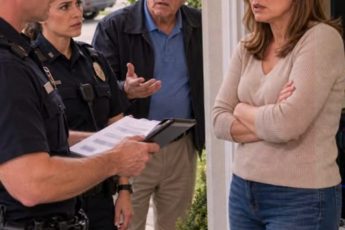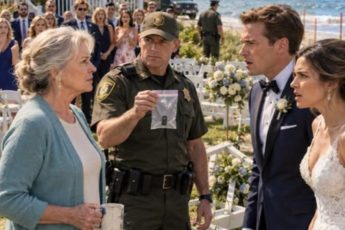

The security guards quickly approached and blocked Alistair’s way.
“Don’t touch it,” Evelyn told him.
“This is my private matter!”
“It is not anymore. You used foundation money, appropriated someone else’s insurance, and entered false information in official documents.”
Alistair looked around the hall. A few minutes earlier everyone here had been smiling at him. Now the guests had risen from their chairs and were watching from a distance, as if he had become a stranger.
His father took out his phone.
“I’m calling a lawyer,” Alistair said.
“I already called one,” his father replied. “And he told me he cannot take your defense in this case.”
“Father…”
“We are starting the return of the money taken from the foundation today. You are no longer the foundation’s deputy chairman.”
Alistair’s face emptied.
Chloe stood by the wall. With one hand she held her stomach, and with the other she gripped my house keys so tightly that her fingers had turned white.
“You told me everything belonged to you,” she said to Alistair.
“Now is not the time for this.”
“You never had time for the truth!”
Evelyn called the police. I was not happy about the call. It did not feel like a victory. It was only turning long-accumulated chaos into an official form.
Alistair came over to me.
“Vivian, please. We can still settle this quietly.”
“You were settling it quietly for eight months.”
“I protected the family.”
“No. You protected your own image.”
He lowered his head.
“I didn’t know everything would go this way.”
“That is the problem. You never thought about where it would go.”

The police officers entered the hall. Alistair instinctively straightened the gold bracelet on his sleeve again, as if the cameras were still filming and one correct movement could bring his old life back.
But the cameras were already recording his voice.
Evelyn played the recording again. Alistair’s voice sounded through the hall:
“Vivian will have to leave the house. The foundation will remain with me. Chloe, after the child is born, we will tell everyone that a new family is beginning.”
Alistair froze.
For the first time he heard his own words as we had heard them. Not as a promise, not as a whisper, but as a cold plan in which I was not a person, but an object to be moved.
“Turn it off,” he said.
“You said it yourself,” I answered.
“I thought differently then.”
“That is exactly why you needed to hear yourself.”
That same night I went to the hospital. Not with Alistair. Evelyn came with me too.
Chloe’s delivery ended without complications. The baby was born healthy. Alistair could not be entered as the father on the birth certificate because he himself had demanded confirmation only when it would be useful to him.
The DNA test was carried out several weeks later and confirmed that he was the child’s father. The child was innocent. Its existence should not have become either a weapon against me or a key to someone else’s property.
Fatherhood gave Alistair responsibility, not my house.
The next day his lawyer came to me.
“Mr. Stanford is offering you a divorce agreement,” he said.
“What does he want?”
“A share from the sale of the penthouse, influence over the foundation’s management, and access to personal accounts.”
“Tell him no.”
“He knows this will be difficult.”
“He did not know many things.”

Before the marriage, I had bought the penthouse with an inheritance received from my mother. The ownership documents were kept in a trust because at the time I thought my safety might be needed in the future. When I made that decision, Alistair laughed.
“You turn our love into contracts,” he told me then.
I answered:
“Love is not afraid of a contract. It is only afraid of lies.”
In those days I often heard his voice again.
He called me in the morning.
“Give me only five minutes.”
“No.”
He called in the evening.
“Our marriage should not collapse because of Chloe.”
“Chloe did not destroy our marriage.”
“Then who did?”
“Your choice.”
The foundation board conducted an independent audit. It turned out that Alistair was not only covering Chloe’s expenses. He had also paid for his personal trips, expensive gifts, and hotel advertising expenses from foundation money.
I temporarily stepped away from the foundation’s leadership so that I would not interfere with the investigation. However, I told all the employees that the children’s programs must not stop.
“We did not work because of your name,” the financial director who had stood behind Chloe that evening told me. “We worked with you because you trusted people.”
“Now rules will protect trust,” I told him.

Several days later, Alistair finally admitted that he had planned to take money and the house from me. He had calculated everything legally, except one thing: I also had the right to calculate what I was losing by remaining beside him.
The police investigation began. The court ordered him to return the foundation’s money and compensate the property damage. I did not demand imprisonment. I wanted the consequences to become his everyday life, not a one-time spectacle.
I spoke with Chloe as well.
This conversation took place in a small city café, where raindrops ran down the window. The baby was covered with a white blanket.
“Do you hate me?” she asked.
“No.”
“I destroyed your life.”
“You opened the door. Alistair decided to enter.”
Chloe lowered her eyes.
“I thought pregnancy would give me everything.”
“A child can create a family. But it does not give a person the right to take possession of someone else’s life.”
She was silent for a long time.
“I need help for the child.”
“The child deserves help. But you will need to learn responsibility.”

Months passed.
I cleared one room in the penthouse and arranged a new workspace for the foundation there. In the mornings I sat by the window, listened to the bells of San Francisco’s trams, and wrote plans for new educational programs for children.
In the kitchen I still had that white cup with a small golden swallow drawn on it. That morning, when the hospital called me, coffee had spilled over it. The crack near the handle was still visible.
Then I thought that this crack was a sign of defeat.
Now it reminded me that a broken thing is not always meant to be thrown away. Sometimes it simply no longer deceives you with its own perfection.
Three months later, my niece Lea stayed with me. She sat on the living-room carpet and was drawing a house with colored pencils.
“Who is this?” I asked when she showed me a little figure.
“You.”
“Why do I have such big windows?”
“Because now you decide who comes in.”
Her words struck me more strongly than any statement from the court.
The first snow came in December. The roofs of the city were covered in white. I opened the window and cold air came in.
Alistair’s last message appeared on the phone:
“My lawyer says an agreement is still possible. Talk to me at least once as a wife.”
I looked at the screen for a long time.
Then I wrote:
“I have already spoken to you as a person who wanted to get herself back. Now my answer is no.”
I sent the message and turned off the phone.
I did not want his defeat. I wanted not to need to change him anymore.
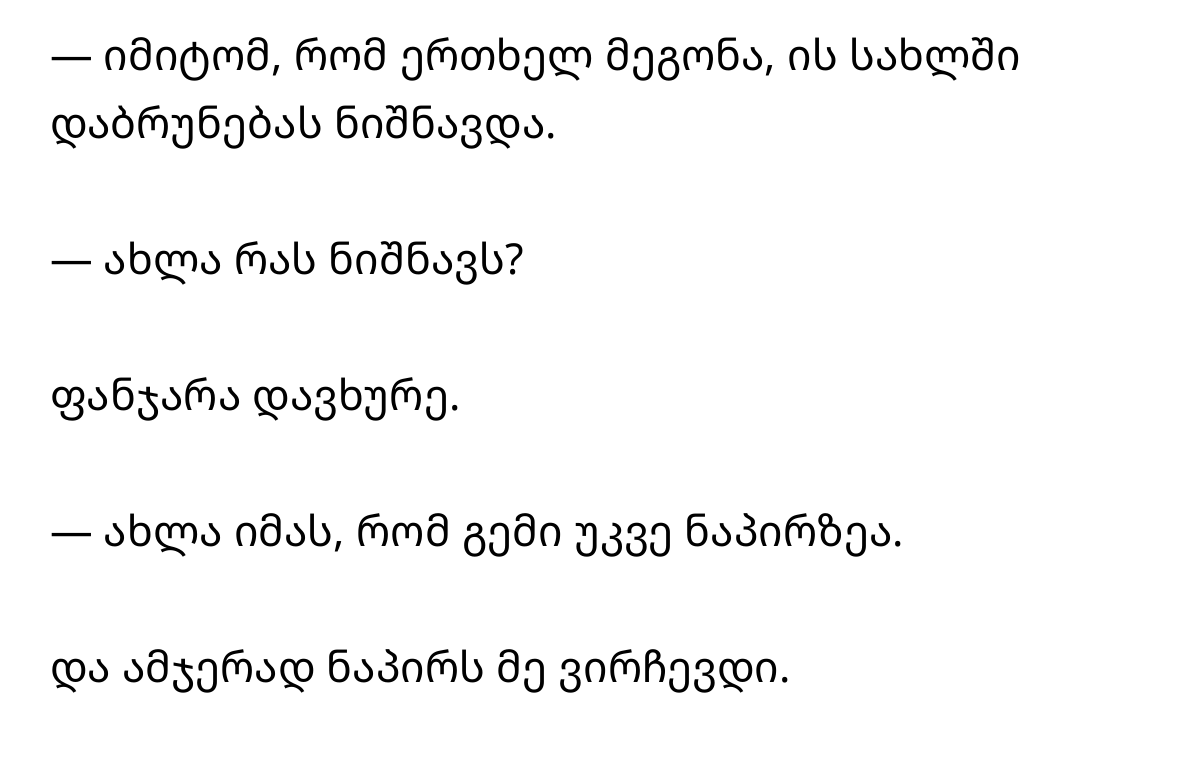
In the evening Lea found my old gift in the wardrobe—the black tie of Alistair’s, with a small silver ship embroidered on it. She picked it up and asked me:
“Why did you keep this?”
I hung the tie on the window handle. Outside, snow was quietly falling on the city.
“Because once I thought it meant that he was coming home.”
“What does it mean now?”
I closed the window.
“Now it means that the ship is already on shore.”
And this time I was choosing the shore.
Missed the beginning?