
At the unknown woman’s final words, every sound in the room disappeared.
“What document is it?” I asked.
“A certificate concerning your mother’s mental state. The date and the doctor’s signature do not match our records.”
Ines immediately picked up a pen.
“Send us a copy. Through official channels.”
“We are already sending it. But please inform the police as well.”
The call ended.
My mother sat by the window and watched the rain outside. Drops of water collided with one another on the glass.
“I told you that she was forcing me to do something,” she said. “I simply thought you would not believe me.”
“Now I believe you.”
Sonia returned home that same night. Ten minutes later my telephone rang. Then once more. Then messages began to arrive.
“Come, let’s talk calmly.”
“For the children’s sake, you must at least answer me.”
“You are destroying everything.”
Ines advised me not to meet her directly.
“She wants to regain control now,” she told me. “The more emotionally you answer her, the more difficult you will make the case for yourselves.”

Sonia went to a lawyer, but her first defender left the room after only a few minutes.
“I cannot sign these documents,” he told her. “If the recording is genuine, you are asking me not for help, but for a miracle.”
“Are you against me too?” Sonia shouted.
“I am not against the facts.”
The next day the police searched her house. I was not there. Ines told me that the investigation itself had to see what was happening.
But Sonia still managed to come to me.
She was standing at the yard gate when I was returning from the doctor with my mother. The wind was throwing her hair across her face, and she was holding a small bag in her hand.
“Only five minutes, Miguel.”
My mother stopped behind me.
“You should not have come here.”
“Mother, you do not understand what you are doing. He is deceiving you.”
“Who? My son, who transferred money to me every month, or my daughter, who left me without bread?”
Sonia fell silent.
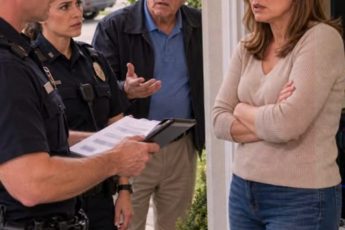
At that very moment a police officer asked for her telephone.
“We need your device for examination.”
“This is illegal!”
“We have a court order.”
Sonia looked toward me. For the first time she no longer looked angry. She was only frightened.
“You really went this far?”
“I am only returning to Mother what was hers.”

The examined telephone contained messages in which Sonia changed accounts, asked stores for credit in my mother’s name, and sent the medical certificate to various institutions. One of the messages said: “If Miguel has returned, we must manage the signature this week.”
Those were her words.
Her own words.
When the court hearing began, Sonia listened to the recording in full for the first time. Wooden chairs creaked in the courtroom. Her name and the dates were visible on the screen.
“If you hide the money, I will throw you out of the annex too.”
Her own voice.
Sonia froze in her chair.
“I did not say that,” she whispered.
Ines answered calmly:
“That is your voice in the recording. The examination confirmed it.”
My mother gave testimony. Her voice trembled, but she did not lower her head even once.
“I do not want my daughter punished. I want to stop being afraid.”
The court prohibited Sonia from approaching my mother and her finances. The house remained in my mother’s name. Part of the lost money was returned from her account, and the rest was to be reimbursed after the sale of Sonia’s property. The case concerning the falsified certificate and financial abuse continued separately.
Sonia did not go to prison immediately, but a suspended sentence, strict restrictions, and debts would completely change her life. I was not happy. I would not find victory in her pain.

In the following weeks we redid my mother’s room in the house. We painted the walls a light color, placed a small armchair by the window, and threw away the heater’s old cable.
The annex remained empty.
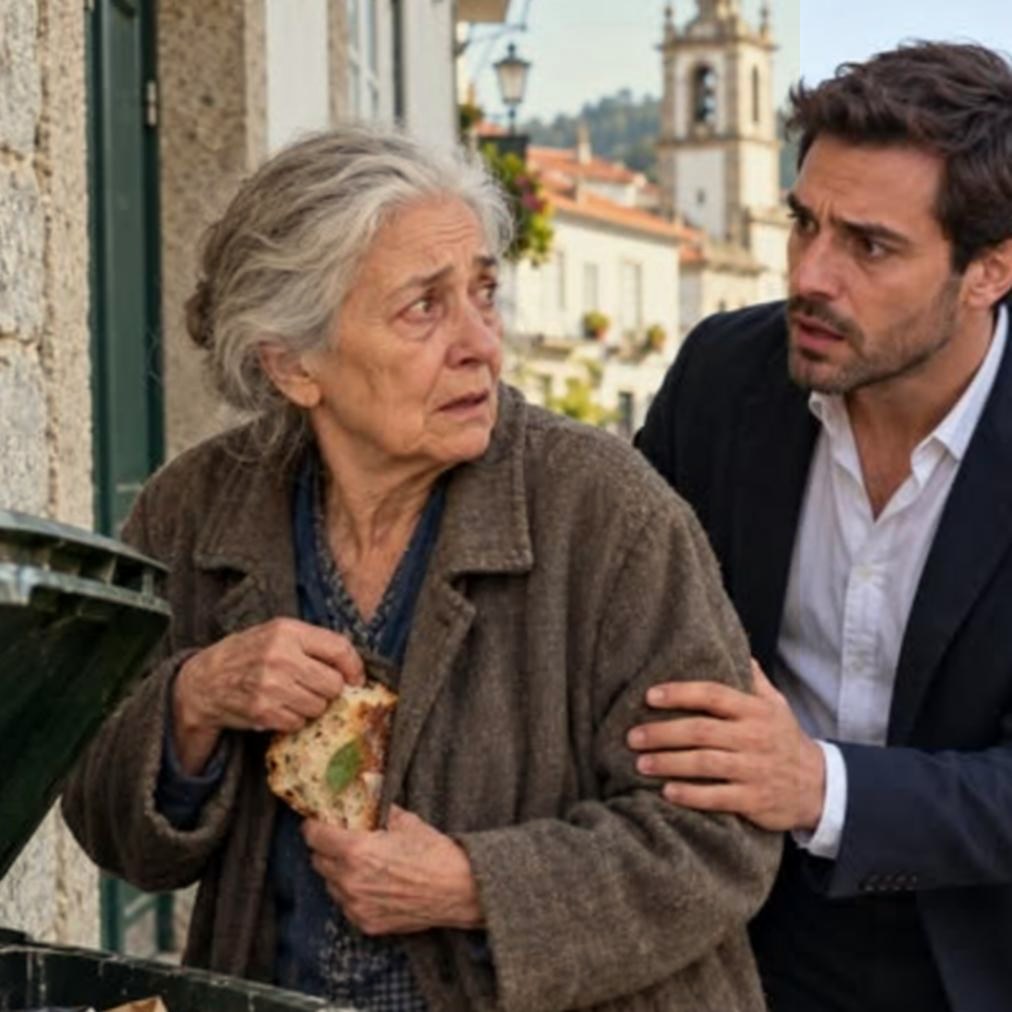
There was only the narrow bed there, with my mother’s pale wool scarf hanging over its metal back. I had seen the end of that scarf earlier by the garbage bin, when my mother was hiding the bread. A small wooden button had been sewn into it, and scratches accumulated over the years could be seen on it.
My mother did not want to throw it away.
“This was with me too, when I had nothing else,” she told me.
After several months she was eating better. In the morning she drank coffee by the window and spoke with the neighbor woman. Her voice gradually grew stronger.
One morning, when the first snow came, my nephew, Tomash, was standing at our door.
His hands were tucked into his pockets.
“May I come in to Grandma?”
My mother opened the door wide.
“You always can.”
The boy took a drawing out of his bag. It showed a small house, two people, and a large yellow sun.
“This is your house, Grandma. There are many windows here.”
My mother pressed the drawing to her heart.
“Now there really are many.”
I was slowly building a new life. I still managed the affairs of my transport company, but two days a week I worked from home with my mother. In the morning I cut the bread myself. I checked the pharmacy dates. Every evening my mother put the door key in the same bowl.
Quiet habits look like small things, but it is precisely they that return a person to their own life.


Once Sonia sent a letter.
“I want to speak with Mother. Everything has changed. I made mistakes. Please give me one meeting.”
My mother read the letter to the end. Then she carefully folded it.
“Do you want to meet her?” I asked.
She thought for a long time.
“Not now.”
“Perhaps someday?”
“Perhaps. But only when seeing her no longer frightens me.”
I answered Sonia.
“Mother is safe. If she ever wishes to meet you herself, we will inform you about it. Until then, please respect her boundaries.”
I received no reply.
That evening my mother hung the old scarf on a small hook beside the door. The wooden button shone in the light.
“I used to touch this button when I was afraid,” she told me.
“Why do you touch it now?”
My mother looked at the snow through the window.
“Now so that I remember: you can come out of fear too.”
I took her hand.
Snow was silently covering the path in the yard. It was warm in the house. Fresh bread lay on the table, not hidden.
My mother took the first piece and smiled at me.
This time she did not hide the bread in her pocket.
Missed the beginning?