
I brought the phone to my ear, but for several seconds I could not make a sound.
The back door.
Only Carter, Yvette, and I used that door.
I looked toward the rack hanging on the wall. The place for my spare key was empty.
“Mrs. Rosalyn?” the lawyer asked.
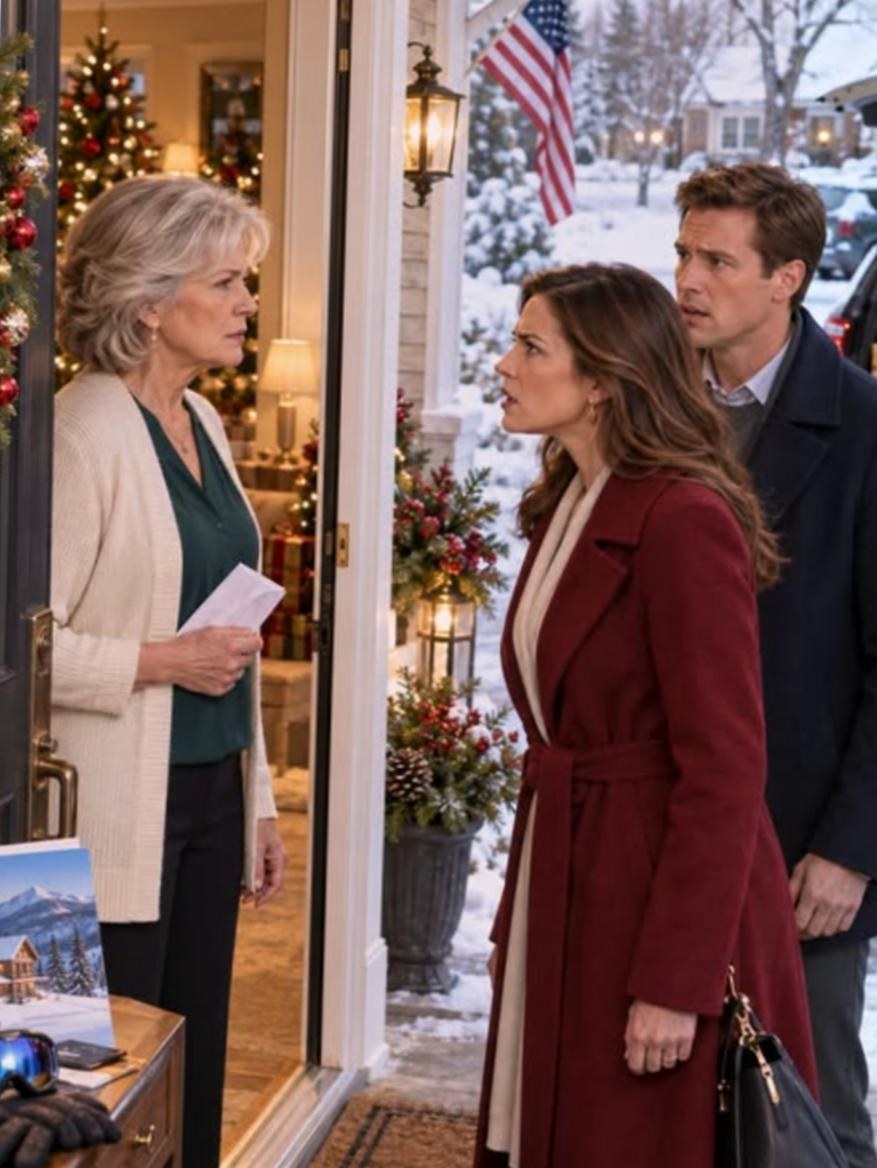
“There is no one in the house now,” I said, although I did not trust my own words either.
Carter stood up.
“Mom, I’ll come with you.”
“No.”
Yvette picked up her bag.
“All of this is already too much.”
“Buying gifts from the children’s money was too much,” I told her. “Now these are simply the consequences.”
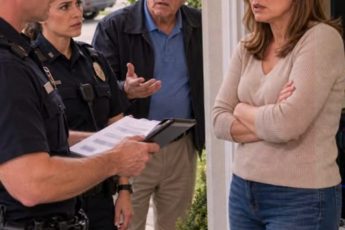
I returned home directly from the bank. Two police officers were already waiting for me at the gate. The wind struck my face, while snow gathered in small whirlwinds on the sidewalk.
The back-door lock was not broken.
But as soon as I entered, I realized that someone had searched my room.
The drawers were open. Documents lay on the floor. The closet door had been opened all the way.
And my small copper bell lay on the floor. Its edge had struck the stone tile and now had a crack.
“Someone came in here,” one of the officers said.
I stood in the corner of the bedroom. For the first time in three years, I felt that I no longer recognized Daniel’s house.

The lawyer called me that same evening.
“The bank gave us all the documents. Also the camera footage. Yvette entered the house alone and tried to photograph the folders.”
“What did she want?”
“Probably to see what else you have.”
Carter called me then.
“Mom, Yvette went home. She isn’t answering my calls.”
“Carter, the police will speak with both of you.”
“I didn’t want this.”
“But you did it.”
The next day I gave my statement. The bank recording, the handwriting conclusion, the attempted transfers, and the camera video turned out to be linked together exactly. In the end Carter signed an agreement that he would return the money in full and lose access to the children’s account.
Yvette, however, refused.
“I was with him, but I did not commit a crime,” she said.
The lawyer answered calmly:
“Madam, your voice is on the recording.”

Then he played the recording.
Yvette’s laughter sounded in the room again.
“Who would have trouble forging your signature?”
Yvette froze.
For the first time she heard her own voice through someone else’s mouth.
“I didn’t say it like that,” she whispered.
“You did,” I told her.
“You ruined my life!”
“No. I simply stopped covering for you.”
Carter stood by the window. Snow was falling outside, and the reflection on the glass moved across his face.
“Mom, please, let’s start over.”
“Starting over could have happened when you took the money and stopped. But you tried a second time.”
That evening I entered the children’s room. Colorful blankets were spread on the beds, and their drawings hung on the wall. In one corner lay Carter’s son’s small wooden train. I picked it up and returned it to the shelf.
For the first time, there was no noise from them in the house.
The empty room turned out to be heavier than any courtroom.

The Christmas trip still took place. Cordelia and I arrived at the small house three days early. There were three bedrooms there, but mountains could be seen from the window, the fireplace hummed warmly, and snow fell by the kitchen window as if a new page of the world had been opened.
Cordelia came with me and put the luggage by the door.
“Are you really all right?” she asked me.
“Not yet,” I answered. “But I am at peace.”
“That is more important.”
That night she made hot chocolate. Under the cup she found a small piece of paper on which she had drawn, in her childish hand, a house, two women, and a large sun.
“This is you,” she told me.
“And the other woman?”
“Me. Because I am staying by your side.”
The words struck me strangely. For years I had stayed beside everyone who did not deserve it. For the first time, someone stayed with me only because she loved me.


Two months later I opened a small family accounting service in Montreal. Until then I had helped only relatives organize their accounts. Now I had my own clients, my own desk, and a morning habit: I stood by the window, drank coffee, and checked every receipt myself.
The money was fully returned to the children’s account. Their names remained, but only I had signing authority.
Carter wrote to me once a week.
In the first months, all the messages were the same.
“Forgive me.”
“Yvette no longer speaks to me.”
“I miss the children.”
I did not answer any of them.
Then, in the first week of spring, he sent me only one sentence: “If you are ever ready, I want you to call me your son again.”
I looked at the screen for a long time.
I could have written that everything would be all right. I could have saved him again, explained again, found a reason in his place.
But in the end I wrote calmly:
“I will always be your mother. But you must learn how to be my son.”

After that I put the phone on the table.
I was alone at home. The March wind shook the window. On the kitchen shelf hung my keys.
The small copper bell still had a crack. I could have repaired it, but I did not repair it. That crack was no longer a sign of shame for me. It reminded me that the quietest sound is sometimes heard when the door finally closes.
The bell moved lightly once.
And this time I did not follow anyone.
Missed the beginning?