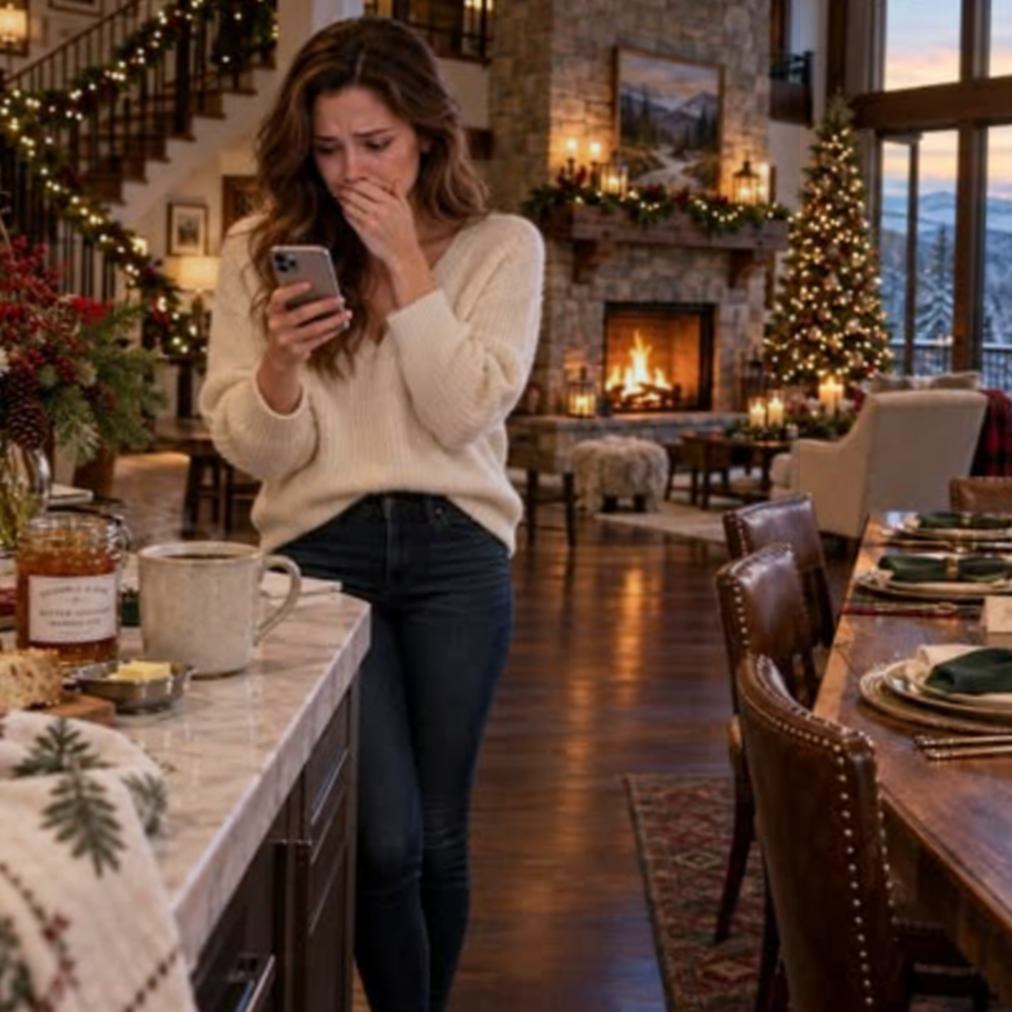

After Eliza’s words, such silence descended over the house that it seemed the whole mountain had stopped breathing.
“What document?” I asked.
“A power of attorney signed by your father. Did you execute it seven years ago?”
“No.”
“That is exactly why I am calling you. Your signature is on the document, but the date is the day when you were out of town.”
I went to the window. Snow was still falling. In the corner of the kitchen stood the glass jar that Mother had brought, which suddenly seemed like a foreign object to me.
“What does Father want?”
“Temporary control over the company accounts. He says you are exhausted and can no longer make decisions.”
I laughed, but my voice trembled unpleasantly.
“I have thirty-seven employees. Dozens of projects. I spent seven years building all this. And now they are supposed to take it away because, after appearing on television, my parents finally realized who I am?”
“No one will take it away,” Eliza said. “But you need to get to the office tomorrow morning.”

Father called me before then.
“Marlowe, Eliza is frightening the situation too much.”
“Why did you use my old signature?”
He was silent.
“I did it to protect you.”
“From whom?”
“From you. You are very emotional right now.”
“Father, I created this company.”
“We did a lot for you too.”
“I know. That is why I paid for everything quietly.”
His voice hardened.
“We are not talking about money.”
“No. We are talking about control.”
He ended the call.

The next morning every room in the Cedar Vale office had its light on. Blythe saw me in the corridor and immediately came toward me.
“Your father was here.”
“I know.”
“He said that you need to rest for several days.”
“And what did you tell him?”
“I told him that my boss would decide for herself when she would rest.”
Blythe put a small wooden box on the desk.
“Security found this in his car.”
Inside the box were old documents, bank letters, and a copy of the registration of my first company. At the very bottom lay a sample of my signature—the form I had filled out at the bank seven years earlier.
Eliza compared the documents with one another.
“This power of attorney is forged. The signature was transferred from an old copy.”
“Where did Father find this?”
Blythe answered me.
“At your parents’ house, in an old cupboard. Dorothea saw it when your mother asked her for help.”

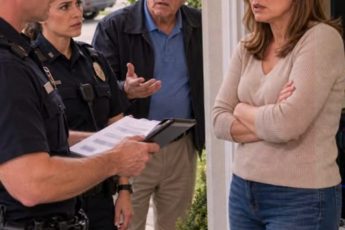
That same day Father came to the office. He held a leather folder, and his face was gray.
“Marlowe, let’s talk calmly.”
“We will talk calmly when you tell me why you forged the document.”
“I did not forge it.”
Eliza opened the folder in front of him.
“We took this from your car. The copy from which the signature was transferred is here as well.”
Father looked at the paper.
“I only wanted to help Tansy.”
Tansy, who was standing by the door, flinched.
“What do I have to do with it?”
For the first time Father could not answer.
“I have a bank loan,” he said at last. “I made bad decisions. I thought Marlowe’s company could help us.”
Tansy closed her eyes.
“You decided to deceive people in my name?”
“I was doing it for you.”
“No, Father. You were doing everything instead of me again.”

At that moment I saw for the first time how Tansy’s face changed. She was no longer afraid.
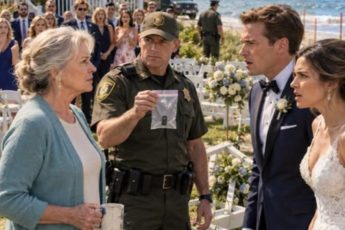
The police came that same evening. I did not ask anyone to be arrested. I simply handed over all the documents, because sometimes the truth is heavier than family love and still must be spoken.
Father signed an admission. The bank reexamined the loan case. The court declared the power of attorney invalid. He did not lose control over the company, but Father had to answer for forgery and financial fraud.
His lawyer left the very next day.
“In this case my client cannot defend himself,” he said.
Father fell silent.
Several weeks later, at the hearing, he heard a recording that Eliza had obtained from the bank’s cameras. Father’s voice could be heard clearly.
“Marlowe is emotionally unstable. I will take temporary control.”
In the courtroom he listened to his own words himself.
His hands were trembling.
I did not sit beside him.
Not even when he raised his head and quietly said to me:
“I wanted to protect the family.”
“A family is not protected through control,” I answered.

That evening, after returning home, I opened the guest room for my parents. The bed was untouched. On the pillow still lay the small white card I had left for Mother: “Welcome home.”
I realized that in this room I had prepared not a place for them, but my hope.
I put the card in a drawer.
And I put the jar of marmalade away in the cupboard.
Two months later Tansy called me.
“I found a new apartment,” she told me. “It is small, but I am paying the rent myself.”
“That is good news.”
“I also asked for a raise.”
“And?”
“They agreed.”
For the first time there was no panic in her voice.
“You didn’t ask anyone for help?” I asked.
“No. Though I called three times and hung up all three times.”
I laughed.
“That is progress too.”

In spring Father returned from court and came alone. He no longer went near the company. He stood at the door holding an old photograph—me on the day of my university graduation, holding my diploma.
“I found this in your room,” he said.
“You can keep it.”
“No. It is yours.”
I took the photograph. On the back Father had written by hand: “Our strong girl.”
“I no longer want to be only the strong girl,” I told him.
He lowered his head.
“I understand now.”
“You understood late.”
“I know.”
That apology did not erase the past. But for the first time he had not said sorry in order to justify himself.
The following Christmas I set the long table again.
This time Mother came a day early and burned biscuits in the kitchen. Blythe opened the window laughing. Tansy brought the groceries herself and proudly placed the bags on the floor.
“No one dare mention my symbolism,” she said.
Everyone laughed.

Father came last. He held only one small gift. He did not ask whether he could come in. He stopped at the door and waited for me.
“Come in,” I said.
Dinner was noisy and imperfect. Mother burned the sauce. Father opened the wrong bottle of wine. Tansy and Blythe argued about the music.
Every chair was occupied.
Father raised his glass.
“Marlowe, look at what you have done.”
Those were exactly the words I had wanted to hear since I was sixteen.
While I waited for them, it was as if my life would finally be confirmed.
But that evening I understood that my life had been real for a long time already. My parents’ acknowledgment could not change what I had built.
Months later Cedar Vale won a major project in Boone. We signed an agreement for sixty-five million dollars. Blythe told me that television had made me famous.
“No,” I corrected her. “The work made me ready.”

A new habit remained with me at home. Every morning I opened the kitchen window, watched the snow, and waited for no one.
One morning Tansy sent me a picture of her new apartment. A childlike drawing hung on the wall—four people at one table, in every chair.
Below it was written: “Everyone can sit here.”
Later Mother wrote to me that Father often asked about me and asked how the Boone project was. I always answered, but I no longer tried to explain my life to him.
One evening Father sent me a message.
“If you ever need me again, my door is open.”
I looked at the screen for a long time.
Then I wrote:
“My door is open too. But coming inside begins with trust, not guilt.”
He sent me only one word: “I understand.”
This time I believed him.

I went into the kitchen and opened the cupboard. There still stood the jar of bitter orange marmalade that Mother had brought that first, deceptive Christmas.
The jar was no longer a promise that they would ever come.
It was simply a jar.
But I no longer needed anyone to come in order to feel at home.
A fire lit in the fireplace. The first snow fell outside. I sat at the end of the long table and calmly left every place free.
No one had to earn my place anymore.
Missed the beginning?