
As soon as the message was read, all the telephones in the room rang at the same time.
This was no longer an ordinary threat.
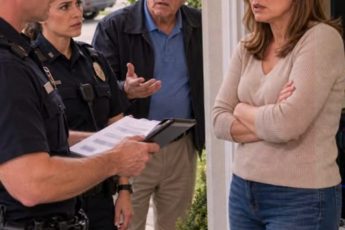
Major Kavtaradze locked the doors and ordered security to occupy every exit from the base. Colonel Revaz’s car was found at the northern gate, but he himself was no longer there. The archive that had disappeared from his office had been opened forty-four minutes earlier.
“General, you will stay here,” the major told me.
“No. My brother’s name is in that message.”
Givi raised his head.
“I am not going anywhere with anyone.”
“That is exactly why you are coming,” I told him. “Someone wants you to be afraid.”
Marina picked up her bag.
“I am coming too.”
“No,” Givi said. “You have already done enough.”
Marina smiled for the first time, but this smile was sad.
“No, Givi. I have not done enough. For four years I knew how you humiliated your sister, and I still remained silent.”
The old radio station stood behind the base, at the edge of the forest. While we were going there, it began to rain again. Water struck the car windows as if someone were knocking with their fingers.

Only one lamp was burning inside the building.
Revaz was waiting for us inside. A heavy archive box stood on the table. Beside it was a small recording device.
“You are late,” he said.
“It is over, Revaz,” I replied.
He laughed.
“Not yet. Do you think I did all this because of Givi? He only needed money. You were the one getting in my way.”
“For what?”
“For control of the base. Your appointment meant an audit. And the audit would show that during the last three years money for fuel, equipment, and medical supplies had been stolen.”
Givi looked at the box.
“You told me I only had to arrange a small joke for Elena.”
“Because if I told you the truth, you would prevent me from escaping.”
Revaz turned on the recorder. The room filled with his own voice from several minutes earlier, when he was making threats to us. Then Givi’s voice followed.
“I will take the money, but you will not hurt Elena.”
“If you do not keep quiet, I will tell everyone that you are an accomplice.”
Givi stepped back. For the first time he heard his own voice the way others heard it.
“I did not say that,” he whispered.
“You did,” I told him calmly. “And now you cannot take the words back.”
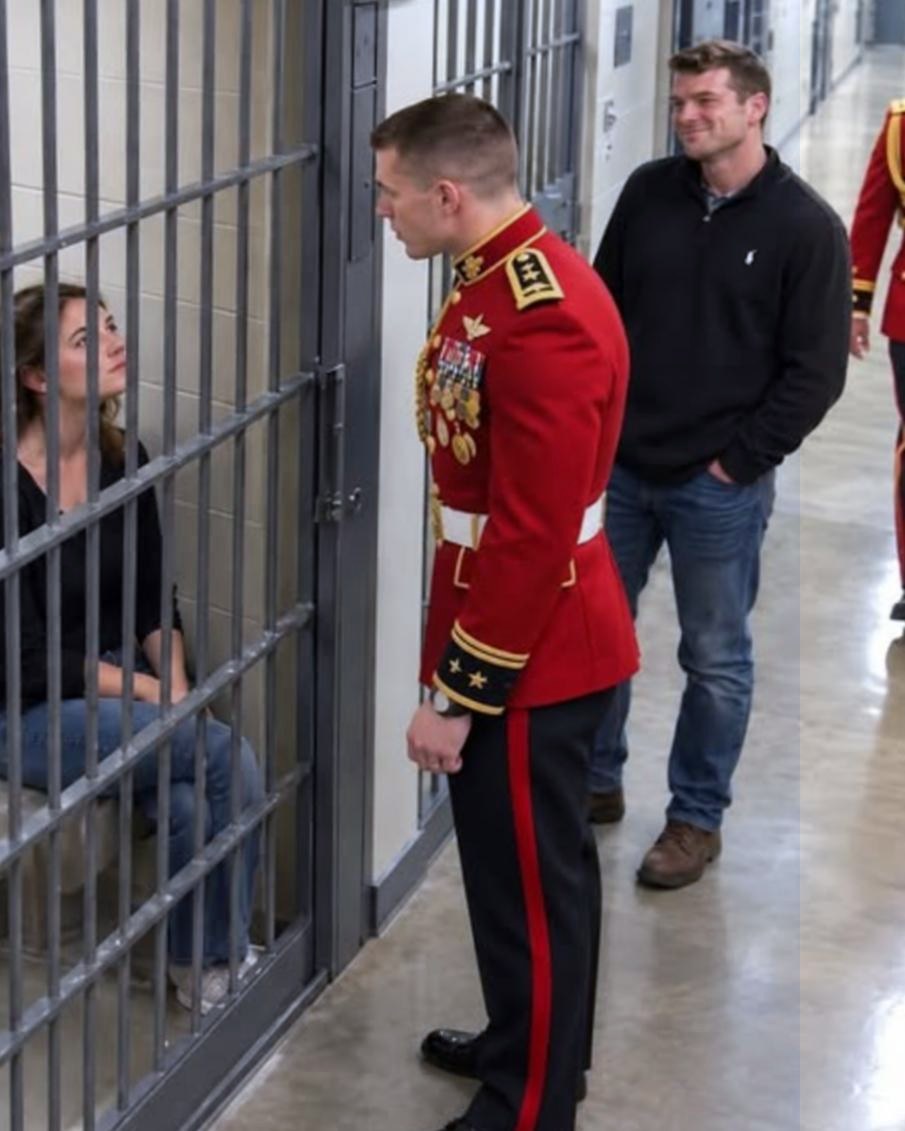
At that moment the sound of vehicles came from outside. The base security group entered. Revaz reached for his weapon, but Marina seized his arm with the hand she had placed on the table. The major put handcuffs on him.

“You are under arrest on charges of misappropriating military property, falsifying documents, and obstructing the investigation,” he said.
Revaz looked at me.
“You still will not get away with all this. The people standing above you will not forgive you for it.”
“I am no longer trying to forgive anything for anyone,” I replied. “I am simply doing my job.”
When Givi saw the handcuffs, he sat down on a chair.
“Elene, please remove my name from there.”
“I did not put anything there. You wrote it yourself.”
That night I saw for the first time what my brother looked like facing his own words. He was no longer ironic, strong, or invincible. He was only a tired man who had used humiliating someone else for years to hide his own smallness.
The investigation lasted three months. The court sentenced Revaz to many years in prison. Givi admitted the crime, returned the money, and received a suspended sentence because he ultimately confirmed the recordings and bank data. I did not remove his name from the military case. But I did not demand revenge either.
Yaroslav Bondarenko was not dismissed from service. He received an official reprimand and was retrained in the procedures. Several weeks later he came to me.
“General, that day I was sure of myself,” he told me.
“Confidence does not replace knowledge, Corporal.”
“Now I will never forget that.”
I nodded.
“Neither will I.”

My old apartment was close to the base. When I moved into the new commander’s house, I left only one thing there: a family photograph hanging on the wall, in which Givi was smiling at me like a child and I was standing beside him. On the back of the photograph I wrote by hand: “That was then.”
The compass also remained in the empty room.
It lay on the floor by the window. A small dark spot from the rain had appeared on its copper surface. I picked it up, cleaned it, and put it in my pocket.
Two months later the base was already living by a different rhythm. Every morning at six I entered the officers’ room, marked new assignments on the wall map, and checked the administrative documents myself. I no longer needed to tell anyone how I had earned this place.
One evening, during the first snow, Marina came to me. She held a small drawing. Beside her stood a little boy, my brother’s son, Nika.
“Aunt Elena,” he told me, “are you really the head of the whole base?”
“That is what they say.”
“Dad says that you are very strict.”
Marina looked at him at once.
“Nika.”
I laughed.
“Your father says many things. What do you think yourself?”
The boy held out the drawing to me. A tall tower, a flag, and a small car were drawn on it. Beside the car stood a woman holding a round object.
“That is you,” Nika said. “Mom told me that you always find the way.”
In the drawing the compass was a large golden circle.

That evening I received a message from Givi. He was changing too, but slowly. In the letter he wrote that he wanted to apologize, that for the first time he understood how many years he had belittled me, and that perhaps someday we could begin again.
His last sentence was: “Tell me when I should come.”
I looked at the screen for a long time.
Then I wrote to him: “When you want to come not to receive my forgiveness, but to take responsibility for yourself, then contact me.”
No answer came.
And this time the silence did not hurt me.
Several weeks later I received a new card. It passed through the scanner without any problem, but I still stopped at the checkpoint. Yaroslav opened the gate for me and nodded.
“Good morning, General.”
“Good morning, Corporal.”
He looked at my pocket.
“Do you still carry the compass with you?”
“Always.”
Snow was slowly falling on the road. The base lights reflected on the white grains. I got out of the car and walked toward the gate, this time alone, without any explanations.
I grasped the copper compass.
It pointed north.
And I already knew the way.
Missed the beginning?