

The message was blinking on the screen.
“If you send David to prison, you will never see your grandchild again.”
Sara’s phone was still lying on my kitchen table. The message had been sent from it.
Greg looked at my face.
“Shall we show it to the police?”
“Yes.”
This time my voice was no longer trembling.
Sara stepped backward.
“Hannah, I was simply frightened.”
“Frightened people ask for help. They do not write blackmail.”
David covered his face with his hands.
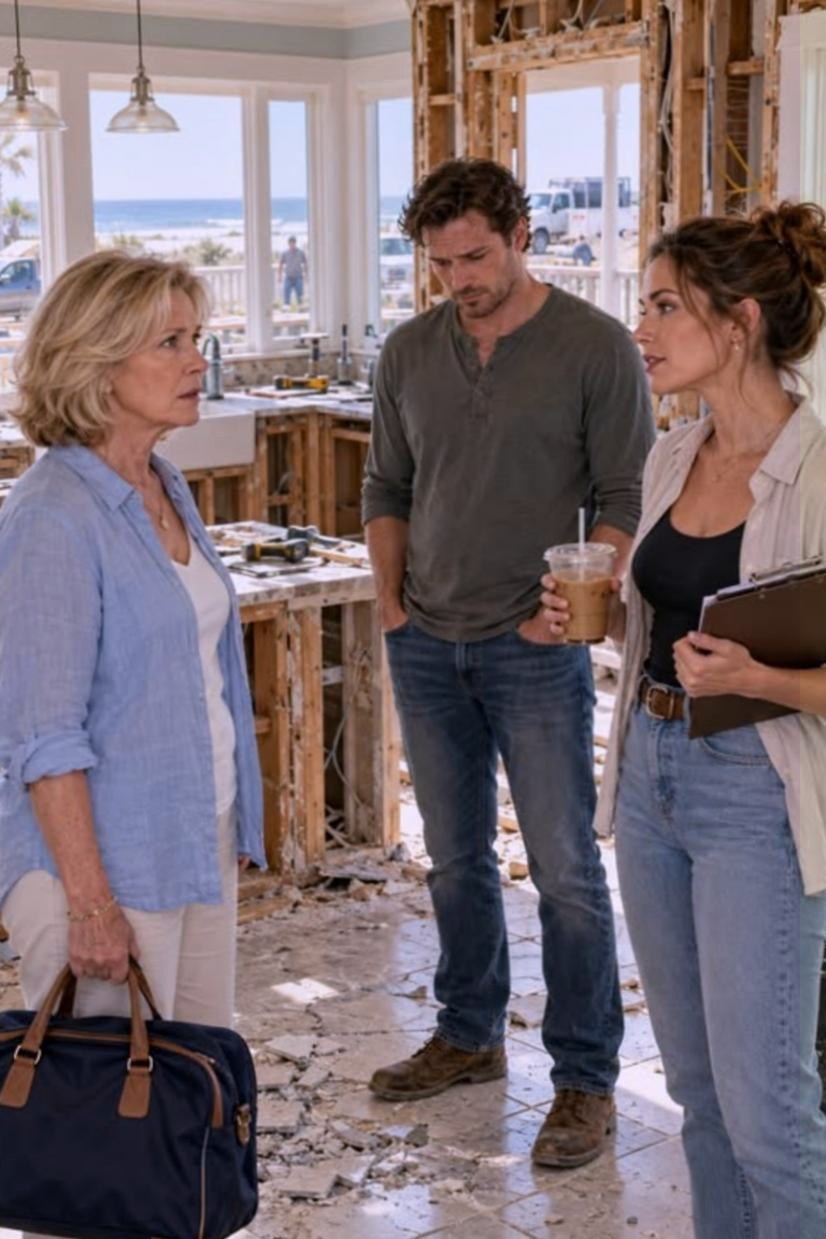
His lawyer, who arrived at ten o’clock at night, stood in the living room still buried in construction dust. He reread the contract, the recording, and the message, then looked at David.
“When did all this happen?”
“Today,” David said.
“No. I mean, when did you start doing this?”
David could not answer.
The lawyer slowly closed the folder.
“I cannot defend you if you continue hiding facts from me.”
“You are my lawyer,” David whispered.
“At this stage, I still am. But an illegal signature, a false power of attorney, a credit application, and a threat are no longer one problem.”

Sara grabbed his hand.
“You have to do something!”
He pulled his hand away.
“I am already doing it. I advise you not to contact anyone else and not to delete anything.”
Only then did David hear his own voice.
Greg played the recording again.
“Mom will not sign. Sara has already transferred her signature.”
His words returned to the room, exactly as they had been that day—confident, quiet, as if he were talking about someone else’s life.
David raised his head.
“I do not talk like that.”
“But you did,” I told him.
The recording continued.
“Once the house is transferred into our names, she will no longer be able to stop it.”
His face became gray.
“Turn it off,” he said.
“Why?” I asked. “For the first time you are hearing yourself from the outside.”
He sat down on a chair.
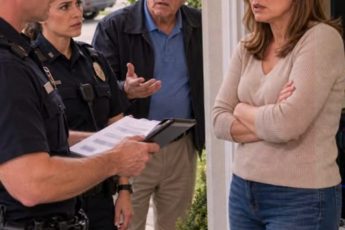
But Sara suddenly grabbed her bag and ran toward the door. A police officer blocked her way.
“Ma’am, you cannot go outside.”
“I did not do anything!”

“Then explain why there are photographs of the document and a copy of my mother’s identity card on your phone?” David asked, but he immediately fell silent.
Everyone looked at him.
Sara had no answer.
The next morning I went to the bank. The security department stopped the loan application, and with the help of my lawyer I canceled all the accounts. Greg officially confirmed the termination of the work and agreed to return the amount already paid, because the service had been ordered through deception.
But the hardest thing was still ahead of me.
That same week David asked me to meet at a small café by the city’s old harbor. It was raining outside, and drops collided with one another on the window.
“Sara left,” he told me.
I said nothing.
“She moved to her parents. She took the child with her.”
“The child is yours. You still have the right to communicate with him.”
“Did you really file a report?”
“I told the investigator the truth.”
“Mom, I may go to prison.”
For the first time there was no demand in his voice. There was only fear.
“You may,” I said. “I cannot decide that.”
“You can say that you do not want to continue the case.”

“I can. But then I will again have to cover up what you did.”
He struck the table with his hand.
“I am your son!”
“That is exactly why it hurts me. But being a son does not free you from responsibility.”
Several weeks later, the court opened a case against Sara for using forged documents, attempted fraud, and threats. David reached an agreement, admitted his participation, and signed an undertaking to compensate for the cost of damaging the house. He was not sentenced to prison, but spent one year under supervision, performed community service, and gradually paid the debts.
Sara left the city. Her parents returned to another state. None of them apologized to me.
And I rebuilt the house from the beginning.
In the first month I had the kitchen walls reinforced. I could no longer save the old oak cabinets, but Greg made a small shelf for me from their remaining pieces. I put my husband’s photograph on it, and beside it a glass jar filled with shells from the seaside.
I laid a new carpet in the bedroom. I washed the old blanket that I found in the garbage bag and folded it over an armchair by the window.
I slept alone on the first night.

I heard the sound of rain and with every drop waited for someone to knock on the door.
No one came.
Three months later I moved to part-time work at the clinic. At noon I walked along the shore, and in the evenings I cleaned the house. I no longer tried to save every person who ran away from their own decisions.
One Sunday my grandson, Noah, came to me. It was a visit arranged with Sara. He held a small wooden boat that he had painted himself.
“Grandma, is this your house?” he asked me.
“Yes.”
“Why was it so messy before?”
I sat beside him and looked at the sea through the window.
“The adults made a mistake.”
“Are they not angry anymore?”
“I am not anymore.”
Noah stood silently for a long time. Then he handed me his drawing. He had drawn four windows on the boat, and a small yellow light was burning in each one.
“This is for you,” he told me. “So you will not be afraid at night.”
That evening I put the drawing on the oak shelf.


In the fourth month David sent me a letter. The letter said that he was attending treatment, had started a job, and hoped that someday I would restore my trust in him.
At the end he had written one sentence:
“Can you be my mother again?”
I looked at the paper for a long time.
Then I answered.
“I will always be your mother. But I can no longer live your life in your place.”
This was my refusal to return.
Not to my son.
Not to love.
Only to the role in which I had hidden his lies for years and lost myself.
That same evening I made tea in the kitchen. I opened the window. Salty sea air entered and lightly touched the shells placed in the glass jar.
My husband’s photograph stood on the upper shelf.
Beside it—the little boat from Noah.
Below lay the old blanket that Sara had thrown into the garbage and that I had nevertheless saved.
The house was mine again.
But for the first time I no longer needed to prove it.
The sea quietly exhaled beyond the window.
And I did not lock the door anymore.
Missed the beginning?