

I was about to sign the discharge paper for seven-year-old Lark Whitmore when the girl squeezed my hand and whispered something that froze my pen in the air.
“Please, Doctor Mercer, don’t tell Mariz that I pour her drops into the flowerpot. When I don’t take them, my stomach doesn’t hurt anymore.”
Only the apparatus’s quiet beeping could be heard in the room. Lark had two unevenly braided brown braids, was missing a front tooth, and hugged a worn giraffe toy to her chest. A seven-year-old child should be happy to go home. But she was looking toward the door as if a dangerous person were about to enter through it.
“Which drops, sweetheart?”
Lark first looked at the corridor, then leaned toward me.
“The vitamins Mariz gives me when Dad isn’t watching.”
I had worked as a pediatrician at Saint Catherine’s Hospital for eleven years, and I knew that children often hated the taste of medicines. But a child rarely invents a secret that has exact rules.
“Why do you pour them out?”
She squeezed the giraffe’s cloth neck so tightly that it tilted to the side.
“When I drink them, my stomach hurts. When I don’t drink them, it doesn’t hurt anymore.”
I put the pen on the table. Lark had been brought in nine days earlier: severe vomiting, abdominal pain, weakness, muscle relaxation, and unexplained weight loss. Blood tests, scans, and examinations for infections had given us no answer. But four days earlier everything had suddenly changed. The vomiting stopped, her appetite returned, and in the morning she had even asked for pancakes.

“When did you stop drinking the drops?”
Lark raised four fingers.
Five small pots stood on the windowsill. Four of them were green. The fifth looked as if it had been passed through flames. The leaves had curled black, and white crystals glittered on the surface of the soil. I approached it, but did not touch it.
“How many times did you pour them in here?”
“Tuesday, Wednesday, Thursday, and last night.”
I felt cold in my throat. Her condition had improved on Wednesday.
“Does your father know?”
Lark lowered her head.
“Dad trusts Mariz very much.”
That answer was neither confirmation nor denial. It was the words of a child who already knew that telling the truth would mean choosing someone.
In the drawer of the bed I found colored pencils, a biscuit, a purple hair tie, and a folded sweater. Under the sweater lay a small amber bottle. The label was stuck crookedly to the glass, and beneath it the edge of another, peeled-off piece of paper could be seen.
“Does Mariz give you this?”
Lark immediately nodded.
“Ten drops. If I’m tired, even more.”
I put on gloves, placed the bottle in an evidence bag, and signed it.

“You’ll be able to go home tomorrow, Dad told me.”
“Not yet,” I told her.
At noon Lark’s father, Beckett Whitmore, came. He had broad shoulders and was still wearing a reflective jacket from a construction site.
“Yesterday you said she was improving,” he told me.
“She is improving, but we need to understand the reason.”
“Mariz spent the whole week doing up her room. She put up starry wallpaper.”
“Mr. Whitmore, from now on only hospital staff will give Lark medicine or supplements.”
His tired smile disappeared.
“Is something dangerous?”
“I’m checking.”
“Mariz understands supplements well. She worked in a pharmacy for six years.”
Those words pierced my heart like a nail.
I took the bottle to the toxicology department. The next morning Professor Malcolm Reeve called me, and from his voice I understood that he already had the answer.
“Rowan, come downstairs. Now.”
Unknown peaks appeared on the computer screen.
“The vitamins written on the label really are there,” he said. “But we found another substance inside as well.”
“What substance?”
Malcolm turned toward me.
“Thallium salts. Enough for repeated doses to cause the child’s poisoning.”

That same evening Mariz came to Lark’s room. She wore a cream-colored coat and carried a huge bag covered with silver stars.
“My favorite girl,” she said to Lark and kissed her on the forehead.
Then she looked at me.
“Doctor, can we finally take our princess home now?”
I looked at the black pot, then at her bag. Mariz smiled for a moment, then put her hand into the bag. I saw the top of a second amber bottle. That was when I realized that a direct accusation could be fatal for Lark. So I calmly told her:
“She will stay one more night for observation.”
Mariz wrapped her fingers around the bag’s handle and leaned toward me. Her lips formed words, but I heard only the first sound…
Mariz quietly closed the door of the room.
“You are being overly cautious, Doctor,” she told me.
“The child almost died.”
“Children often get sick.”
“Not from the substance that was found in her drops.”
The smile on her face did not change, but a vein twitched beneath her left eye. Lark clutched the giraffe.
“Tell Dad that she should go home,” Mariz said. “Lark is safe with me.”
“No one is leaving this room without speaking with me.”
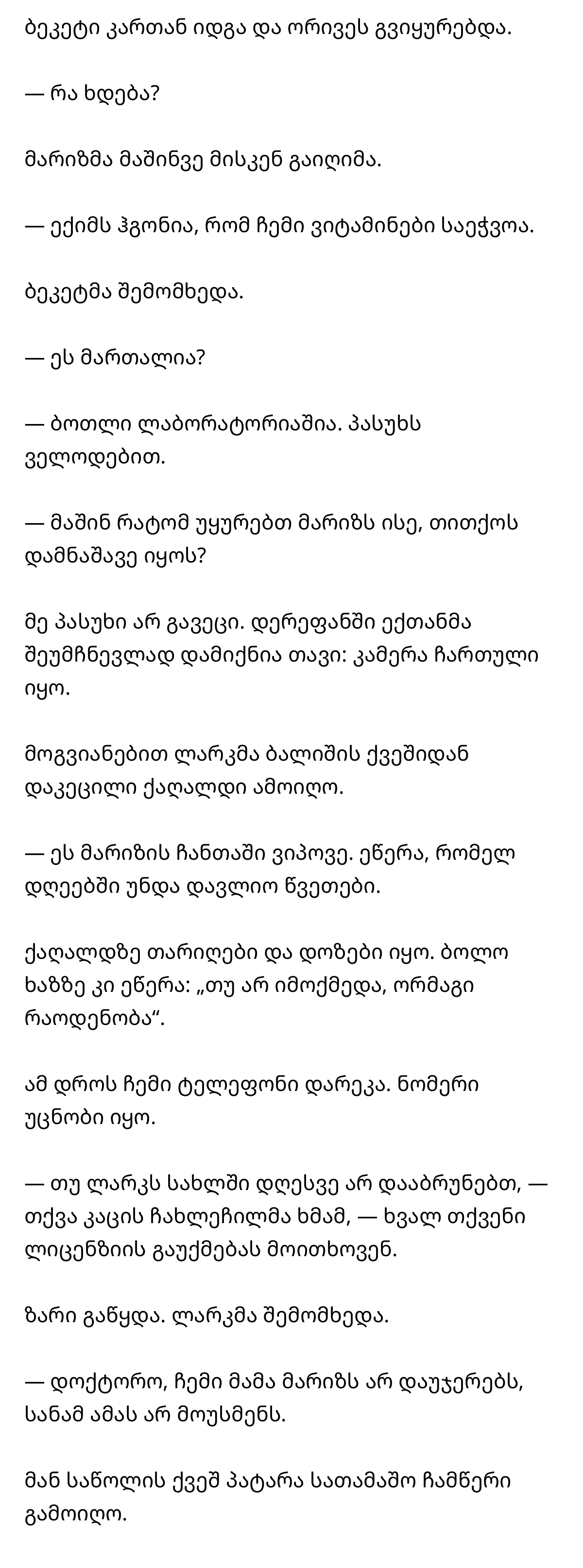


Beckett stood at the door and watched both of us.
“What is happening?”
Mariz immediately smiled at him.
“The doctor thinks my vitamins are suspicious.”
Beckett looked at me.
“Is that true?”
“The bottle is in the laboratory. We are waiting for the result.”
“Then why are you looking at Mariz as if she were guilty?”
I did not answer. In the corridor, a nurse discreetly nodded to me: the camera was on.
Later Lark took a folded paper from under her pillow.
“I found this in Mariz’s bag. It said on which days I was supposed to drink the drops.”
There were dates and doses on the paper. On the last line it said: “If it does not work, double the amount.”
At that moment my phone rang. The number was unknown.
“If you do not return Lark home today,” said a man’s hoarse voice, “tomorrow they will demand that your license be revoked.”
The call ended. Lark looked at me.
“Doctor, my father won’t believe Mariz until he hears this.”
She took out a small toy recorder from under the bed.
Only one file appeared on the recorder. I moved my finger toward the button…
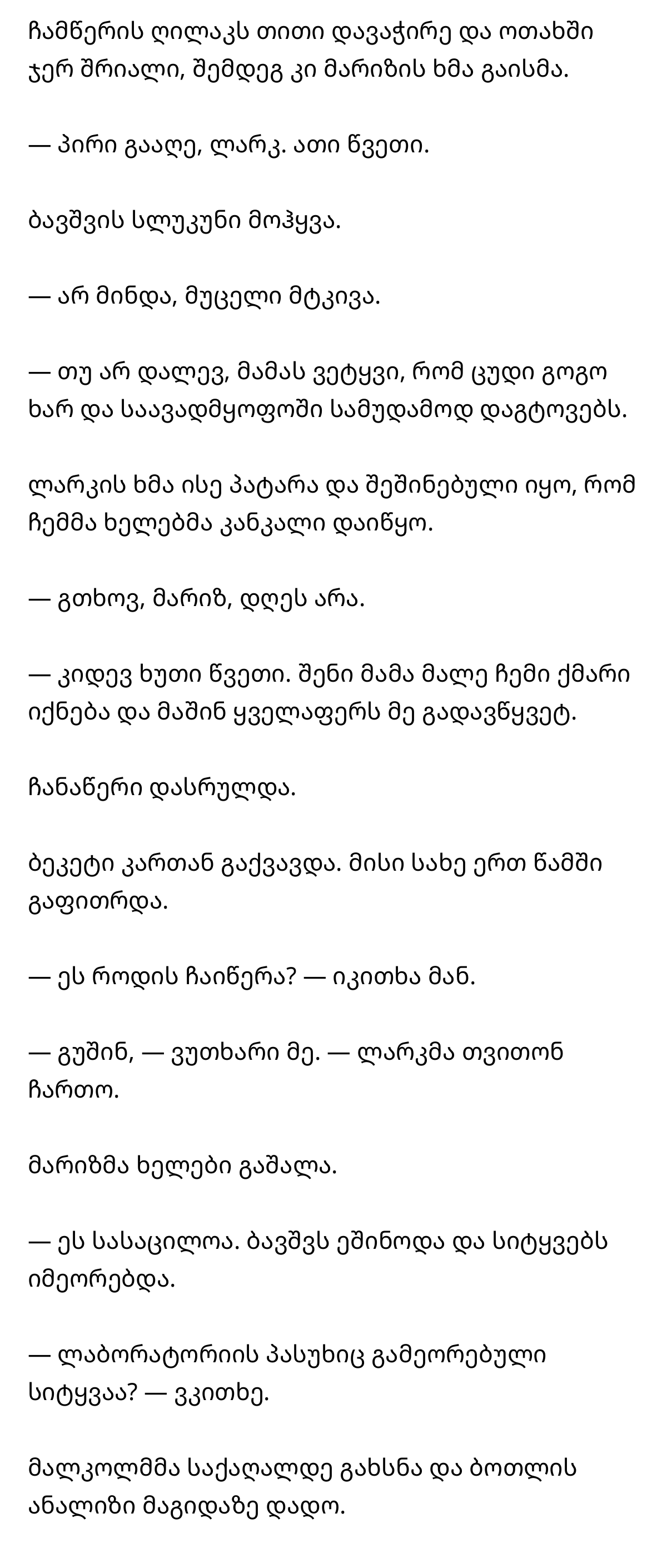
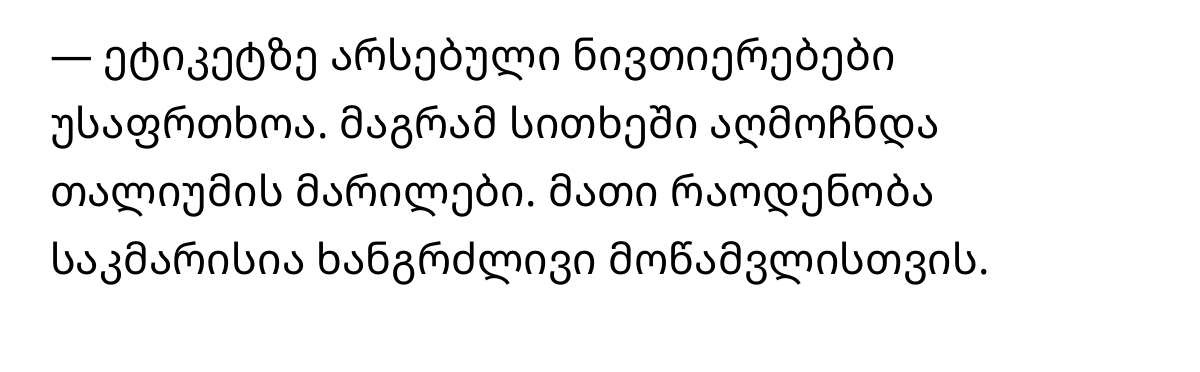

I pressed the recorder’s button, and first rustling, then Mariz’s voice sounded in the room.
“Open your mouth, Lark. Ten drops.”
The child’s sobbing followed.
“I don’t want to, my stomach hurts.”
“If you don’t drink, I’ll tell Dad that you are a bad girl and that he will leave you in the hospital forever.”
Lark’s voice was so small and frightened that my hands began to tremble.
“Please, Mariz, not today.”
“Five more drops. Your father will soon be my husband, and then I will decide everything.”
The recording ended.
Beckett froze at the door. His face turned pale in one second.
“When was this recorded?” he asked.
“Yesterday,” I told him. “Lark turned it on herself.”
Mariz spread her hands.
“This is ridiculous. The child was frightened and repeated words.”
“Is the laboratory result also repeated words?” I asked.
Malcolm opened the folder and put the bottle analysis on the table.
“The substances on the label are safe. But thallium salts were found in the liquid. Their amount is sufficient for prolonged poisoning.”
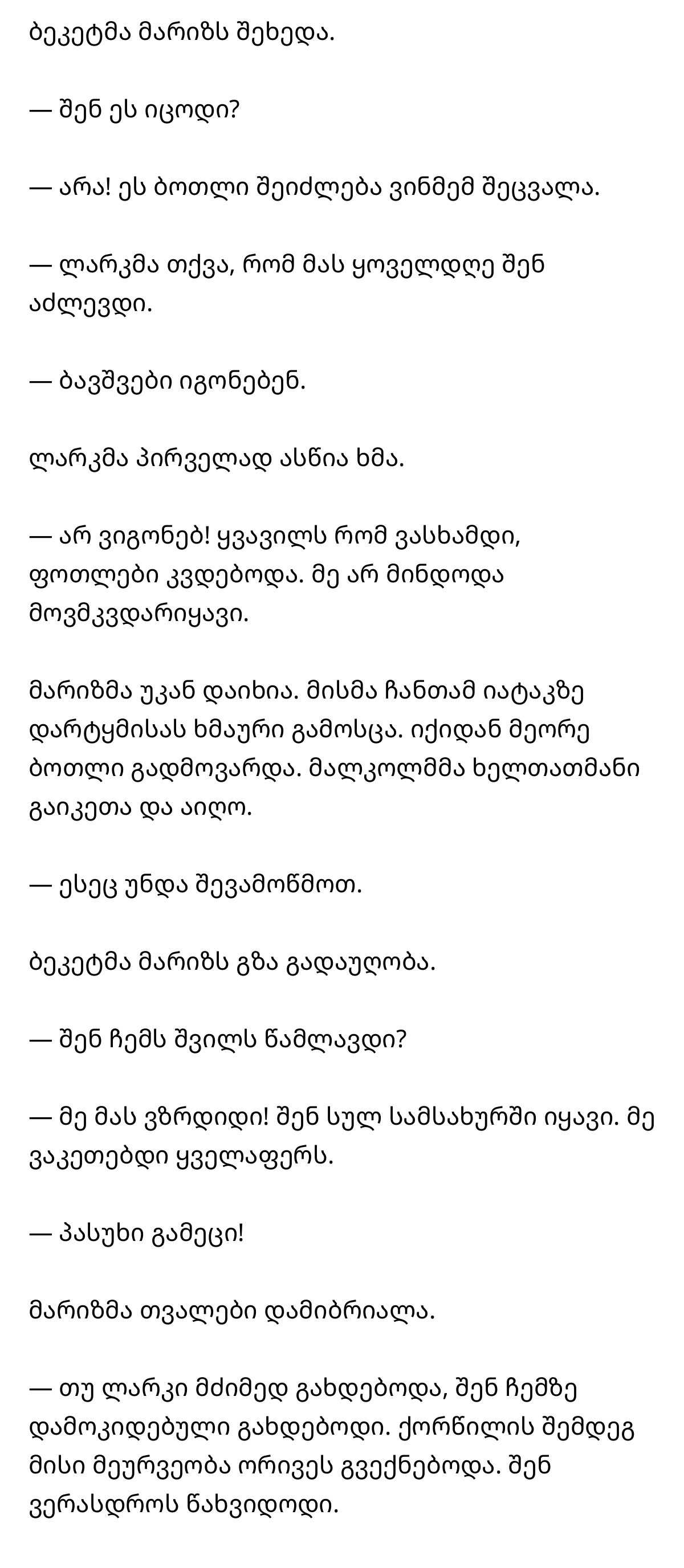

Beckett looked at Mariz.
“Did you know this?”
“No! Someone may have replaced this bottle.”
“Lark said that you gave it to her every day.”
“Children invent things.”
For the first time Lark raised her voice.
“I’m not inventing it! When I poured it on the flower, the leaves died. I didn’t want to die.”
Mariz stepped back. Her bag made a noise when it hit the floor. A second bottle fell out of it. Malcolm put on a glove and picked it up.
“We must test this one too.”
Beckett blocked Mariz’s way.
“Were you poisoning my child?”
“I was raising her! You were always at work. I did everything.”
“Answer me!”
Mariz rolled her eyes at me.
“If Lark became seriously ill, you would become dependent on me. After the wedding, we would both have guardianship of her. You would never leave.”


Such silence fell over the room that even the apparatus’s beep sounded sharp.
Beckett took out his phone and called the police. Mariz turned toward the door, but two security officers were already standing there.
At that moment my phone rang again. This time it was the hospital director.
“Rowan, the police are at your house. They found boxes of medicines bought in Lark’s name.”
“At my house?” I asked.
“Yes. And one more thing. Your electronic signature is on the boxes.”
Mariz heard this and lost her color for the first time.
But I knew that her most dangerous move had not yet been made. Someone had issued prescriptions in my name, and behind this matter there seemed to be more than Mariz’s desire alone. At that very moment I found a stolen document placed in Lark’s file: a guardianship application that looked like Beckett’s signature.
Below it was one date — three days before the wedding.
And on the document’s last page another name was indicated, the sight of which made my breath catch…
ლარკმა ქოთანში ჩადებული პატარა ქაღალდი მომაწოდა…
მეგონა, ყველაზე საშინელი უკვე გავიგეთ. მაგრამ შემდეგ გამოჩნდა ადამიანი, ვინც ამ საიდუმლოს უფრო ღრმა ფესვებთან იყო დაკავშირებული.
„აქ აღარაფერი მოკვდება.“
და პირველად მშვიდად გაიღიმა.
👇 ისტორიის ფინალი უკვე გახსნილია






