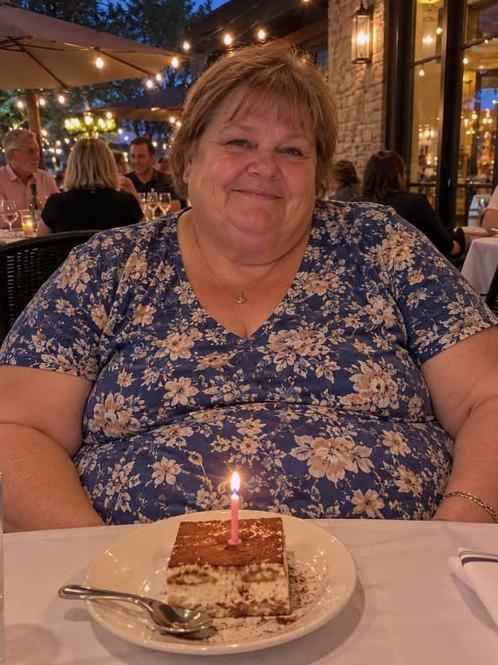
The woman at the next table had barely finished telling my mother to skip dessert when the chef locked the restaurant’s front door.
It was 7:42 on a warm Saturday evening, and my mother, Ruth, had been smiling over a plate of mushroom ravioli like she had forgotten how dangerous restaurants could feel. She had turned sixty-five that day. For months, I had tried to get her out of the apartment, but every invitation ended with the same answer.
“People stare,” she would say.
“They don’t matter.”
“They matter when they say things loud enough for the whole room to hear.”
That night, I promised her the little Italian restaurant on Bell Street would be different. It had red lamps over the tables, chipped ceramic bowls, and a brass service bell beside the kitchen doors. The place smelled of garlic, butter, and warm bread. Nobody had looked at her twice.
Until the woman at table nine turned around.
She was wearing a cream jacket and a gold watch shaped like a narrow leaf. She studied my mother’s plate, then looked at the tiramisu waiting beside it.
“Maybe skip dessert this time,” she said loudly.
The fork in my mother’s hand stopped halfway to her mouth.
Conversation died around us. Even the silverware seemed to hold its breath.
My mother lowered the fork onto her napkin. Her face did not change at first. Then the color drained from her cheeks, and her fingers closed around the worn leather purse in her lap.
“I think we should leave,” she whispered.
The woman laughed.
“You’ll thank me tomorrow.”
I pushed my chair back so hard it struck the wall.
“Do you make a habit of humiliating strangers?” I asked.
The woman dabbed her lips with a white cloth.
“Someone has to tell the truth.”
“What truth?”
“That people shouldn’t pretend they’re entitled to everything they want.”
My mother stood beside me, her hand trembling against the purse clasp. I could feel my own pulse in my throat.
“Say one more thing about her,” I warned.
The woman tilted her head.
“Or what?”
At 7:47, the kitchen doors slammed open.
Chef Mateo Alvarez stepped into the dining room. He was still wearing his white apron, but there was flour on one sleeve and a dark burn mark near his wrist. He was not carrying a plate. He did not look at the woman first.
He walked straight to my mother.
For a moment, he simply stared at her face.
Then he placed one careful hand on her shoulder.
“Ruth?” he said.
My mother’s lips parted.
“Mateo.”
The woman at table nine snorted.
“Wonderful. The staff is putting on a show now.”
Mateo turned toward her. His face had gone pale.
“You need to leave,” he said.
She leaned back in her chair.
“And who are you to order me around?”
Mateo did not answer. He looked past her to Jonah, the young waiter carrying a tray of sparkling water.
“Lock the front door.”
Jonah froze.
“Chef?”
“Now.”
The brass bell beside the kitchen gave a tiny metallic tremor as Jonah hurried past it. The key turned in the lock.
The woman’s smile vanished.
“You cannot keep customers inside.”
“You stopped being a customer when you threatened someone under my roof,” Mateo said.
“I threatened nobody.”
Mateo’s hand tightened on my mother’s shoulder. She was staring at him as if he had become a stranger.
“Why do you know my mother?” I demanded.
Mateo looked at me, then at the purse pressed against Ruth’s ribs.
“Because she gave me this restaurant,” he said quietly.
My mother shook her head.
“Not tonight.”
“Tonight is exactly why.”
He walked back toward the kitchen, lifted a black metal case from beneath the host stand, and returned with a thin folder tucked under his arm. The woman in the cream jacket began pounding on the locked door.
“Open it!” she shouted.
Mateo set the folder on our table.
His fingers reached for the clasp, and every person in the room leaned toward us as though the answer were hidden beneath that cover…
PART 2
His fingers touched the brass clasp, but my mother caught his wrist.
“Mateo, don’t.”
The restaurant remained locked at 7:51. Outside, a delivery truck idled beside the curb, its engine rattling through the glass. Inside, nobody moved except the woman in the cream jacket, who had stopped pounding and was now staring at the folder.
“You know what’s in there,” I said.
My mother looked at me.
“I know what I wanted to forget.”
Mateo gently freed his wrist.
“Ruth, forgetting did not make it disappear.”
The woman slapped her palm against the door.
“This is absurd. I’m calling the owner.”
Mateo faced her.
“You already did. Three times this week.”
Her mouth tightened.
“I have spoken to the owner about serious problems.”
“You spoke to my landlord, my suppliers, and the bank.”
A murmur went through the dining room.
The woman’s gold watch flashed as she folded her arms.
“I represent Bell Street Hospitality.”
“Your name is Valerie Pike,” Mateo said. “You represent a company trying to buy this building for half its value.”
My mother gripped the edge of the table. The tiramisu sat untouched between us, its cocoa powder forming a neat dark line across the cream.
“Why would anyone want this building?” I asked.
Valerie’s eyes moved to my mother.
“Ask her.”
“Ask me what?” Ruth said.
“That you signed away your interest years ago.”
Mateo opened the folder.
At the top lay a faded page covered in handwriting. I recognized my mother’s narrow, slanted letters from birthday cards and grocery lists. Beneath it was a contract, its corners softened from being handled too often.
My mother turned her face away.
I read the first line aloud.
“Transfer of restaurant operations, with retained ownership interest in the property.”
My voice faltered.
“Mom, what is this?”
Mateo pulled out a chair and sat beside us.
“Twenty-two years ago, Ruth owned this place. She had been cooking here since before I arrived in this country. When the rent increased, she borrowed money to keep the doors open.”
“You were a dishwasher,” my mother whispered.
“I was nineteen and terrible at washing dishes.”
A few people gave a nervous laugh. Ruth almost smiled, but the expression collapsed before it reached her eyes.
Mateo continued.
“She taught me the kitchen. She trusted me with the business. When her health became difficult, she transferred daily operations to me. But she kept a controlling share in the property and one condition.”
I looked at the contract.
“What condition?”
“No sale to a chain restaurant, no matter how much money they offer.”
Valerie laughed sharply.
“That clause expired.”
“Not according to the original agreement.”
“You lost the original.”
Mateo tapped the black metal case.
“No. Ruth kept it.”
My mother closed her eyes.
I remembered that case. It had sat behind the winter blankets in her closet for years. Whenever I asked about it, she said it contained old recipes and receipts.
Valerie walked away from the locked door.
“This is not a courtroom. You cannot detain me over a business disagreement.”
“No one is detaining you,” Mateo said. “You are free to wait until Jonah checks the back exit.”
Her face hardened.
“You think a piece of paper will save you? The bank has already accepted the transfer documents.”
The room seemed to tilt.
“What transfer documents?” I asked.
Valerie looked pleased with herself.
“The building is being sold Monday morning.”
Mateo went still.
My mother’s hand slipped from the table and struck the brass service bell. Its bright ring cut through the room.
Jonah came running from the kitchen.
“Chef, the back office line is ringing.”
Mateo stared at him.
“Who is it?”
Jonah swallowed.
“The bank. They said the closing papers have already been filed.”
Valerie’s shoulders relaxed.
“Exactly,” she said. “By breakfast, this place belongs to someone else.”
Mateo looked down at the contract, then at my mother’s shaking hands.
A thin man near the bar slowly raised his head. He had been sitting alone with a cup of coffee since we arrived, wearing a green wool scarf despite the heat.
“I should have told you before tonight,” he said.
Mateo turned.
The man stood, removed the scarf, and placed it on the bar.
“My name is Harold Vance. I notarized the agreement twenty-two years ago.”
Valerie’s face changed.
“You?”
Harold reached inside his satchel and pulled out a sealed packet.
“I kept a duplicate because Ruth asked me to.”
My mother stared at him.
“Harold, why are you here?”
He looked toward the folder.
“Because the signature on the transfer papers filed this morning is not yours.”
The restaurant seemed to lose all its air.
Mateo stepped closer.
“Whose signature is it?”
Harold looked at Valerie, then at my mother.
“Before I tell you, there is something you need to know about the person who brought those papers to the bank…”
PART 3
“It was not Valerie,” Harold said.
Valerie’s face tightened.
“Be careful.”
Harold placed the sealed packet on our table. The paper inside made a dry whisper as he unfolded it. A small brass seal, stamped with the initials of the original landlord, clung to the corner.
“It was a man named Stephen Pike,” he said. “Valerie’s father.”
Valerie gave a bitter laugh.
“My father has been dead for six years.”
“Which is why the bank should have noticed.”
Mateo stared at the document.
Harold pointed to a signature at the bottom.
“Stephen Pike signed as the authorized seller. But the filing also claims Ruth surrendered her retained share. That signature is a copy taken from an old tax form.”
My mother pressed her fingers to her mouth.
“I never signed anything.”
“I know,” Harold said. “I watched you sign the original agreement. You used a small red fountain pen and put your initials beside every condition.”
That detail broke something open inside me. My mother had owned that pen for years. I had seen it in the kitchen drawer, its cap cracked, always wrapped in a square of linen.
Valerie reached for the packet.
“This is irrelevant.”
Harold pulled it away.
“It becomes very relevant when your company submits a forged transfer at nine in the morning.”
Mateo turned toward her.
“You knew the bank was accepting false papers.”
“I knew the building was available.”
“You sent the letters to my suppliers.”
“Your business was failing.”
“You arranged the health inspection complaints.”
Valerie’s eyes flicked toward the dining room.
“Your kitchen was old.”
Jonah stepped forward, his hands still wet from washing glasses.
“No. You came here last Tuesday and told me to report Chef Mateo for storing flour near the oven.”
Valerie snapped her head toward him.
“You have no idea what you’re talking about.”
“I wrote it down,” Jonah said. “Every time you came in.”
He pulled a small notebook from his apron. Its pages were wrinkled and spotted with water.
“You said if he lost the lease, the new owners would keep me.”
Mateo looked at Jonah.
“You never told me.”
“I was scared.”
“So was I,” my mother said.
Everyone turned toward her.
She opened the black metal case. Inside lay a red fountain pen wrapped in linen, three old recipe cards, and a document protected by wax paper.
“I did not leave because I stopped loving this place,” Ruth said. “I left because people kept telling me that a woman my size had no business feeding anyone. They said the food was dishonest because I was.”
Her voice shook, but she kept going.
“Mateo promised me he would keep the kitchen kind. I believed him.”
Mateo’s eyes filled.
“You made me promise I would never let anyone be shamed at a table.”
“I remember.”
Valerie stepped toward my mother.
“You built this whole performance around a clause nobody has seen in decades.”
Ruth lifted the wax paper.
“Harold saw it. Mateo saw it. And your father signed it.”
Harold nodded.
“The original is here. The retained share never expired. Ruth still controls the sale.”
Valerie’s carefully painted lips parted.
Mateo took out his phone, called the bank, and put it on speaker.
A woman answered after two rings.
“Commercial services.”
“This is Mateo Alvarez, owner of Bell Street Kitchen. The transfer submitted today contains a forged signature and violates the retained-interest clause.”
Valerie lunged for the phone.
“Do not listen to him.”
The banker went silent.
Harold placed the original document beside the phone.
“I am the notary listed on the filing. I will send the duplicate and my sworn statement tonight.”
The banker’s voice sharpened.
“Then the closing is suspended pending verification.”
Mateo exhaled. Jonah lowered his notebook.
Valerie looked at the customers, the locked door, and finally at my mother.
“You think you won,” she said.
Ruth met her gaze.
“No. I think you were counting on me being too ashamed to stand up.”
The words landed harder than a shout.
Valerie turned toward the front door.
“Open it.”
Mateo took the key from Jonah and unlocked the door.
Valerie stepped onto the sidewalk, but before she left, she looked back at the restaurant.
“You still have the debt,” she said. “Your father’s loan is tied to this building. If the bank reviews everything, they will freeze the account.”
Mateo’s expression changed.
“What loan?”
Valerie smiled again, but it was not triumph. It was relief.
Harold opened the last page of the packet.
“The loan was paid,” he said. “By Ruth.”
My mother stared at him.
Harold’s hand trembled over a receipt dated twenty-two years earlier.
“And the person who paid it was not the woman you think she was…”
My mother opened the last page, and I saw my own name…
I thought the restaurant was the only thing being taken from us. I was wrong. The final discovery changed what my mother had been protecting all along.
My mother turned toward me.
The answer made Valerie step back.
👇 The final part of the story is open now.






