PART 4
It was my father.
For several seconds, nobody moved.
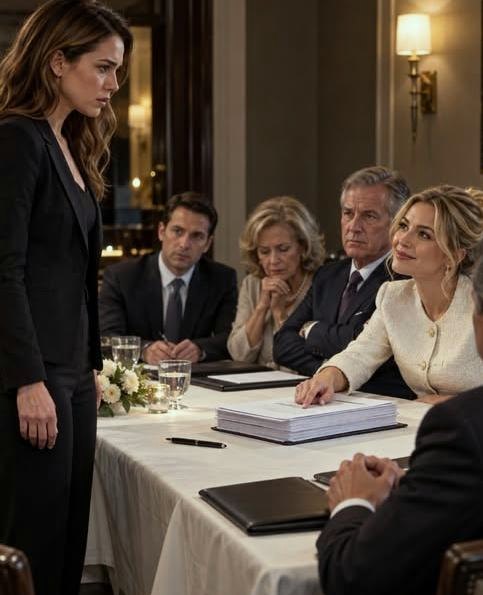
The private dining room smelled of pepper, butter, and the lemon peel floating in my untouched water. My mother’s hand remained wrapped around Dad’s sleeve. Jessica stood beside the table with mascara streaking down her cheeks.
I handed the phone back to Marcus.
“Tell me everything,” I said.
Dad looked at the floor. “Sarah—”
“Everything.”
The copper-watch lawyer slowly sat down again. “Mr. Bennett, you need to understand that another guarantee changes the nature of this matter.”
“I know what it changes,” Dad said.
“No,” I replied. “You know what it costs. I need to know why.”
He lowered himself into his chair. The leather gave a soft groan beneath him.
Mom began to cry harder. “Your father’s business has been failing.”
I stared at her. “What business?”
“His commercial repair company,” Dad said. “The contracts dried up last winter. We were behind on payroll, then taxes, then the mortgage.”
Marcus’s expression tightened. “The second account was a business credit line?”
Dad nodded.
“How much?” I asked.
He did not answer.
“How much?”
“Sixty-eight thousand.”
Jessica covered her mouth.
The number hung above us, heavier than the framed photographs on the wall.
I thought of every phone call my parents had made during the past year. Every time Mom said they were “managing.” Every time Dad changed the subject when I asked about the house. I had believed they were protecting their pride.
Instead, they had protected a lie with my name.
“Did you use the same signature?” I asked.
Dad looked at me then. His face seemed smaller than it had an hour earlier.
“No.”
Jessica’s head snapped toward him.
Dad reached into his coat and removed a folded sheet of paper. The creases had been pressed so many times that the edges had turned soft.
“I signed that one myself,” he said. “I told the lender it was my daughter’s authorization.”
My breath caught.
The room became painfully clear: the silver pen, the crushed napkin beside Jessica’s plate, the birthday bracelet still inside its little box.
“You signed my name,” I said.
“I signed as your father.”
“That is not a legal category.”
“I know.”
The word did not excuse him. But it was the first honest one he had offered all night.
Jessica rounded on him. “You said Sarah would cover the wedding debt.”
Dad flinched. “I said I would make sure the lender was paid.”
“You said she had money.”
“I said she had a career.”
“You promised me the wedding would happen.”
“And you promised you would stop borrowing.”
The sentence struck Jessica silent. Mom closed her eyes.
I turned to Marcus. “How did you find the transfers?”
“Jessica’s first package included a list of vendor deposits,” he said. “The amounts did not match her reported income. I checked the public lien filings on your parents’ house, then asked Northstar whether your name appeared in any guarantee records. They could not give me details without your authorization, but Elaine recognized the disputed file.”
Elaine held her canvas case against her chest. “I had been uneasy since the verification call. The caller knew facts from a public professional profile, but she did not know the private question Sarah would have answered naturally.”
My mother whispered, “I only wanted to help Jessica.”
I looked at her. “You helped her steal from me.”
Her lips trembled. “I thought she would repay it before you ever knew.”
“That is not help. That is concealment.”
One of the lawyers pushed the settlement agreement away. “No one signs anything tonight. The lender must be informed immediately, and every document must be preserved.”
Jessica grabbed the agreement. “If I give it back, the wedding is over.”
“The wedding was over when you financed it with debt and forged a guarantee,” I said.
She looked at me with the same fury she had shown at my kitchen island months earlier.
“You were always waiting for me to fail.”
“No. I was waiting for you to become responsible.”
“I needed one beautiful thing.”
“You needed a wedding you could afford.”
“I needed Brad to stay.”
That changed the air.
Brad had not been absent because of work. Jessica had told him the deposits came from her savings and a family gift. She had hidden the loans from him too.
Marcus’s phone rang again. This time the caller’s name was displayed clearly: Brad Miller.
Jessica stared at it.
“Don’t answer,” she said.
I did.
“Sarah?” Brad’s voice shook. “I’m outside. The venue manager just called me about a payment issue. Jessica told me you guaranteed everything.”
I looked across the table at my sister.
“Brad, come in.”
“No,” Jessica said.
The door opened before she could stop him.
Brad entered wearing a wrinkled blue shirt, his tie hanging loose around his neck. He looked from Jessica to the lawyers, then to the papers spread across the table.
“What happened?”
Jessica rushed toward him. “It’s complicated.”
“Did Sarah guarantee the loan?”
“No.”
“Did your parents transfer money?”
Jessica stopped.
Brad’s face changed. “Jessica.”
She reached for him. He stepped away from her hand.
“I asked you three times whether we could afford this,” he said. “You told me your family was helping.”
“They were.”
“By putting Sarah’s name on debt?”
“She would have helped if she weren’t so cruel.”
I saw Brad’s shoulders fall, not with anger but with exhaustion. He took a folded envelope from his pocket and placed it on the table.
“My parents canceled the venue this afternoon,” he said. “They found out the deposits were borrowed. The florist is demanding payment. The band has already refused to perform.”
Jessica stared at the envelope. “You promised me.”
“I promised to marry you. I did not promise to lie for you.”
She slapped him.
The sound cracked through the room.
Brad did not touch his cheek. He simply looked at her, and whatever remained between them seemed to collapse without a sound.
“I am going home,” he said.
“Brad, please.”
“I am not marrying someone who makes a debt out of every person who loves her.”
He left the envelope behind and walked out.
Jessica sank into the chair. The gold bracelet box sat near her elbow.
I picked it up and placed it in my purse.
She looked at me. “You brought me a gift.”
“Yes.”
“After all this?”
“I brought it before I knew what you had done.”
For the first time that night, she looked ashamed rather than frightened.
The next morning, Marcus and I met Elaine at Northstar’s office. I signed a formal statement denying both guarantees and gave the lender every message, document, and date I had preserved. The law firm withdrew from Jessica’s settlement. The false agreement was never submitted anywhere.
My father sold his repair company’s equipment and listed the house. He paid Northstar from the proceeds, then arranged a repayment plan for the remaining business debt. My mother moved into a small apartment near her sister. They did not ask me to cover the difference.
Jessica returned the wedding deposits she could recover and signed a written admission to the lender. She also gave me the birthday card from which she had copied my signature. It had been tucked inside her desk with the corner torn away.
I did not forgive her that day.
Forgiveness would have been too easy a word for something that had damaged every promise in our family.
But I accepted one thing from her: a list of every person she had lied to, every debt she had hidden, and every dollar she still owed. She delivered it herself, without asking me to stand beside her.
Months later, I met her in a quiet café near the courthouse—not for a hearing, not for a settlement, but because she had completed the repayment plan she had promised Brad and wanted me to see the final receipt.
She slid it across the table.
“I sold the dress,” she said.
“I know.”
“I sold the car too.”
“I know.”
“I thought you would be happy.”
“I am relieved.”
She nodded. “That is fair.”
Outside, a delivery truck rumbled past, shaking the café window. Jessica looked at the receipt between us.
“Do you still love me?” she asked.
The question was smaller than the one she had asked for fifty thousand dollars. It was also harder.
“Yes,” I said. “But love is not permission.”
She swallowed. “Will you ever trust me?”
“Not because you ask me to.”
“I know.”
She pushed the receipt closer. “Then I’ll have to earn it.”
I left the paper on the table and stood.
At home that evening, Marcus found the torn birthday card on my desk. I had kept it because the missing corner matched the place where Jessica had copied my signature.
He picked it up carefully.
“You want to throw it away?” he asked.
I looked at the three lines I had written to my mother: We are family. We protect one another. We tell each other the truth.
“No,” I said. “I want to keep it.”
“Why?”
I folded the card along its old crease.
“Because next time I write those words, I want them to mean something.”
Marcus set the card beside the unopened bracelet box.
On Monday morning, I returned the box to the jewelry store. The clerk offered me a credit slip. I used it to buy a simple gold pen for my own office.
Not silver.
Gold.
When it arrived, I engraved one sentence along its side—the same sentence I had spoken before tearing open the envelope at that birthday dinner.
My name is not a family resource.
And beneath it, in a smaller line, I added the only signature that mattered.
Sarah Bennett.
Missed the beginning?






