PART 4
The hospital corridor smelled of antiseptic, coffee, and wet wool.
It was nearly midnight when Daniel and I reached the cardiac ward. My legs felt heavy, and one hand kept returning to my stomach as though I could shield the tiny life inside me from every adult decision surrounding it.
Dr. Patel met us outside the consultation room.
“Your husband’s heart is stable,” she said. “But the records raised a question.”
Daniel looked at me.
“What question?”
She placed a thin medical file on the table.
“Twenty-six years ago, Daniel underwent a procedure at a private clinic. The file says he was advised that natural conception would be extremely unlikely.”
I stared at him.
The hallway seemed to narrow.
“Daniel?”
He closed his eyes.
“I didn’t know the procedure had failed,” he said.
“What procedure?”
“A vasectomy.”
The word fell between us.
I gripped the back of a chair. “You had a vasectomy?”
“It was after Mark was born. We had decided two children were enough.”
“You decided.”
“I was afraid to tell you later. Then you kept losing pregnancies, and I thought…”
“You thought what?”
“That the problem was yours.”
His voice broke on the last word.
I looked at Dr. Patel.
She spoke gently. “The procedure can fail, especially after many years. Your pregnancy is naturally conceived. The timing is unusual, but medically possible.”
A laugh escaped me, thin and stunned.
After three miscarriages, a stillborn daughter, and years of believing my body had betrayed me, the truth was not that I had been incapable of carrying a child.
My husband had been carrying a secret.
Daniel reached for my hand.
I let him touch two fingers, then pulled away.
“You allowed me to mourn myself,” I said.
“I know.”
“No, you don’t.”
He looked older beneath the hospital lights. The skin around his eyes had folded deeply, and his wedding ring was loose on his finger.
“I was ashamed,” he whispered. “I thought if I told you, every loss would become my fault.”
“It was never about fault.”
“I know that now.”
The door opened. Mark, Ethan, and Clara stood outside. Judith was behind them, holding a sealed envelope.
Mark’s face was drained of color.
“Mom,” he said, “the lender withdrew the demand.”
“Why?”
“Because Clara gave them the notebook and the letter.”
Judith nodded. “The agreement involving your property is suspended. They will not accept it as security.”
Mark lowered his head.
I looked at him. “And your company?”
He swallowed. “I sold my controlling share tonight.”
Ethan spun toward him. “You did what?”
“I sold it to pay the debt.”
“You’ll lose everything.”
“I already tried to make Mom lose everything.”
That was the unexpected wound—not the money, not the house, but the sound of my son finally naming what he had done without wrapping it in the word protection.
Clara stepped forward.
“I’m taking our son and staying with my sister until the accounts are separated,” she said. “I won’t let him grow up believing love means signing papers for someone who is frightened.”
Mark flinched.
“Clara, please.”
“No.”
She did not shout. That made it final.
Ethan sat in the nearest chair. His hands covered his face.
“I thought the baby would erase us,” he said.
I stood across from him. “Why would she erase you?”
“Because you wanted a daughter so badly. Because everyone would talk about the miracle, and we would become the sons with an elderly mother and a new baby.”
“You were afraid of being forgotten.”
He looked up.
The boy from the photographs was still there somewhere, buried under mortgages, pride, and the need to appear successful.
“You should have told me,” I said.
“We thought you would choose her over us.”
“I have spent forty-eight years choosing you.”
Nobody moved.
I reached into my coat and took out the brass locket. The hinge had loosened from Ethan’s hand striking the table, and the tiny photograph inside was bent at one corner.
“I carried this because I believed my family was complete,” I said. “I was wrong about one thing. Complete does not mean unchanged.”
Mark stepped closer.
“Are you cutting us out?”
“No.”
His eyes lifted.
“I am cutting you out of my decisions until you learn the difference between helping and taking control.”
Daniel nodded slowly.
The next morning, he signed a new arrangement with a financial adviser chosen by me, not by our sons. The house remained ours. Mark’s company was gone, but the warehouse debt was cleared through the sale, and no one was evicted. Ethan returned the papers he had taken from our filing cabinet and admitted he had known about the lender’s pressure for three weeks.
He also called his wife and told her the truth without asking me to soften it.
That mattered.
Not enough to repair everything. Enough to begin repairing one thing.
Dr. Patel examined me again before noon. The baby’s heartbeat filled the room, quick and stubborn.
Daniel stood beside the bed, but he did not touch me until I offered my hand.
“Do you still want her?” he asked.
I looked at the pulsing light on the monitor.
“I wanted her before I knew she was possible.”
“And now?”
“Now I want to meet the person she becomes.”
He pressed my fingers to his lips.
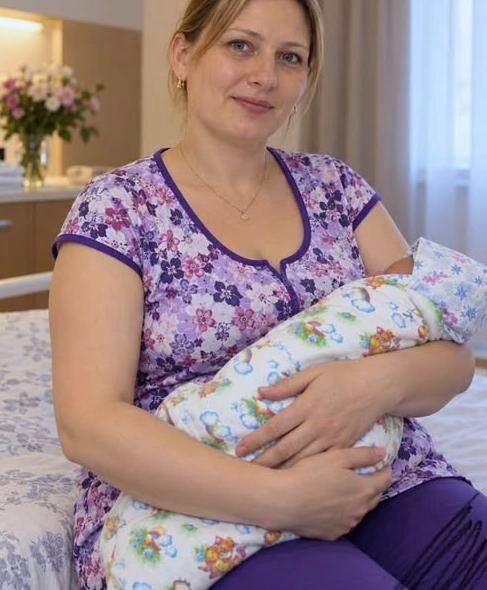
Months later, when my daughter was born, Ethan held her first because his hands were shaking too badly to hold the cup of water Clara gave him. Mark stood at the foot of the bed, crying into the sleeve of his shirt, while Daniel kept whispering the baby’s name as if he were afraid the world might take her back.
We named her Rose.
Not after the daughter we lost. Not as a replacement. Rose was her own name, chosen on the morning she arrived, when the nurse placed her against my chest and she opened one furious eye at all of us.
The old cedar box remained beneath my bed. I did not throw it away. I placed Rose’s hospital bracelet beside the yellow blanket, leaving the lid slightly open.
Some griefs do not disappear when joy enters the room.
They learn where to sit.
A week after Rose came home, Mark visited alone. He did not bring flowers or another document. He brought a small wooden toy he had carved himself, rough around the edges and unevenly painted.
He set it beside the bassinet.
“Mom,” he said, “I don’t expect you to trust me.”
“I don’t.”
He nodded, accepting the answer.
“But I want to earn it,” he said.
I looked at his hands. There was sawdust beneath his fingernails, and a thin cut crossed his thumb.
“Start by telling Clara everything about the accounts.”
“I already did.”
“Then start by telling your sister what you did.”
He had no sister.
He looked confused.
I touched Rose’s cheek.
“Tell her someday. When she asks why you were afraid of her.”
Mark bent over the bassinet. Rose curled her fingers around the wooden edge, refusing to sleep.
He smiled through his tears.
“She has your stubbornness.”
“No,” I said. “She has her own.”
That evening, I opened the cedar box and placed the photograph of my sons beside the hospital bracelet. Then I added a second photograph—the one Daniel had taken of Rose gripping Mark’s crooked wooden toy.
The locket hung from my neck, its repaired hinge catching the light.
Inside it, there was still no room for everyone.
So I stopped trying to make the past smaller.
I carried the locket to Rose’s crib, where my daughter kicked free of her blanket and shouted at the darkness like she had already found the whole world waiting for her.
I leaned close and whispered, “I’m here.”
Rose opened her eyes.
Then she grabbed the brass locket and would not let go.
Missed the beginning?






