PART 4
At the bottom was my mother’s name.
I reached for the paper, but Vivian held it away from me.
“Do not touch it,” she said. “You have spent enough of this evening touching things that do not belong to you.”
My mother stared at the signature.
Her face changed before she even read the rest.
“What is that?” I asked.
“An admission,” Vivian said. “Elena acknowledged that she sold her recipes to Bellavita and waived every claim against the restaurant.”
Marco stepped closer. “That document was never mentioned in the ledger.”
“Because she signed it later.”
My mother looked at Vivian. “I never signed that.”
Vivian’s mouth curved. “You did.”
Rosa moved beside us, leaning hard on her cane. “Let me see it.”
Vivian laughed. “You have seen enough.”
“No,” Rosa said. “I have seen the original.”
She reached into her cardigan again and pulled out a pair of reading glasses. Her hands shook as she examined the page from across the table.
Then she looked at my mother’s purse.
“Your mother still keeps the old recipe card?” Rosa asked.
My mother blinked. “What recipe card?”
“The one your husband made you sign when he was trying to teach you bookkeeping. The card with the olive leaf pressed into the corner.”
My mother slowly opened her purse. Beneath her wallet and a packet of tissues was a small laminated card, stained with tomato sauce. The corners were soft from years of handling.
She placed it beside the document.
Rosa bent over both pages.
“Same paper,” she whispered. “Different ink.”
Vivian’s eyes hardened.
I looked at the signature. It resembled my mother’s, but the final loop in the letter B was too sharp. My mother always made that loop round, almost childlike. I had watched her sign birthday cards all my life.
“Forgery,” I said.
Vivian snatched the page back.
“You have no expertise.”
“I have thirty years of watching her sign things.”
Marco turned toward the kitchen.
“Bring the staff out.”
One by one, the cooks and servers emerged. Luis still held the phone receiver. Behind him came a small woman with silver hair and a flour-covered apron.
My mother stared at her.
“Do you remember me?” the woman asked.
Mom’s hand flew to her mouth.
“Teresa.”
Teresa had been the baker at the community center. I had heard her name only once, when my mother was half-asleep and crying about a cake she had been forced to throw away.
Teresa crossed the dining room and placed a narrow cardboard box on the table.
“I kept the carbon copy,” she said.
Vivian took one step backward.
“What carbon copy?”
“The notice you made Elena sign. You told her it was a receipt for the classes. But you made three copies. One for you. One for the owner. One stayed in my kitchen because the copier jammed.”
Teresa opened the box.
Inside lay a brittle sheet covered in faded blue ink. At the bottom, beneath the false admission, was a line written by Vivian herself: Elena Bennett refuses partnership and releases all recipes without compensation.
But underneath that line, in Teresa’s handwriting, was a note dated the same day.
“Signed under threat. Elena was told her children would be removed from the program if she objected.”
My chest tightened.
I looked at my mother. “What children?”
“My students,” she said. “They were teenagers. Vivian threatened to cancel their scholarships.”
Vivian’s voice rose. “They were mine to protect.”
“No,” Teresa said. “They were yours to control.”
The front door remained locked, but nobody was trying to leave now.
The staff stood behind Marco. Rosa held the trust papers. Teresa held the carbon copy. My mother held the recipe card with the olive leaf pressed into its corner.
Vivian looked at all of them and understood that the room had changed sides.
Then she smiled.
“You think this makes you owners?” she asked. “The trust gives Elena the building, perhaps. But it also names the beneficiary.”
Marco’s brow furrowed.
Vivian turned to my mother.
“Read the last paragraph.”
Rosa unfolded the trust document fully. Her eyes moved down the page.
She stopped.
“What?” I asked.
Her voice broke. “The building belongs to Elena only until she dies. After that, it passes to the person who has maintained Bellavita’s recipes and staff.”
Marco stared at the paper.
Vivian’s smile widened. “Which is me, according to the amended filing.”
My mother’s face tightened.
“I never amended it.”
“No,” Vivian said. “Your husband did.”
For several seconds, the only sound was the telephone receiver humming in Luis’s hand.
My father’s name hung over us like smoke.
He had been dead for eight years. He had loved my mother, but he had also been the man who told her to stop making trouble when the recipes disappeared. The man who promised to fix the paperwork. The man who came home with a new menu and would not meet her eyes.
My mother sat down.
“I trusted him,” she said.
Marco knelt beside her chair. “Elena, look at me.”
She did not.
Vivian leaned toward her. “Give me the restaurant tonight, and I will let the staff keep their jobs. Refuse, and tomorrow morning Bellavita is finished.”
Marco stood.
“You cannot seize a charitable trust.”
“I can make every supplier stop delivering.”
Luis finally lowered the phone. “They already called six suppliers.”
My stomach dropped.
Vivian had not come for revenge alone. She had come with a plan to suffocate the restaurant before anyone could read the papers.
My mother looked at the staff.
“Did you know?” she asked Marco.
He swallowed. “I knew your husband had changed something. I did not know what. I stayed because he told me the restaurant would eventually be yours.”
“You stayed for eight years without telling me?”
“I was afraid he had another document. I was afraid if I spoke, he would sell the building before you knew.”
“Fear did not help me,” she said.
Marco lowered his head. “I know.”
That answer hurt more than an excuse would have.
My mother reached for the trust papers.
“Rosa, what exactly does the amended filing say?”
Rosa adjusted her glasses.
“It says the beneficiary must have worked in the restaurant for at least ten years and must preserve Elena Bennett’s original recipes under her name.”
Vivian’s smile faltered.
Marco looked at Teresa, then at Luis, then at the cooks behind him.
“How long have you worked here?” my mother asked.
“Twenty-four years,” Teresa said.
“Eleven,” Luis answered.
A cook near the doorway raised his hand. “Seventeen.”
Marco met my mother’s eyes.
“Thirty-one.”
The room seemed to inhale.
Vivian shook her head. “The filing names one beneficiary.”
Rosa turned the page around.
“No. It names a cooperative made up of the long-term staff.”
Vivian’s face collapsed.
The restaurant was not hers to inherit. It was not even my mother’s to sell. My father had eventually done one decent thing, though he had hidden it behind another betrayal: he had placed Bellavita into the hands of the people who had kept it alive.
But that was not the final surprise.
Marco reached into the red ledger and removed a small envelope. It was pale green, sealed with wax stamped by the restaurant’s original olive-leaf emblem.
He gave it to my mother.
“I was told to open this only if Vivian returned.”
Mom broke the seal.
She read the note silently. Then she handed it to me.
My father had written only three lines.
Elena, I stole your courage because I was too ashamed to admit what I had done. The restaurant belongs to those who learned from you. If you return, let them decide what happens next.
At the bottom was his signature, unmistakably uneven.
My mother closed her eyes.
Vivian watched her carefully. “He knew you would forgive him.”
“No,” my mother said. “He knew I would want the truth.”
She stood.
Her knees shook, but she remained upright.
“Marco, unlock the door.”
Vivian’s head snapped up. “You cannot let me leave.”
“I am not keeping you here.”
“You said the door was locked.”
“To stop you from walking out before Rosa finished speaking.”
My mother turned to her.
“You came to humiliate me because you thought shame still belonged to you.”
Vivian’s lips parted.
“You were wrong,” Mom continued. “It belongs to the person who uses it. Keep yours.”
Marco unlocked the front door.
Vivian stepped toward it, then stopped.
“What will you do?” she asked.
My mother looked at the red ledger, the recipe card, and the staff gathered around her.
“I will put my name on every menu,” she said. “And I will put yours beside the sentence explaining why you are no longer welcome here.”
Vivian’s expression twisted. “You would destroy my reputation?”
“No. I will describe your actions accurately. You can decide what that does to your reputation.”
Vivian left without another word.
Outside, the night air pressed against the glass. The restaurant remained full of people who had witnessed the entire thing, but nobody rushed back to their meals.
My mother returned to our table.
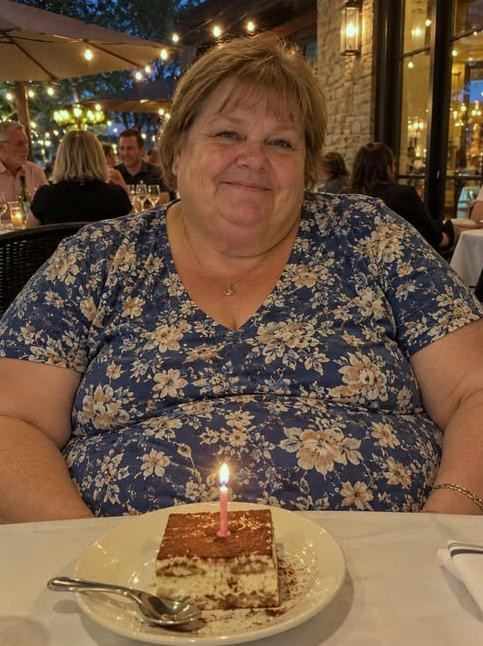
The tiramisu was still there, the cream slightly melted beneath its dusting of cocoa.
She picked up the spoon.
I held my breath.
“Mom,” I said, “you don’t have to.”
She looked at me, then at Marco.
“Is this still the best tiramisu in the city?”
Marco wiped his eyes with the heel of his hand.
“It is the recipe you taught me.”
“Then it had better be good.”
She tasted it.
For a moment, no one spoke.
Then she turned to the staff.
“Tomorrow, we rewrite the menu.”
Luis smiled. “Under your name?”
“Under all our names.”
Marco placed the red ledger beside her plate.
My mother opened it to the first recipe. Her handwriting filled the page, confident and slanting forward. Beside it, Marco added a new line in fresh ink.
Created by Elena Bennett. Protected by the people she fed.
My mother read it twice.
Then she pushed the tiramisu toward me and said, “Take the first bite. You started this birthday.”
I lifted the spoon.
Across the room, the brass olive emblem on the restaurant sign caught the light, and beneath it, Marco began writing my mother’s name into the menu where it had always belonged.
Missed the beginning?






