PART 4
I read the line twice because my mind refused to accept it.
Beneficiary upon default: Victoria Hrytsenko.
The hallway seemed to shrink around us. The damp coats, the peeling wallpaper, the muddy footprints on the tiles—everything pressed closer, as if the apartment itself were listening.
Diana reached for the document.
I pulled it against my chest.
“Why is my name here?”
No one answered immediately.
Then Oleg said through the phone, “Because I put it there.”
My fingers tightened around the paper.
“You knew?”
“I knew the agreement existed.”
“That wasn’t my question.”
“I knew your name was on the final clause.”
Diana made a strangled sound.
“You said she would never see it.”
“I thought I could fix everything before then.”
The sentence landed with a strange emptiness. Not an excuse. Not even a defense. Just another promise from a man who had built six years of our marriage on things he planned to repair later.
Elena took off her glasses and cleaned them with the corner of her scarf.
“Oleg signed the agreement in my office,” she said. “He said Victoria was investing in the property through family support.”
I turned toward the phone.
“Investing?”
“I was going to repay the money,” Oleg said.
“With what?”
He did not answer.
Sergei placed his folder on the radiator.
“With the money you and Victoria kept sending Diana,” he said. “That was the arrangement.”
I looked at Diana.
She was sitting on the bench, clutching the sleeve of her robe. For years, she had made herself small whenever she asked for money. She had perfected the lowered eyes, the trembling voice, the wounded silence.
Now she looked neither helpless nor manipulative.
She looked exhausted.
“Did you know my name was on this?” I asked.
She nodded.
“When?”
“From the beginning.”
The answer hurt more than the amount.
I remembered every conversation at our kitchen table. Every time Oleg had said, “She has nobody.” Every time Diana had thanked me with both hands wrapped around mine. Every time Artem had asked about the mountains while I checked whether we could afford another transfer.
“You knew,” I repeated.
“I knew Oleg used your name. I didn’t know he would keep doing it.”
“You helped him keep doing it.”
“Yes.”
Her honesty was so sudden that it frightened me.
Sergei opened a second folder.
Inside were receipts, account summaries, and photographs of the new apartment. A pale green sofa. A brass pendant lamp. A child’s room with white shelves and a desk beneath the window.
The apartment was not meant for Diana.
It was meant for her daughter.
“I bought it because I thought I could get her away from all of you,” Diana said. “Away from the debts, from Oleg’s promises, from Sergei coming to the door.”
Sergei’s jaw tightened.
“I came for my money.”
“And I was trying to make sure my daughter had somewhere to live if everything collapsed.”
That was the part I had not expected.
The lie had not been born from luxury. It had grown around fear, then swallowed everyone who trusted it.
But fear did not erase what she had done.
“Where is the rest of the money?” I asked.
Diana looked down.
“Some went to the apartment. Some paid Sergei. Some paid the bills I really had. And some…”
She stopped.
“Some what?”
She pressed her palm against her mouth.
“Some went to Oleg.”
The phone went silent.
I felt something inside me go still—not peace, not forgiveness. Recognition.
Oleg had not merely helped his sister. He had used her as a wall between himself and the consequences of his own decision.
“How much?” I asked.
“Four hundred thousand,” Sergei said.
Diana nodded.
“He said he needed it to replace the money at work.”
I closed my eyes.
The amount was almost exactly what we had paid over six years, one emergency at a time.
Oleg finally spoke.
“I was trying to save the business.”
“You were trying to save yourself,” I said.
“I was terrified.”
“So was Diana.”
“I never wanted you to suffer.”
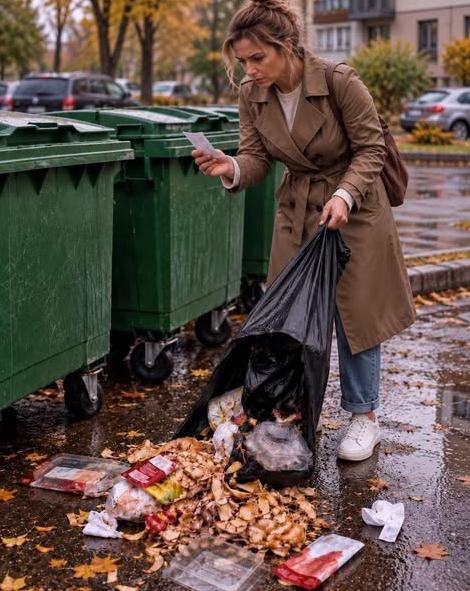
I looked at the worn receipt in my hand, the one that had begun all of this beside a leaking garbage bag.
“You didn’t need to want it. You only needed to keep choosing it.”
He stopped speaking.
At four forty-five, Sergei received a call from his accountant. The company had agreed to accept the apartment as settlement, but only if the transfer papers were signed that evening.
Diana stood abruptly.
“No. That apartment is for my daughter.”
Sergei looked at her.
“Then pay the debt.”
“With what?”
No one replied.
That was the cruel center of the entire story. The apartment had been bought with money taken from people who trusted us, but losing it would punish a child who had not lied to anyone.
I thought about Artem’s split sneakers. I thought about the other little girl’s room with the white shelves.
Then I called Oleg.
“Come here.”
“Victoria—”
“Come here now. Bring every bank statement, every transfer record, and the company papers.”
He arrived forty minutes later, pale and soaked from the rain. He stopped when he saw Elena, Sergei, and the documents spread across the table.
Diana’s daughter stood in the doorway of the bedroom, still wearing her school uniform. She had heard enough.
“Mom,” she whispered, “are we losing the apartment?”
Diana turned toward her.
“I don’t know.”
The girl looked at me.
“Is it because of us?”
I crossed the room and knelt so we were eye to eye.
“No,” I said. “None of this is because of you.”
Oleg flinched.
I stood and faced him.
“You are going to sell the car.”
He stared at me.
“What?”
“The car. The storage unit. The shares you kept hidden from me. Everything that can be sold without destroying someone’s home.”
“You can’t order me around.”
“No. But I can refuse to sign anything that protects you.”
He looked toward the document with my name on it.
For the first time, he understood what that clause meant. The apartment could become mine, but the debt would still remain his. The business could survive, but only if he gave up the comforts he had protected while our family went without.
Sergei offered a compromise.
He would accept the car, the shares, and a signed repayment schedule from Oleg. The apartment would remain with Diana’s daughter, but Diana would have to give up control of the property until the debt was cleared. Every payment would go directly to Sergei, not through Diana and never through me.
I agreed to one condition.
“My name comes off the agreement,” I said. “I will not own a home built from my silence.”
Oleg looked at me.
“And us?” he asked.
I studied his face. I had loved that face across cheap dinners and unpaid bills. I had believed his sighs meant compassion. I had mistaken secrecy for protection.
“Our marriage is not a payment plan,” I said. “It ends today unless you tell the truth to everyone you lied to.”
His eyes filled.
“Victoria, please.”
“No begging. Bring the truth.”
He sat at the table and began making the calls.
To the business partners, he admitted the missing money.
To his parents, he explained that Diana had not been the only person receiving funds.
To the bank, he requested the full account history.
Each call took something from him. Not his life. Not his health. The carefully protected version of himself that everyone had been asked to believe.
Diana watched him until the last call ended.
“I’m sorry,” she said.
I looked at her.
“Sorry is not enough.”
“I know.”
“Then do something that costs you.”
She nodded.
The next morning, she signed away the apartment’s control and accepted a second job cleaning offices at night. She stopped asking for money through Oleg. She opened a separate account for her daughter’s expenses and sent me photographs of every bill before paying it.
I did not become her rescuer again.
But I did not abandon the child either.
For a while, Artem refused to speak about the mountains. He had heard me crying in the bathroom and understood more than I wanted him to.
When I finally bought him new training shoes, he held the box without opening it.
“Are they really mine?” he asked.
“Yes.”
“Did Aunt Diana need something?”
I sat beside him and answered carefully.
“Adults made choices. You don’t have to pay for them.”
He opened the box.
The shoes were black with orange laces, bright enough to look almost defiant against our old hallway floor.
Oleg moved into a rented room above his office. He sent every spare hryvnia toward the debt. He did not ask me to visit. He did not send messages about starting over. He understood that a person could not rebuild trust by demanding access to the rubble.
Three weeks later, Sergei came to our apartment with the final papers removing my name from the agreement.
He placed them beside the old receipt I had kept in my wallet.
“You could have taken the apartment,” he said.
“I know.”
“Why didn’t you?”
I looked at the receipt, its ink faded where rain had touched it.
“Because my name was never supposed to be the price of someone else’s lie.”
He nodded and left.
That Sunday, Diana’s daughter came over with a school project. Artem helped her build a cardboard model of a mountain waterfall, gluing small stones around a strip of blue paper.
I watched them argue over where to place the bridge.
“Put it here,” Artem said.
“No, people need to cross it from this side,” the girl replied.
They moved the bridge together.
On the table, beneath the drying glue, lay two things: the signed papers that freed me from Diana’s apartment and the receipt that had exposed the truth.
The receipt had started as trash.
By evening, it was pinned above my desk—not as a reminder of what they owed me, but of the exact moment I stopped confusing sacrifice with love.
Artem came running from the hallway, holding the finished model with both hands.
“Mom, look,” he said. “The bridge finally reaches both sides.”
I touched the orange laces of his new shoes and smiled.
“Then don’t let anyone move it again.”
Missed the beginning?






