PART 4
The return address belonged to the hospital where my grandfather had been treated during his final month.
I stared at it while the clock struck one.
Daniel saw the name too.
“Give me that envelope,” he said.
Mrs. Alvarez tucked it against her chest. “You have taken enough from this family.”
“I took nothing.”
“You took buildings.”
“I kept them from being seized.”
I turned toward him. “By whom?”
He looked at the broken whiskey bottle beneath the piano.
“By the lender,” he said. “Your grandfather borrowed against the properties. I was trying to prevent foreclosure.”
That was the first fact he had offered that sounded like fear instead of arrogance.
I opened the hospital envelope.
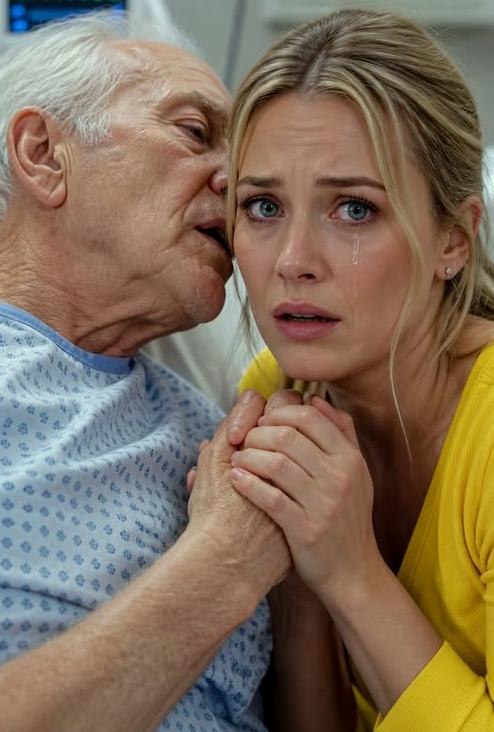
Inside was a copy of a medical billing statement, a handwritten note, and a photograph of a woman I did not recognize. She stood beside my grandfather outside the hospital’s rehabilitation wing, holding a folder against her stomach.
The note contained only one sentence.
“Ask Dr. Whitmore why your grandfather believed the theft began before Daniel touched a deed.”
At 1:08 a.m., I called the number printed on the billing statement.
A tired woman answered on the fifth ring.
“Dr. Whitmore speaking.”
“My name is Genevieve Carter. My grandfather was Samuel Carter.”
The doctor inhaled sharply.
“Are you with your father?”
“Yes.”
“Then do not let him leave with those papers.”
Daniel moved toward the hall.
I stepped into his path.
“What did you do?” I asked.
He rubbed both hands over his face. The funeral’s white thread still clung to his sleeve.
“Your grandfather had kidney failure,” he said. “The treatment was expensive. The insurance rejected part of it. He needed cash immediately.”
“You forged the transfers.”
“I borrowed against the properties.”
“You put them in your company.”
“So the bank would approve the loan.”
“And then you kept taking money.”
His mouth tightened. “The first loan paid for his treatment. The second covered the taxes. After that, the business collapsed.”
I thought of the statement marked family gift. I thought of my mother’s flowers and Chloe’s empty chair at the hospital.
“Why did you never tell me?”
“Because you would have called it theft.”
“It was theft.”
Daniel flinched, but he did not deny it.
Dr. Whitmore remained on the line. “Genevieve, your grandfather did not want you to know about the first loan. He told me your father had saved his life.”
I closed my eyes.
There it was—the piece none of us had expected. Daniel had not begun by stealing for a sports car or a vacation. He had used the properties to pay for treatments that kept his father alive.
But the desperate son had not stayed desperate.
He had discovered that nobody was checking the accounts closely. He began paying his debts with rental income. Then he bought a second house. Elaine signed because she believed the money would be returned. Chloe accepted the consulting payments because Daniel told her they came from legitimate management work.
The fraud had started as a rescue and grown into a family habit.
Dr. Whitmore continued, “Your grandfather also told me something else. He refused another treatment two days before he died.”
My throat tightened. “Why?”
“He said he wanted to remain lucid long enough to finish a letter. He was afraid that if he died confused, your father would control the story.”
Daniel gripped the banister.
“I never wanted him to suffer,” he said.
“No,” I replied. “You wanted him alive when it helped you, and silent when it did not.”
His shoulders collapsed.
At seven thirty, we were in Mr. Halpern’s office above the bank. Rain struck the tall windows, and the city below looked smeared with charcoal. My mother and Chloe arrived together. Elaine wore the same pearl earrings she had worn at the funeral. Chloe carried the cedar music box, its brass bird rattling inside.
“You left this in the sitting room,” she said.
“I did not ask you to bring it.”
“I thought it was mine.”
“It was never yours.”
Mr. Halpern placed the trust documents on the table. “The Mercer sale is suspended. The trust owns the properties. Daniel has no authority to sign for them.”
My father stared at the papers.
“What happens to us?” Chloe asked.
I opened the ledger. “That depends on what you return.”
Elaine began to cry. “We are your family.”
“So was he.”
No one answered.
Mr. Halpern explained that the mortgage could be settled by selling Northmere’s remaining assets and using the profits from the orchard. The family house, however, was not part of the trust. Samuel had left it to Daniel because he wanted him to have one place he could not lose—provided he admitted what he had done and stopped trying to sell what was not his.
Daniel looked at me.
“He gave me the house?”
“He gave you the chance to live honestly in it,” I said. “Those are not the same thing.”
The cedar box sat between us. Chloe slowly turned its key. The brass bird rose, wings trembling, and played the tiny melody my grandfather used to hum while pruning the orchard.
Then Chloe placed the box in front of me.
“I knew about the payments,” she said.
My mother turned. “Chloe.”
“I did not know about the forged deeds. I knew Dad sent me money every month. I knew it came from Northmere. I told myself it was for helping Grandpa’s accounts.”
“You never helped him,” I said.
“I know.”
She removed a folded receipt from the music box’s hollow base. It was from the first hospital payment, dated three years earlier, signed by Daniel and witnessed by Elaine.
My grandfather had hidden it there because he wanted me to see the beginning, not only the ruin.
Chloe pushed the receipt across the table.
“I will return everything,” she said.
My mother shook her head. “You cannot be serious.”
“I can sell the apartment.”
“You worked for that money.”
“No,” Chloe said. “I spent it.”
That admission changed the room more than any accusation had. She removed her pearl earrings and placed them beside the receipt.
“I bought these with the first payment,” she whispered. “I wore them to his funeral.”
My father sat down.
For the next three hours, we went through every account. Elaine signed a repayment agreement. Chloe surrendered the apartment and every remaining payment. Daniel transferred Northmere’s shares to the trust and agreed to manage the orchard under Mrs. Alvarez’s supervision for a salary, not a percentage.
It was not forgiveness.
It was accounting.
At noon, Dr. Whitmore arrived with the original hospital file. She confirmed that my grandfather had remained mentally competent when he signed the trust. She also gave me the last page of his medical notes.
His final request was written in blue ink.
“Let Genevieve decide what the family deserves after she knows what the money cost.”
I read it twice.
Then I made my decision.
I kept the trust, but I did not keep all the profit. The orchard income would pay for medical care for elderly tenants in the four Mercer buildings. My grandfather had rented those homes below market value for years. His family had seen the properties as numbers; he had seen the people living inside them.
The remaining money covered the debt, restored the stolen accounts, and established a small fund named after the nurse who had sat with him when I went home to sleep.
Daniel kept the house.
But he had to live in it without hiding behind a company, a signature, or a family story.
Before we left Mr. Halpern’s office, he approached me alone.
“I did save him,” he said.
“I know.”
“And then I ruined everything.”
“You ruined what you chose to ruin.”
His eyes moved to the cedar box. “Does that mean you hate me?”
I thought about the hospital bed, the unpaid bills, the forged deeds, and the way he had stood beside the safe demanding the letter before asking whether his father had suffered.
“No,” I said. “It means I know exactly what you did.”
He nodded as if that answer weighed more than hatred.
At the courthouse archive that afternoon, I filed the trust papers with my grandfather’s original deeds. Mrs. Alvarez stood beside me, holding the brass key to the safe. Chloe waited outside with the music box. Elaine had gone home to begin selling her jewelry.
The clerk stamped the final page.
The sound was small.
It still seemed to travel through every room my family had ever lied in.
That evening, I returned to the orchard with the receipt from the music box in my coat pocket. The trees were bare, and the old irrigation pump coughed whenever the wind pressed against it. I placed my grandfather’s ledger on the wooden table in the packing shed and opened to the first page.
Mrs. Alvarez stood beside me.
“What will you write?” she asked.
I picked up the pen he had left clipped to the ledger’s spine. The ink had dried, but the nib still scratched across the paper.
“Everything,” I said.
From the road came the sound of a car stopping. Daniel stepped out carrying a crate of apples from the storage room. He set it down, checked the inventory, and waited for me to sign the delivery sheet.
He did not ask for the trust.
He did not ask to be rescued.
He simply pointed to the final line on the form.
“You need to add the name of the tenant who received the damaged crate,” he said.
I looked at him.
“Why?”
“Because if we hide small things, we will eventually hide large ones again.”
I handed him the pen.
Daniel wrote the tenant’s name beneath the number of apples, and the brass bird inside the cedar box began its faint, uneven melody on the shelf behind us.
This time, nobody called it an inheritance.
Missed the beginning?






