PART 4
The message came from the fertility clinic. It contained a warning about the embryo used in my treatment—and a name I had never expected to see connected to our marriage…
I opened it with shaking fingers.
The room around me had become a storm of voices, but the words on the screen were unmistakable.
Please call immediately. The consent record attached to your treatment file was altered after submission. The witness listed on the amended form is Mark Vale.
I looked at my husband.
He saw my face and understood that another wall had fallen.
“What did you do?” I asked.
Mark’s mouth tightened. “Not here.”
“Here is exactly where you wanted to perform.”
The host had stepped away from the microphone. Board members clustered near the stage stairs. Reporters were filming with their phones. Tiffany stood several feet from Mark, one hand pressed against her abdomen, her red dress bright beneath the crystal lights.
Dana took the phone from me and read the message.
“What does this mean?” she asked.
I could barely breathe. “The clinic used an embryo created from my eggs and donor material. Mark had no right to alter the consent record.”
Mark said, “I was protecting you.”
Tiffany laughed once, a broken sound. “You changed medical records and called it protection?”
“I was trying to make sure Claire couldn’t take the embryo if we divorced.”
The words struck harder than the forged signature.
I had spent seven years believing infertility had been a tragedy we carried together. Mark had sat beside me beneath fluorescent clinic lights. He had watched nurses explain procedures. He had kissed my forehead when another attempt failed.
All that time, he had been imagining the child as another asset to control.
“You knew?” I whispered.
“I knew the treatment might work.”
“And you planned this gala before the result came back.”
His silence answered for him.
Tiffany stepped between us. “You told me she was leaving the company because she was unstable.”
“She was distracted.”
“You told me the baby was mine.”
The hall seemed to inhale.
Mark turned sharply. “Tiffany.”
She pulled a folded clinic receipt from her handbag. The paper had been creased so many times that the ink was fading.
“Two months ago, you took me to a private clinic,” she said. “You said we needed proof that I was pregnant before the board meeting. The test was negative.”
Mark’s face tightened.
“You told me the laboratory had made a mistake,” Tiffany continued. “You paid a doctor to print a positive result. You promised that once Claire signed over her shares, we would announce our child and you would marry me.”
Every word landed in the open air.
I looked at her. “You weren’t pregnant?”
“No.” Her voice shook. “I thought he loved me. I thought he was building a future with me.”
Mark reached toward her. “Tiffany, listen—”
She slapped him.
The sound cracked across the marble atrium.
His head turned with the impact. A red mark rose on his cheek, matching the dress she had chosen to wound me.
“I was your excuse,” she said. “Not your future.”
The company attorney, Harold Klein, came up the stairs holding the document projected behind us.
“Mark,” he said, “the board has reviewed the banking report. Your executive authority is suspended immediately.”
Mark stared at him. “You work for me.”
“I work for the corporation.”
“Claire owns the corporation,” Tiffany said quietly.
“No,” I corrected. “The employees built it with us. That is why I won’t let either of you burn it down.”
The words surprised me as much as they surprised them.
For years, I had treated the company as proof that my marriage mattered. If the business succeeded, perhaps our sacrifices had meant something. If Mark stood beside me at the podium, perhaps the years of disappointment had not been wasted.
Now I understood the difference between what we had built and what he had taken.
Dana turned to the board. “The emergency loan is secured against company property through a forged document. The bank has frozen the account, but the building is still exposed.”
“I can cover the debt,” I said.
Mark looked at me. “With what?”
“My voting shares.”
Dana’s head snapped toward me. “Claire.”
“I’m not transferring them to him. I’m using them to force a restructuring.”
The board members gathered closer.
I spoke slowly so every person could hear. “Mark loses executive control. The holding company is dissolved. The company buys back the unauthorized consulting payments from Tiffany only if she turns over every document she received and signs a sworn statement about the altered records. I will personally guarantee the building for ninety days, but I will not be the sole owner after this.”
Harold studied me. “What are you proposing?”
“A worker trust. The employees receive a share of future profits. The founders’ shares remain divided, but the board becomes independent.”
Mark laughed bitterly. “You’re giving away the company.”
“No. I’m taking it away from people who confuse ownership with permission.”
The employees had gathered at the edge of the atrium. Some had worked beside me since the garage days. Miguel from engineering stood with his old laptop tucked under one arm. Priya from payroll held a ring of office keys. They did not cheer.
They simply moved closer.
That was enough.
Mark looked around and realized he had no room left that belonged to him.
He turned to me. “Claire, please. We can fix this privately.”
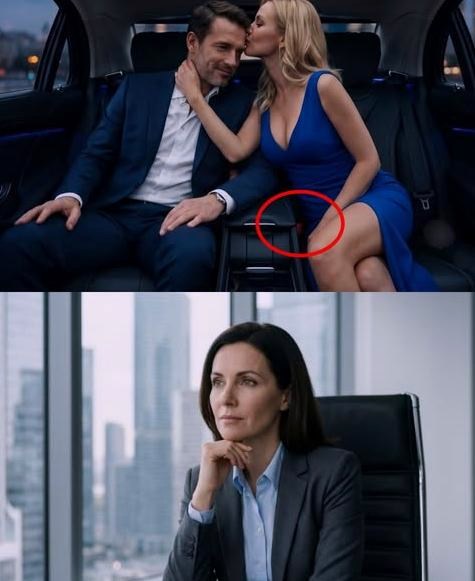
“You had privacy when you laughed in the car.”
“I was afraid.”
“So was I.”
“I didn’t know how to keep everything.”
“That was the problem. You believed everything was yours to keep.”
His eyes dropped to the medical report on the podium.
“Is the baby mine?” he asked.
The question cut through the anger because it was the first thing he had said all night that sounded human.
“The embryo came from my eggs,” I said. “The donor agreement is sealed. Legally, the child is mine.”
“That isn’t what I asked.”
“I know.”
He waited.
“The clinic will answer that question after the consent records are audited. Until then, you will not come near my treatment, my body, or my child.”
His face folded—not with regret, but with the terror of losing control over a future he had already tried to claim.
Tiffany removed her red earrings and placed them on the podium.
“I’m leaving,” she said.
Mark looked at her. “You have nowhere to go.”
“I have the truth.”
She handed Dana a small metal flash drive. “These are the payment records, the messages about the forged signature, and the clinic receipt. I copied them before tonight.”
Dana accepted it. “Why did you wait?”
Tiffany looked at me. “Because I thought I was helping him destroy you.”
She swallowed.
“Then I saw the pregnancy result. He didn’t even know whether the child was his, and he still planned to use it in the announcement.”
I did not forgive her. Not then.
But I understood that betrayal could have layers, and sometimes the person who helped build the trap was also the one who knew where the loose board was.
Rosa came to me after the board signed the emergency suspension. Her brass key tag tapped against her knuckles.
“I’m sorry,” she said. “I should have told you sooner.”
“You saved the original page.”
“I was afraid.”
“So was I.”
She nodded toward the stage. “What will you do now?”
I looked at the company logo behind us, the one Mark had accepted praise for while I was still correcting its first spelling mistake.
“Tomorrow, I’ll meet the employees.”
“And tonight?”
“Tonight I’m going to the clinic.”
Dana drove me there herself. The streets outside the civic hall were crowded with gala guests, reporters, and taxis. The red dress, the forged page, and the positive report had already become the city’s favorite scandal, but I felt no triumph.
At the clinic, a nurse led me into a small consultation room with pale green walls. A folder waited on the desk. Beside it sat a sealed tray containing the original consent form.
The doctor apologized before she explained.
Mark had not altered the embryo record to steal the child. He had altered it to make himself the sole legal decision-maker if anything happened during treatment. He had submitted the change through a private consultant connected to the holding company.
The embryo was mine. The pregnancy was real. The altered form could be voided.
“And the donor?” I asked.
“Anonymous,” the doctor said. “There is no legal connection to Mark.”
The answer brought relief, then grief.
I had wanted Mark to be the man beside me in that room. I had wanted the child to arrive inside a marriage that had survived its hardest years.
Instead, I had found out that the marriage had been surviving me.
At 2:03 in the morning, the clinic printed a new report. The nurse placed it in a clear sleeve and handed it to me.
Positive.
I held it against my chest, not as evidence and not as a weapon, but as the one document Mark could never forge into belonging.
Before leaving, I asked the nurse for a pen.
On the back of the report, I wrote the name of the worker trust that would own the first protected share of the company.
I named it after my mother’s garage, the place where the first idea had survived because nobody had yet learned how to take credit for it.
The next morning, the employees voted unanimously to accept the restructuring. Mark’s access card stopped working at 9:00. His Porsche was returned to the company lot, its gear shift cleaned until not even Tiffany’s perfume remained.
The bank released the operating account after the forged collateral was voided. Tiffany surrendered the consulting money through a repayment agreement and gave the board every file she had copied. She left the company without a farewell speech.
Rosa became head of internal records.
Dana became the corporation’s permanent counsel.
And I kept the positive result in a locked medical file, far away from boardrooms and men who thought a woman’s body was another line item.
Mark’s final message arrived three days later. It contained no apology, only one question: “Will you let me see the clinic report?”
I did not answer.
I sent him a photocopy of the document that mattered instead—the signed amendment removing him from every medical decision connected to my pregnancy.
At the bottom, beneath my signature, the clinic had stamped one word in dark blue ink.
VOID.
That evening, I stood in the old garage with Rosa, Dana, and twelve employees crowded around the workbench where our first server had once hummed.
The original company ledger lay open beneath the hanging lamp. Its pages smelled of dust and machine oil. My mother had written the first expense in careful handwriting: one borrowed table, one computer, one impossible idea.
Miguel pointed to the empty space beside the entry.
“What goes there?” he asked.
I placed the new trust certificate on the page.
“Everyone who kept it alive,” I said.
Rosa smiled and reached for the ledger.
Outside, delivery trucks rattled past the garage, carrying packages through a city that had already found another scandal to discuss.
Inside, the old server light blinked green.
And beneath it, the first line of the company’s new record read: Claire Vale, founder, present.
Missed the beginning?






