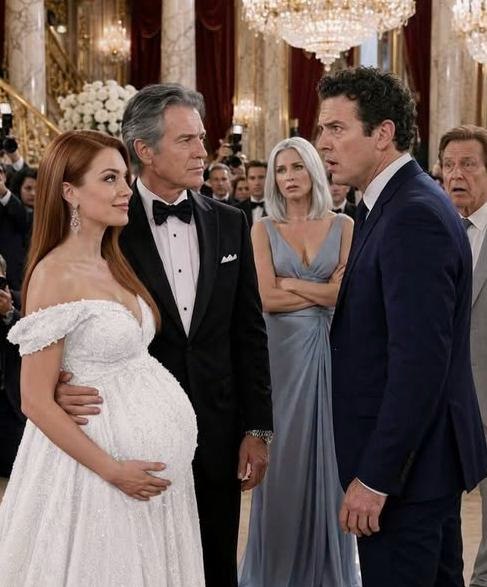
The night Julian ended our marriage, he placed my fertility records on the kitchen table like evidence in a trial, then poured himself a drink.
“Chloe is pregnant,” he said.
The ice clicked against the glass.
“So now we know who the problem was.”
I stared at him, unable to make my lungs work. For six years, I had endured injections, surgeries, hormone treatments, and two miscarriages so early that Julian’s mother called them “barely losses.” Julian had held my hand through every waiting room. He had kissed my forehead after every failed procedure.
He had also known the truth.
By sunrise, our joint account was empty. My health insurance had been canceled. While I was at work, Julian changed the locks on the house and had my clothes packed into three cardboard boxes. The only thing left in my car was a chipped ceramic travel mug shaped like a yellow bird, the one my sister had given me before she died.
When I returned, Julian stood behind the porch railing in his tailored suit.
“You can stay with a friend,” he said.
“I have nowhere to go.”
“That isn’t my responsibility anymore.”
“Julian, you promised we would face this together.”
His mouth tightened.
“You promised me a family.”
He drove away before I could answer. The red taillights vanished beyond the cedar trees, leaving me on the gravel with my suitcase, my bird-shaped mug, and a pain so heavy it felt physical.
Across the narrow road, Garrison Blackwood had watched everything.
Cedar Hollow knew him as the reclusive former sheriff who lived in an aging farmhouse with a three-legged hound named Copper. He was tall, silver at the temples, and so quiet that men like Julian mistook silence for weakness. Garrison wore a faded brown vest with a brass sheriff’s star stitched inside the pocket, though no one had seen him wear the badge in years.
At 9:20 that night, he crossed the road.
“Do you have somewhere safe to sleep?” he asked.
“I’ll find a motel.”
“You won’t find one with an empty bank account.”
Shame burned my face.
“I don’t need charity.”
“Good,” he said. “Because I’m not offering charity.”
Inside his kitchen, the air smelled of cedar smoke and black coffee. Copper rested beneath the table, one ear lifted. Garrison placed three things in front of me: a spare key, the name of a divorce attorney, and a sealed envelope from a fertility specialist in Boston.
I looked at the envelope.
“What is this?”
“An appointment.”
“I can’t afford one.”
“It’s already paid for.”
“Why?”
His gray eyes settled on mine.
“Because your husband lied.”
He slid a photocopied medical report across the table. Julian’s name appeared at the top. My fingers went cold as I read the conclusion: severe male-factor infertility, with an extremely low likelihood of natural conception.
I had never seen it before.
“Where did you get this?” I whispered.
“Your husband arranged for the original to disappear.”
“How would you know that?”
“Because I kept a copy.”
The old sheriff reached for a thick brown folder tucked beside the breadbox. His hand stopped just above the clasp…
PART 2
His fingers closed around the folder, but he did not open it immediately.
At 9:27 p.m., the clock above the stove ticked so loudly that I could hear every second falling between us. Copper shifted beneath the table, his claws scraping the wooden floor.
“Why were you investigating my husband?” I asked.
Garrison looked toward the dark window.
“I wasn’t investigating Julian when this began.”
“Then who were you investigating?”
“A clinic administrator named Ruth Bell.”
He opened the folder. Inside were copies of invoices, appointment logs, and handwritten notes marked with dates from six years earlier. My name appeared on several pages. So did Julian’s.
My stomach twisted.
“Why would a former sheriff have fertility clinic records?”
“Because Ruth Bell was connected to a prescription fraud case I worked before I retired. She contacted me after someone asked her to alter a patient file.”
“Someone?”
Garrison’s jaw tightened.
“She was afraid to name him.”
A car passed outside, its headlights sliding across the kitchen walls. I flinched before realizing I was gripping the yellow bird mug hard enough to crack it.
“Did Julian pay her?”
“I believe he paid someone.”
“That isn’t an answer.”
“No. It isn’t.”
At ten o’clock, Garrison drove me to the motel anyway. He refused to let me stay alone in the parking lot, so he waited beside the reception desk while I signed the paperwork with a borrowed card. The clerk’s plastic pen left a red mark across my thumb.
“Come to Boston in the morning,” he said. “The specialist can see you at eleven.”
“I don’t understand. Julian’s report says he can barely conceive.”
“Your report says nothing about what his family wanted you to believe.”
The next morning, at 7:40, I sat in Garrison’s truck while the heater rattled beneath the dashboard. He handed me a folder with my name printed on a white label.
Inside was a second report from the same year as Julian’s. It showed that my hormone levels were normal and that the repeated procedures had never been medically necessary.
I felt the world tilt.
“They kept treating me because they knew I would keep paying,” I said.
“They kept treating you because someone wanted the records to tell a different story.”
“Who?”
Before Garrison could answer, his phone rang. He listened, said nothing, and ended the call.
“What happened?”
“Ruth Bell agreed to meet us.”
“Where?”
“At the closed county archives.”
The building stood behind the courthouse, a brick rectangle with boarded windows and a rusted sign. At 2:15 that afternoon, Ruth waited beside a metal filing cabinet, twisting a brass key ring around her fingers.
“You should have come sooner,” she said.
Garrison’s expression hardened.
“You said you were ready.”
“I said I was tired of being afraid.”
She looked at me.
“Julian didn’t only hide his report. He ordered the clinic to list every failed procedure under your name.”
“Why?”
Ruth swallowed.
“Because he needed his family to believe you were the reason he had no children. His mother threatened to destroy the clinic. Julian threatened to destroy me.”
My knees weakened.
“What did he do with the original report?”
Ruth reached into her coat and pulled out a small brass key.
“It was never destroyed,” she said. “It was locked away with the records of the donor program.”
Garrison stared at the key.
“Ruth, what did Julian sign?”
Her eyes filled with fear.
“Not Julian.”
She turned toward the archive cabinet and raised the key. Then the hallway lights went out, and somewhere behind us, a lock began to turn…
PART 3
The archive door opened before Ruth could fit the key into the cabinet.
Julian stood in the darkness with his mother, Margaret, beside him. He wore the same expensive suit from the night he threw me out. Margaret held a leather handbag against her ribs, her knuckles white around the clasp.
“You were always too curious, Evelyn,” Julian said.
Garrison stepped between us.
“Leave.”
Julian laughed softly.
“You still give orders as if that badge means something.”
“It means I recognize a confession when I hear one.”
Ruth backed against the cabinet.
Margaret’s face had gone pale.
“Julian, we should go.”
“No,” he snapped. “She wants answers. Let her have them.”
He looked at me with the cold confidence of a man who believed money could erase any wound.
“The report was real,” he said. “I was infertile. My mother found out before the wedding and told me not to ruin my life over a medical detail.”
My voice came out thin.
“So you ruined mine instead.”
“You were already obsessed with having children.”
“You made me undergo surgeries.”
“You agreed to them.”
Ruth suddenly slammed the brass key into the cabinet lock.
The drawer opened with a metallic groan. She pulled out a sealed brown packet and placed it in my hands.
“Read the signature,” she whispered.
The original report was there, along with a payment ledger. Julian’s name appeared beside six transfers to Ruth’s private account. Margaret’s name appeared beside the authorization for every unnecessary procedure.
But the last page made my fingers stop shaking.
It was an embryo consent form. Julian had signed it six years earlier, authorizing the clinic to use donor material while telling me the embryos were genetically his. He had planned to blame me if the treatment failed, then claim the children if it succeeded.
I looked up.
“You knew the embryos weren’t yours.”
Julian’s face changed.
“I knew you wanted a family.”
“That isn’t what I asked.”
Garrison took the form from my hand and read the final signature.
“Margaret signed as witness.”
Ruth began to cry.
“I kept copies because I knew one day he would come back for the embryos.”
“He already did,” Garrison said. “The transfer request arrived yesterday.”
Julian lunged for the packet. Garrison caught his wrist and held it against the cabinet without raising his voice.
“You are not taking anything from her.”
Julian stared at him.
Then his anger gave way to confusion.
“Who are you?”
Garrison released him and pulled a black card from his coat. The name embossed beneath the county seal was not sheriff. It read Garrison Blackwood, founder and trustee of the Blackwood Reproductive Foundation.
Julian looked from the card to him.
“No,” he whispered.
“Yes,” Garrison said. “The foundation owns the clinic, the research center, and the company that just purchased your employer’s debt.”
Margaret gripped the cabinet.
“You can’t do this.”
“I’m not doing anything to you,” Garrison replied. “You did it to yourselves.”
His phone rang.
He answered, listened, and slowly turned toward me.
“What is it?” I asked.
“The Boston specialist received your test results.”
He held my gaze.
“Evelyn, you’re already pregnant…”
Julian saw the name on Garrison’s card—and froze…
I thought the hidden report was the worst betrayal. I was wrong. The final truth changed what Julian could claim—and what I was carrying.
“Some things are meant to be opened.”
Julian’s face lost its color.
👇 The final chapter is open






