
That evening my father told me laughing on the phone that my seven-year-old daughter’s birthday was “not important enough,” and for the first time I thought that for three years I had been helping strangers.
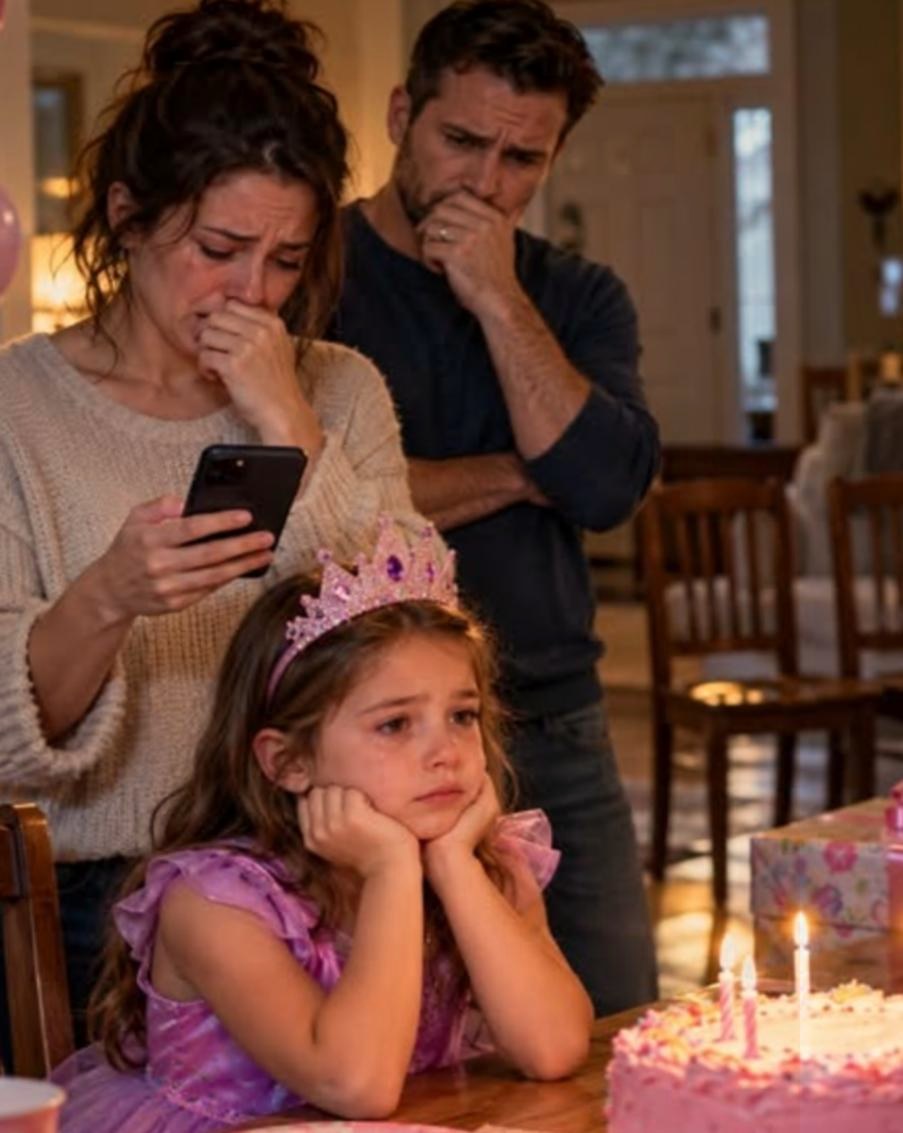
It was Saturday, four o’clock in the afternoon. Cheap colorful balloons still hung in our small apartment, half the cake stood on the table, and wrapping paper lay on the floor. Lily stood by the window in a purple dress, holding a glitter-covered photo frame. She had made it herself. Inside she had put our old photograph—me, her, and Grandma in the yard.
Two chairs by the window remained empty all day.
“Maybe they’re on the way?” Lily asked me.
“They probably got stuck in traffic, little one.”
But I knew that was a lie. At ten in the morning, Mother had texted me: “There is no way we can miss your little girl’s birthday.”
At three, the children left. At four, Lily looked toward the door again.
“Mom, did you tell them the right day?”
“Yes.”
“The right time too?”
This time I could not answer. I went into the kitchen and called Dad. He answered on the fifth ring. From the very first second I heard noise: music, glasses clinking, laughter.
“Dad, where are you?”
“At Dennis’s, sweetheart.”
Dennis was my brother. It took three hours by car to get to his house.
“Today is Lily’s birthday.”
“Today?” he asked, as though I had simply mistaken an ordinary date on the calendar.
“You promised yourself.”
My father sighed heavily.
“Sarah, we can’t run off for everything. We have other grandchildren too.”
I saw my fingerprint on the window glass. I had stood there all day waiting for the road.

“Where did you get the money for the trip?” I asked.
“What are you asking me?”
“Gas, food, visiting… What did you pay for all that with?”
His voice immediately hardened.
“We saved.”
“For three years I have transferred five hundred and fifty dollars to you every Friday. You told me you needed it for bills and groceries.”
“You offered to help us yourself.”
“Because you told me you would lose the house.”
My father gave a little laugh.
“That money was ours, Sarah.”
I heard a small intake of breath in the hallway. Lily was standing there. Tears were silently running down her face, and she had pressed the glittering frame to her chest.
“Dad, she waited for you all day.”
Silence fell for several seconds.
Then my father said:
“Dennis’s family is more organized. You have always been difficult.”
“What does that mean?”
“You have your own family. You were able to help because you lived better. That does not mean we have to come to you every Saturday.”
“My family?” I repeated.
“You were never counted the way Dennis’s family was.”
I hung up.
My husband Marcus was standing in the kitchen. His blue work shirt was covered with dust, and cracks from the cold showed on his hands. He said nothing. He simply looked at the bank statement lying on the table.
“Sarah,” he said quietly, “will you stop now, at least?”
I opened the banking app on my phone. It said: five hundred and fifty dollars, every Friday, indefinitely.
For three years I had paid for someone else’s peace by gluing my daughter’s shoes.
I put my finger on the cancel-transfer button. Then I looked at the car loan I had co-signed for my father. I opened Mother’s additional card. Another account. Another debt.

Marcus asked me:
“Are you sure?”
A quiet sob came from Lily’s room.
“No,” I answered. “But for the first time I know what I am doing.”
I canceled the transfer. Then I opened the loan documents and saw a strange entry: the money transferred in my father’s name did not go to the same account every week. There were three different accounts.
Mother called me at that very moment.
“What did you do?” she shouted without a greeting.
“Which part is bothering you?”
“The card no longer works. Your father says Friday’s money has disappeared too.”
Lily’s purple dress hung on a chair in the hallway. Silver glitter still clung to its sleeve.
Mother continued shouting on the phone.
“That money was ours!”
I opened the computer and gathered three years of statements into one folder. On the screen I saw the same amount, the same time, but different recipients.
Marcus stood behind me.
“This was not simple help,” he said.
On the last page of the folder, an entry appeared that I had not expected to see at all. Beside it was my father’s signature, and below it was the date when I still trusted everyone.
I reached out to open the document…
The document would not open. It asked for a password.
Mother was still shouting on the phone.
“Come to the bank tomorrow morning and return everything!”
“What should I return, Mom? My money or your lie?”
Silence fell on the other end.
Marcus closed Lily’s bedroom door so the child would not hear anymore. Then he sat beside me and put his hand on mine.
“Don’t open it alone,” he told me.
“Why?”
“Because whoever did this was certain you would never check.”

That night I looked through the old messages. Father wrote that the mortgage threatened them. Mother sent me pharmacy receipts. But the money disappeared on exactly the days when new photos came from them: a restaurant, a hotel, my brother’s house.
At seven in the morning Dennis called me.
“Sarah, Dad told me you’ve gone crazy.”
“Do you know where my money was going?”
“This is a family matter.”
“No. This is my child’s shoes.”
Dennis lowered his voice.
“If you make a fuss, you will lose a lot.”
“What?”
Instead of answering, he hung up.
At that same moment I received a message from the bank: the document password had been recovered. A new letter appeared on the screen—not from the bank, but from a lawyer whose name I was seeing for the first time.
“Ms. Sarah, if you have received this letter, it means the family has broken the agreement. Come today. Do not come alone…”
I arrived at the lawyer’s office at nine in the morning. It was raining outside, and water ran in thin strips down the stone steps. Marcus was with me, holding Lily’s glitter-covered frame—the child had not let it go before we left the house.
A woman met us in the office. She was around fifty and still had raindrops on her glasses.
“I am Elene,” she said. “I was your grandmother’s lawyer.”
“My grandmother’s? But she died six years ago.”
Elene placed a thick folder on the table.
“One month before her death, she created a protected account in your name. The condition was this: the money would be transferred to you only when you could no longer help your parents or when it was confirmed that they were using your name for debts.”
I gripped the chair.
“Why did I know nothing?”
“Your grandmother told me she did not trust your parents. Especially after she learned that they were planning to take out a loan in your name.”
Marcus placed his clenched fist on the table.
“How many loans?”
Elene opened the first document.
“Three. One for renovating a home, the second for a car, and the third for starting a small business. But the money was spent on none of those things.”
I studied my father’s signature. I remembered the letters—when I was a child he wrote my homework like this: “Do well.” Now that same signature was eating my future.
“Five hundred and fifty dollars?” I asked.
“That amount was not their debt,” Elene said. “Your parents took that money every Friday to cover the payment of debts. But the main thing is something else.”
She turned the laptop toward us.


A recording appeared on the screen. It was a bank-branch camera. Three years ago, six in the evening. Father stood before an employee and signed a form made out in my name. Dennis stood beside him.
“Sarah will not find out,” Father said in the recording.
“Will it come through every week?” Dennis asked.
“As long as you make her feel guilty, always.”
The recording stopped.
It was as if the air disappeared from the room. I was looking at the screen, but in reality I saw all three of my years: glued shoes, canceled shopping, Marcus’s quiet exhaustion, and Lily’s empty chairs.
“There is more,” Elene said.
She opened a second file. It contained correspondence between Mother and Dennis. Mother wrote: “She will send it again this Friday. Tell her the house payment has accumulated.” Dennis answered: “We will not go to Lily’s birthday. Sarah will be so busy that she will not notice the truth.”
Marcus lowered his eyes.
For the first time I cried. Not because they were lying to me. Because all this time I had been telling myself that love was an explanation for their behavior.
Elene took out a third sheet.
“According to your grandmother’s will, there are now two hundred and eighteen thousand dollars in the protected account. This money is yours. But one condition remains before you receive it.”
“What condition?”
Elene looked at her phone. At exactly that moment, it rang.
Mother’s name appeared on the screen.
Elene did not answer the call. Instead, a voice message began.
Mother’s voice was trembling.
“Sarah, if you go to the bank today, your father will be arrested. Remember, we know where Lily lives and when she returns from school.”
Marcus stood up.
“That is a threat.”
Elene nodded quietly.
“And there is one more thing you need to know. This message did not come from them. The number was used falsely. Whoever is blackmailing your family now is hiding something from your parents.”
A new message came to the phone. It contained only one sentence: “If you want to find out who used your mother’s account, trust no one until midnight today…”
იმ დღეს ლილიმ ერთი კითხვა დამისვა…
ფინალმა ყველაფერი სხვა კუთხით დამანახა. ყველაზე მძიმე პასუხი სასამართლოში კი არა, ჩემი შვილის თვალებში აღმოჩნდა.
„იქ აღარავის დაველოდები.“
მე პირველად მშვიდად გავუღიმე.
😱 გაიგეთ, რას მალავდნენ ისინი →
👇 ისტორიის ფინალი უკვე გახსნილია






